


More news on this day
Thousands of passengers who recently returned to Kano from Saudi Arabia are still waiting for their checked luggage weeks after landing in Nigeria, as reports highlight a growing baggage backlog involving Saudi flag carrier Saudia and mounting frustration for more than 3,000 affected travelers.
Get the latest news straight to your inbox!
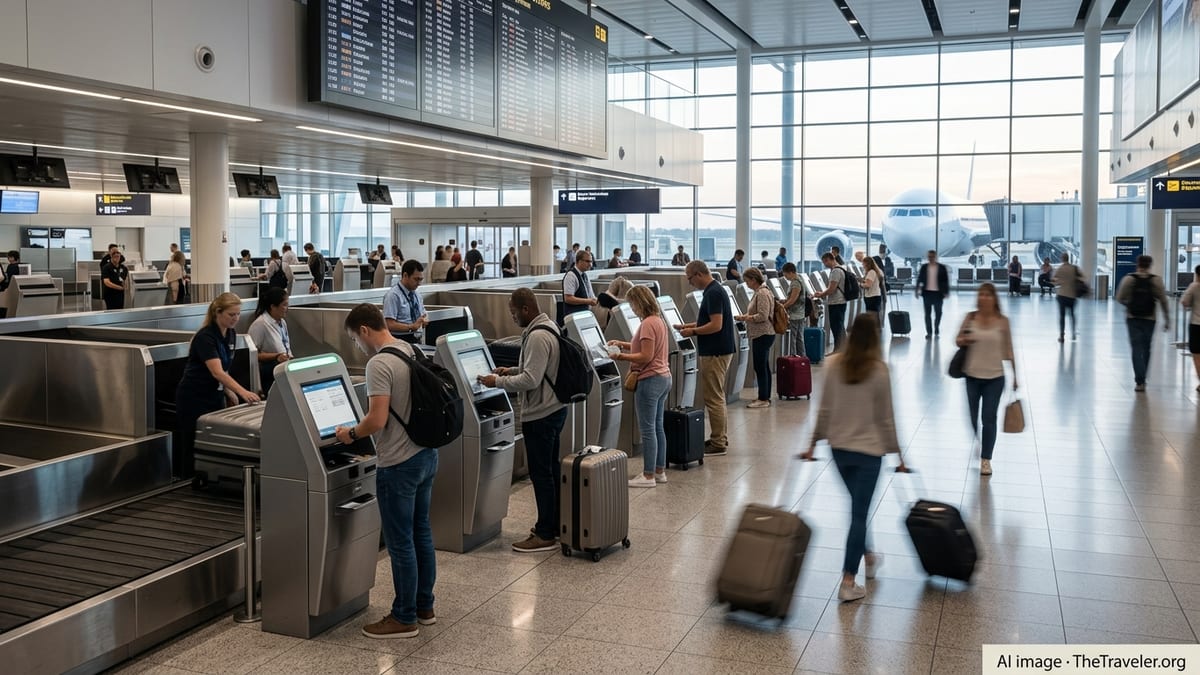
Weeks-long wait for luggage on Kano–Saudi routes
Recent coverage from Nigerian aviation and local news outlets indicates that around 180 tonnes of passenger luggage belonging to Nigerian travelers on Saudi routes remain stuck in Jeddah. The problem has hit passengers flying to Kano particularly hard, with more than 3,000 people reported to be affected by the disruption.
The delays emerged after this year’s busy Hajj and Umrah travel period, when airlines serving Nigerian cities, including Kano, operated intensive schedules between Nigeria and Saudi Arabia. While passengers have largely completed their journeys back to Mallam Aminu Kano International Airport, many checked bags have not followed on schedule, leaving travelers to navigate daily life without personal belongings, clothing, and trade items that are typically transported in bulk on these flights.
According to publicly available information from Nigeria’s Civil Aviation Authority, only a small portion of the delayed baggage has so far been transported back to Nigeria, representing a fraction of the overall backlog. For passengers who returned weeks ago, the absence of firm delivery dates for their bags has deepened concerns and prompted growing calls for clearer communication from all parties involved.
The situation has revived longstanding worries about post-Hajj logistics between Saudi Arabia and northern Nigeria, where Kano serves as a major departure point for religious travelers and traders heading to Jeddah and Madinah each year.
Regulators step in as Saudia cites operational challenges
Public statements from Nigeria’s Civil Aviation Authority show that regulators have intervened directly in the matter, engaging with Saudia to push for faster clearance of the stranded baggage in Jeddah. Reports indicate that the airline has attributed the disruptions to operational challenges tied specifically to services operating into Kano, although detailed explanations have not been fully outlined in open sources.
Following the intervention, regulators have confirmed that a limited quantity of the delayed luggage has arrived on subsequent flights, but this represents only a modest share of the estimated 180‑tonne backlog. As of the latest updates made public, the majority of affected passengers are still waiting for their belongings, with regulators describing the volume as significant enough to require a phased recovery over multiple flights.
Available coverage suggests that Nigerian aviation authorities are monitoring compliance with consumer protection rules and are urging the airline to prioritize affected passengers on Kano routes. However, clear timelines for when the remaining luggage will reach Kano-bound travelers have not been publicly confirmed, and industry observers note that slot availability, aircraft capacity, and ongoing operational constraints between Jeddah and northern Nigeria all influence how quickly the backlog can be resolved.
For travelers, the regulatory involvement has provided some reassurance that the issue is being tracked at a national level, yet practical questions about compensation, interim support, and documentation of missing items continue to surface as the delays lengthen.
Kano’s pivotal role in Nigerian Hajj and Umrah traffic
Kano has long been one of Nigeria’s main gateways for pilgrims and religious travelers journeying to Saudi Arabia. Publicly available records from the National Hajj Commission of Nigeria highlight that the state regularly fields several thousand pilgrims during each Hajj season, with dedicated charter and scheduled services linking Kano to Jeddah and Madinah.
In recent years, Kano’s importance has been reinforced by the allocation of significant Hajj quotas and the use of the city as a hub for northern Nigerian pilgrims. State-level initiatives, including welfare schemes and travel subsidies funded by the Kano government, have aimed to reduce financial pressure on pilgrims and streamline departure procedures from the city’s main airport.
This concentration of traffic means that any disruption on Saudi routes can rapidly affect large numbers of Kano residents. When aircraft operate at or near full passenger capacity during Hajj and Umrah, the additional weight and volume of checked luggage and cargo can strain baggage systems. If operational or scheduling challenges arise on the return leg, luggage is often among the first elements to be offloaded or rescheduled, leaving passengers to complete their journeys home without their belongings.
Analysts who track West African pilgrimage operations point out that similar luggage bottlenecks have occurred in previous Hajj seasons, both in Saudi Arabia and at Nigerian entry points, highlighting enduring pressures on post-Hajj logistics, especially when flights are tightly scheduled over short windows.
Passenger impact, claims and consumer rights
The luggage delays have direct consequences for affected passengers in Kano and other Nigerian cities. Many travelers returning from Saudi Arabia transport clothing, personal effects, religious items, gifts, and sometimes goods intended for small-scale commercial resale. Extended separation from these belongings can create financial strain, particularly for those who invested savings in items purchased abroad.
Consumer protection frameworks in Nigeria, including provisions overseen by the Civil Aviation Authority, recognize passengers’ rights to care and compensation in cases of delayed, damaged, or lost baggage. While the precise handling of claims in the current situation depends on each passenger’s ticket conditions and documentation, travelers are generally advised to retain boarding passes, baggage tags, and receipts for priority items in order to support any future claim.
Public coverage of the ongoing backlog notes that some passengers have begun approaching airport desks, local travel agencies, and Hajj coordinators to seek updates or file complaints. However, with luggage still physically located in Saudi Arabia, the practical resolution of many cases is likely to hinge on the speed at which Saudia is able to clear and uplift remaining bags onto Nigeria-bound flights.
Travel observers highlight that prolonged delays can deter future travelers unless airlines, regulators, and local coordinators provide transparent communication about the status of outstanding luggage and clearly outline options for redress once bags are delivered or formally declared lost.
Pressure for longer-term fixes in Hajj baggage logistics
The difficulties experienced by Kano passengers are unfolding against a larger backdrop of efforts to improve Hajj and Umrah logistics between Saudi Arabia and major sending countries. Saudi authorities have promoted initiatives focused on streamlining travel formalities, including systems that tag and route luggage directly to pilgrims’ accommodation in the holy cities. These programs aim to reduce congestion at airport baggage halls and minimize the need for passengers to manage bulky items during peak travel days.
On the Nigerian side, the National Hajj Commission and state pilgrims’ welfare boards continue to refine pre-departure processes, airline selection, and cargo arrangements in search of more reliable post-Hajj operations. Official documents have, in previous seasons, named specific carriers and cargo firms responsible for moving excess baggage and pilgrims’ goods, underscoring the complex chain of actors that must function smoothly to avoid disruption.
Despite these efforts, the present backlog linked to Kano flights shows that capacity and coordination challenges persist, particularly when large numbers of passengers converge on a limited number of air corridors over a short time. Analysts suggest that more resilient planning could include reserved cargo capacity after peak travel dates, clearer service-level agreements covering baggage timelines, and digital tracking tools that allow passengers to monitor their bags’ journey from Jeddah to final destinations in Nigeria.
For now, more than 3,000 affected Kano passengers remain in an uncertain position, relying on incremental updates from airlines and regulators as they wait for their luggage to cross the Red Sea and complete the final leg of an already demanding journey.