


More news on this day
Fremantle Dockers fans attempting to return to Perth after the AFL grand final in Melbourne have described widespread flight cancellations and sky-high replacement fares as a "disgrace", capping off a bruising weekend of on and off-field disappointment.
Get the latest news straight to your inbox!
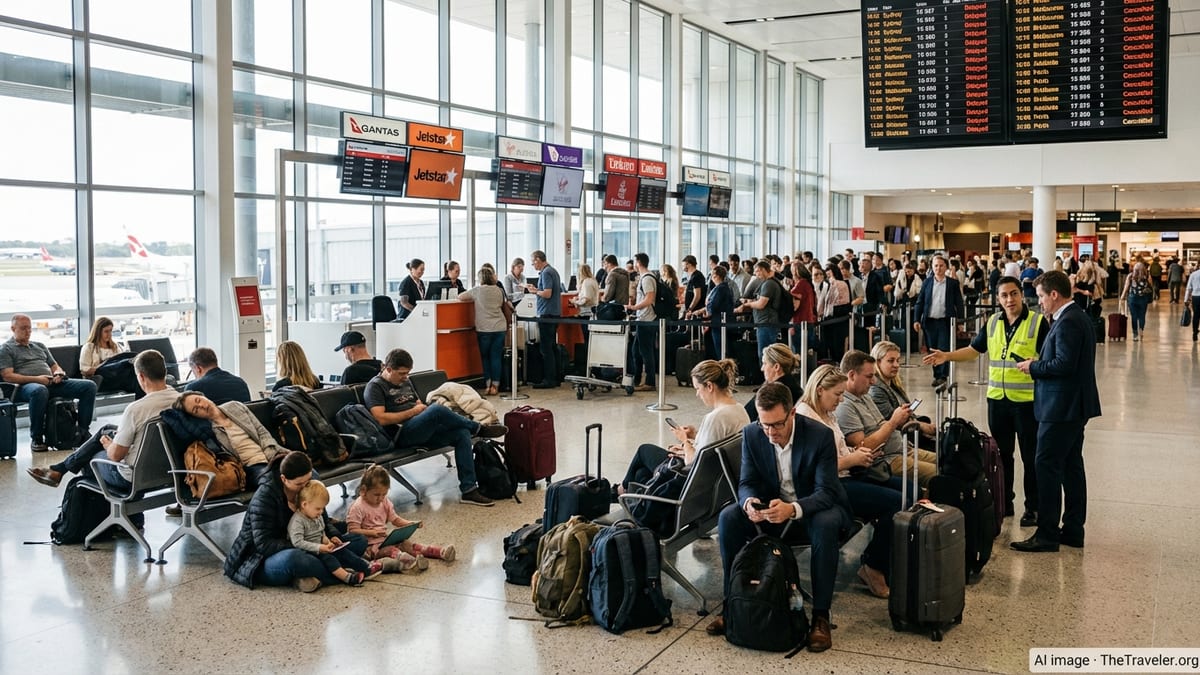
Grand final heartbreak spills into airport chaos
The travel disruption unfolded on Sunday 27 September, the day after Brisbane defeated Fremantle in the AFL premiership decider at the MCG. As thousands of West Australian supporters began making their way to Melbourne Airport for flights home, multiple services bound for Perth were cancelled or heavily delayed, according to Australian media coverage.
Reports indicate that cancellations affected services operated by Virgin Australia, Qantas and low-cost carrier Jetstar on the busy Melbourne to Perth corridor, leaving some Dockers fans stranded in terminals or scrambling to rebook at short notice. Coverage from national broadcasters and online outlets notes that the disruption also flowed onto other domestic routes, including services to Sydney, Adelaide and Brisbane, as aircraft and crew were rescheduled.
For many Fremantle supporters, the airport scenes followed a week in which air travel had already been a major stress point. Publicly available fare data cited by Australian news organisations showed return tickets between Perth and Melbourne reaching as high as A$6,000 in the lead-up to the grand final, as interstate fans rushed to secure seats on limited services.
The combination of record prices to get to Melbourne and uncertainty about getting home has fuelled renewed scrutiny of how airlines manage major sporting events that trigger short, intense spikes in demand between specific cities.
Stranded passengers decry costs and communication
Among the most widely cited examples of the disruption is that of Fremantle supporter Amy Rule, whose experience has been detailed in multiple news reports. She initially spent around A$6,000 on Virgin-operated travel and accommodation packages before the grand final, but after her Melbourne to Perth flight was cancelled on Sunday she was forced to purchase last-minute Qantas tickets reportedly costing a further A$3,100.
Rule and other affected passengers quoted in coverage have characterised the situation as an “absolute disgrace”, pointing to limited real-time information about the reasons for cancellations and limited staff capacity at airport help desks. Social media posts shared by fan groups and reproduced by news outlets describe long queues, difficulty accessing call centres and concerns over how long refunds or travel credits might take to process.
Consumer advocates quoted in earlier analyses of Australia’s airline sector have frequently identified communication gaps during disruption as a key issue for passengers, particularly when travel is tied to once-in-a-lifetime events such as grand finals. The latest problems facing Fremantle fans are likely to intensify calls for clearer minimum standards on rebooking, accommodation support and compensation when large numbers of flights are cancelled within a short window.
Available statements from airlines in recent days have pointed to operational and weather-related factors affecting networks around the country, while noting that additional services are being added where possible to move stranded passengers. However, many Dockers fans returning from Melbourne appear to have borne the brunt of the timing, with cancellations concentrated on the first major wave of post-grand final departures.
Airfare surge highlights challenges for west coast supporters
The cancellations came on the heels of a documented spike in airfares between Western Australia and Victoria in the days after Fremantle and Brisbane secured their spots in the grand final. Data cited by Australian broadcasters in the week before the match showed some return economy fares from Perth to Melbourne climbing into the A$4,000 to A$6,000 range, while one-way tickets in the final days before the game were reported at around A$1,900.
Those price levels encouraged a notable number of Dockers fans to bypass flying altogether. Publicly available reports highlighted supporters driving the 3,300-kilometre route across the Nullarbor Plain, stopping at roadhouses that temporarily adopted purple-themed decorations to welcome the travelling “Docker army”. Others shared rental cars or booked cross-country coach services to keep costs manageable.
Travel commentators quoted in recent coverage have suggested that the combination of Perth’s relative isolation, constrained seat capacity on the domestic network and sophisticated airline revenue management systems can combine to produce steep fare increases whenever a major event is confirmed. The 2026 grand final, featuring a Western Australian club with a large and highly engaged supporter base, appears to have amplified those pressures.
While elevated pricing around marquee events is not new, many Fremantle fans posting online have argued that the magnitude of this year’s increases, followed by mass cancellations, undermines confidence that airlines are adequately planning for foreseeable spikes in demand tied to the national sporting calendar.
Travel disruption adds to emotional toll for Fremantle fans
Back in Western Australia, local media have documented how thousands of supporters gathered in Fremantle and across Perth to watch the grand final, only to be left devastated by the narrow loss to Brisbane. The emotional weight of the defeat was evident again when the team arrived home to Perth Airport, where fans turned out to greet players despite the result and the travel issues affecting many fellow supporters.
For those still stuck on the east coast, the disruption has stretched what was meant to be a tightly planned long weekend into an uncertain, and often costly, extended stay. Some fans have reported using additional leave, rearranging work rosters or adjusting school holiday plans while they wait for replacement flights to become available.
The experience has also sparked renewed discussion within Fremantle’s fan community about the broader realities of following a West Australian club in a competition dominated by teams based on the eastern seaboard. Long distances, limited carriers on certain routes and the need to cross multiple time zones mean that even routine away trips demand careful planning and significant budgets, with grand finals representing the most expensive and high-stakes journeys of all.
Industry observers note that these recurring patterns underscore the importance of clear contingency planning around major fixtures, including the possibility of additional late-night or next-day services that can operate as pressure valves if disruption strikes.
What the saga means for future event travel
The post-grand final travel problems for Dockers fans are emerging as a case study in how quickly a celebrated sporting pilgrimage can unravel when network reliability falters. With more than a dozen flights reportedly cancelled nationally on the Sunday after the decider, the ripple effects across multiple cities highlighted the fragility of a system running near full capacity.
Travel industry analysts following the situation say the episode may strengthen arguments for clearer, nationally consistent passenger rights in Australia, similar to compensation and care frameworks that apply in some overseas markets. These typically set out when meals, accommodation or partial refunds should be provided, regardless of the specific ticket type or airline policy.
For airlines, the backlash from Fremantle supporters serves as a reminder that goodwill built through sponsorships and fan engagement can be quickly eroded if disruptions are perceived as poorly handled. Clearer pre-event communication about contingency options, proactive rebooking tools and stronger coordination with airports could all play a role in reducing the risk of similar headlines during future grand final weekends.
For future travellers from Perth and other distant cities planning to follow their teams to major events, the 2026 experience is likely to reinforce a familiar set of lessons: secure seats early where possible, consider flexible tickets, and be prepared with backup options if network shocks hit at the worst possible time.