


More news on this day
Limassol Port is set to host a large-scale counter-terrorism exercise this Wednesday, with Cypriot civil and military authorities preparing a detailed drill designed to test security, emergency coordination and the uninterrupted operation of the island’s busiest maritime gateway.
Get the latest news straight to your inbox!
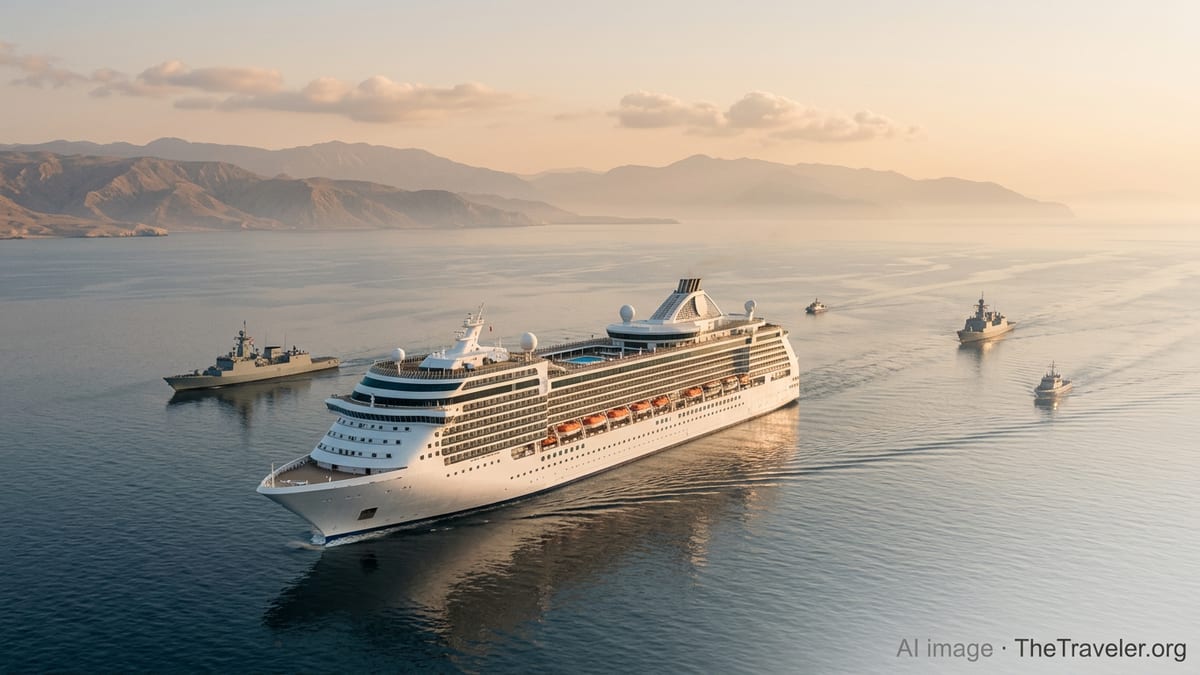
Focus on port resilience and crisis readiness
The planned exercise at Limassol Port is expected to simulate a complex security incident in a high-traffic maritime environment, reflecting concerns over regional instability and the importance of keeping critical infrastructure fully operational during emergencies. Publicly available information on recent drills in Cyprus indicates that such scenarios typically combine counter-terrorism elements with continuity-of-operations planning, ensuring that cargo movements, passenger handling and essential services can resume quickly after a disruption.
The drill will likely unfold across multiple zones of the port, including commercial quays, the passenger terminal and adjacent marina facilities, mirroring the way Limassol functions as a combined cargo, cruise and logistics hub. By concentrating activity within an operating port rather than an isolated training ground, planners aim to test procedures under realistic conditions while still maintaining core port functions.
Exercises of this type generally involve live deployment of specialist security units, support from maritime and land-based assets and the use of role-players to simulate passengers, port workers and bystanders. The overall objective is to validate crisis-management plans in real time and identify weaknesses in communication, command structures and practical field responses.
Officials have over recent years emphasized the need for regular, scenario-based training at Limassol, which handles the majority of Cyprus’s seaborne traffic and serves as a staging point for regional operations in the Eastern Mediterranean. The latest counter-terrorism drill continues that pattern of using the port as a testbed for national and regional security procedures.
Part of wider “Nikitis–Dimitra 2026” and maritime security planning
This week’s port security exercise is expected to connect with the broader “Nikitis–Dimitra 2026” framework, a large annual national defence drill that has already featured naval maneuvers off the coasts of Larnaca and Limassol. Recent iterations of that exercise have incorporated scenarios involving the protection of key maritime assets and the maintenance of safe shipping lanes around Cyprus.
Within this broader framework, Limassol has been used to test an updated national “Sounio Plan,” which governs the way Cyprus organizes strategic maritime transport and keeps its main ports operational during stress, crisis or emergency conditions. A counter-terrorism scenario at the port fits into that planning by bringing together the security-focused aspects of the national exercise with the practical demands of port management and logistics.
The emphasis for planners has shifted from exclusively military maneuvering to a more integrated approach, where civilian authorities, commercial operators and military forces train side by side. By placing Limassol Port at the center of this approach, Cyprus is able to examine how defence concepts translate into day-to-day operational readiness for the facilities that support trade, tourism and international support missions.
Observers of recent defense and maritime-security announcements in Cyprus note that the island’s role as a logistical hub for regional operations, humanitarian missions and energy projects has elevated the importance of Limassol’s resilience. The counter-terrorism component adds another layer, focusing on fast detection, isolation and neutralization of threats that could otherwise cause prolonged disruption.
Multi-agency participation across land, sea and health services
Publicly available descriptions of similar exercises at Limassol Port show that these drills typically draw in a wide spectrum of entities, from port operators and maritime police to fire services, health organizations and specialized units from the National Guard. Wednesday’s exercise is expected to follow that pattern, functioning as a live test of inter-agency cooperation in a dense and operationally complex setting.
Emergency medical teams and hospital services are usually integrated into the scenario to practice triage, field treatment and patient transfer procedures. For a port that handles both commercial shipping and cruise calls, a security incident could quickly produce mass-casualty situations, making medical readiness a central pillar of the exercise design.
On the maritime front, patrol boats, support craft and port-tug assets are likely to be involved in cordoning off restricted areas, escorting vessels and securing approaches to sensitive infrastructure. The coordination between on-water units and shore-based command posts is routinely highlighted in exercise summaries as a key capability that needs regular testing.
Commercial stakeholders, including terminal operators and shipping agents, are also expected to participate by activating their internal emergency procedures, communications trees and business-continuity plans. Their involvement helps ensure that any lessons learned can be translated into revised protocols for vessel scheduling, cargo handling and passenger management during and after a security incident.
Potential impact on port users and visiting travelers
While Limassol Port is expected to remain operational throughout the drill, travelers and port users may experience temporary restrictions in certain areas, brief traffic diversions around the cruise and passenger terminals or visible security cordons and patrols. Past exercises at the port have generally been structured to minimize disruption to regular operations, but organizers typically accept short-lived delays in order to preserve the realism and training value of the scenarios.
Passengers embarking or disembarking from cruise ships on Wednesday may encounter additional checks, controlled access routes and slightly longer processing times at security screening points. Transport connections between the port, central Limassol and nearby resort areas might also be adjusted for short intervals as part of the exercise choreography.
Local businesses operating within or adjacent to the port zone, such as logistics companies, service providers and hospitality venues, are normally informed in advance so that they can plan around any brief interruptions. For many of these operators, the exercise also serves as a live rehearsal of their own continuity plans, particularly in terms of staff safety measures and communication with clients.
Residents in the wider Limassol area may notice increased movements of emergency vehicles, occasional use of sirens and, potentially, low-level helicopter or drone activity associated with monitoring and coordination. Public communications around previous drills have typically emphasized that such activity is planned and that there is no cause for alarm.
Limassol’s growing role as a regional security and logistics hub
The decision to stage a substantial counter-terrorism exercise at Limassol Port reflects the city’s evolving position as a regional maritime and logistics center. The port already hosts high-profile political and diplomatic gatherings, supports multinational naval visits and has been selected as a venue for future European maritime events, underscoring its strategic importance to Cyprus and the European Union.
Limassol’s cruise and commercial facilities regularly support visiting warships, support vessels and international task groups conducting operations or training in the Eastern Mediterranean. Combined with the island’s involvement in multinational exercises and civil-military cooperation drills, this has turned the port into a focal point for regional security planning.
Against a backdrop of heightened attention to energy corridors, humanitarian corridors and maritime trade routes, Cyprus appears to be using Limassol as both a working port and a proving ground for new security and crisis-management concepts. Counter-terrorism exercises form part of that effort by stressing systems in realistic, time-sensitive situations and feeding the findings back into national contingency plans.
For travelers and maritime businesses, the increased tempo of exercises can occasionally mean more visible security and tighter controls, but it also signals an ongoing attempt to safeguard operations in a region where geopolitical developments can quickly affect sea traffic. The upcoming drill at Limassol Port is intended to strengthen that protective framework while keeping Cyprus’s main maritime gateway open and functional.