


Thailand has emerged as a significant hub for remote workers in Asia, supported by rapidly improving digital infrastructure and a dense network of coworking spaces in major cities. For professionals evaluating a medium to long-term relocation, the adequacy, reliability, and geographic distribution of coworking options and internet connectivity are central to determining whether day-to-day work can be sustained with minimal disruption. This briefing analyzes the current state of coworking spaces and remote work infrastructure in Thailand, focusing on practical, decision-critical considerations rather than tourism appeal.
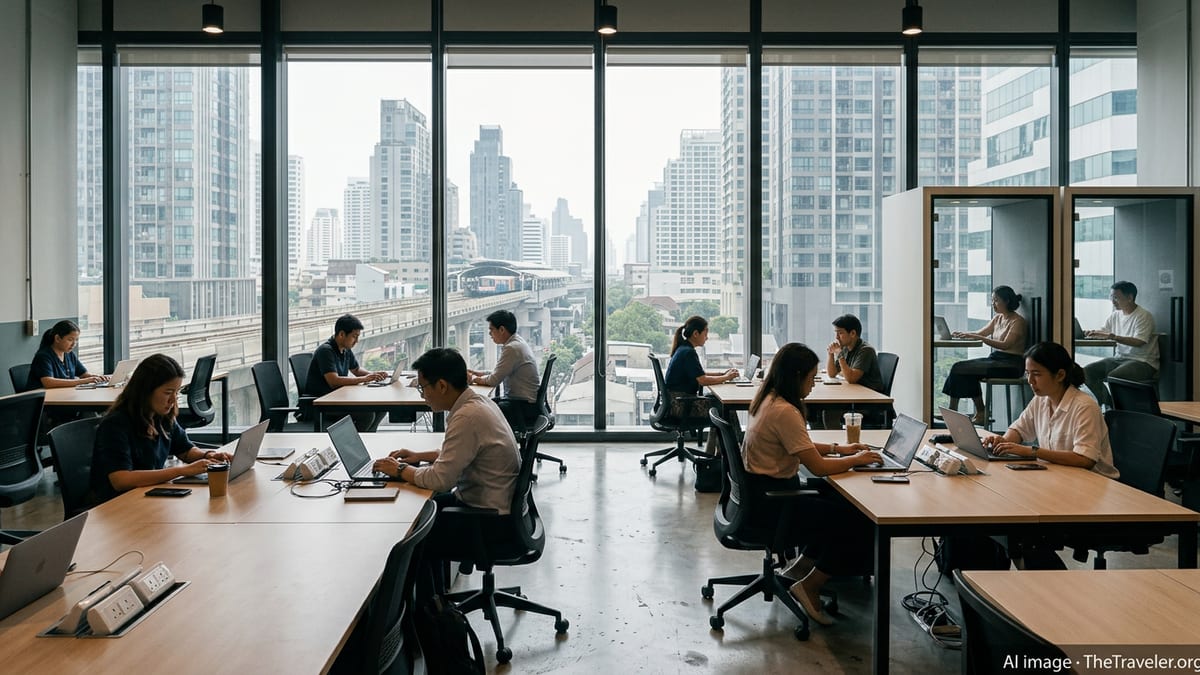
Overview of Thailand’s Remote Work Infrastructure
Thailand’s digital and office infrastructure has evolved from basic connectivity a decade ago to one of the stronger ecosystems in Southeast Asia today. Internet penetration is above 90 percent of the population, and average fixed broadband speeds now place the country among the top tier globally. Urban centers, in particular Bangkok, Chiang Mai, and Phuket, offer high-capacity networks, extensive 4G and 5G mobile coverage, and an expanding stock of modern flexible workspaces suitable for both individuals and corporate remote teams.
Fiber optic broadband dominates new fixed-line connections, accounting for close to 90 percent of fixed broadband subscriptions, which supports high-speed connectivity in most urban and peri-urban areas. Average fixed broadband download speeds around 230–240 Mbps are common, with gigabit plans available in many neighborhoods in Bangkok and other major cities. This level of connectivity is typically sufficient for bandwidth-intensive tasks such as large file transfers, cloud-based collaboration, and high-definition video conferencing.
On the mobile side, 4G coverage is close to universal and 5G networks reach over 90 percent of the population, including all provinces. While performance drops in more remote or rural areas, field studies and user reports indicate that even secondary cities and some islands can achieve practical speeds for remote work, though latency-sensitive or highly data-intensive professions may still prefer major metropolitan hubs.
Alongside network improvements, Thailand’s office market has integrated flexible and serviced offerings into new and existing buildings. International coworking brands and regional operators maintain multiple locations in Bangkok, while domestic providers and smaller independent spaces are present in most major urban centers. This combination of strong connectivity and space availability underpins Thailand’s positioning as a workable base for remote professionals.
Geographic Distribution and Types of Coworking Spaces
Coworking spaces in Thailand are heavily concentrated in Bangkok but are also well represented in Chiang Mai, Phuket, and several secondary cities. Bangkok, with a metropolitan population exceeding 16 million, is the core market and features dozens of coworking centers operated by regional brands and local companies. These range from high-end spaces in Grade A office towers along the mass transit lines to mid-market hubs in mixed-use or community-focused buildings.
Chiang Mai functions as the primary northern hub for location-independent workers and hosts more than 20 coworking spaces, including dedicated hubs and coliving-plus-coworking properties. The market here skews toward small and medium-sized spaces, often in low- to mid-rise buildings, with a mix of open-plan desks, private offices, and basic meeting facilities. Phuket’s coworking presence is smaller in absolute numbers but relatively dense in popular residential and business areas, particularly in the south and west of the island, where tourism-related and hospitality firms intersect with remote professionals.
Beyond these three centers, coworking supply exists in cities such as Pattaya, Hua Hin, Koh Samui, and some provincial capitals. However, coverage outside major hubs is uneven. Many smaller locations are independent, single-site operators with limited capacity and variable service standards. Some newly built condominium and serviced apartment developments across Bangkok and other cities have incorporated residents-only coworking lounges or business centers, which can provide an additional semi-private workspace option but are not full-service coworking operations.
The typology of coworking spaces in Thailand can be broadly grouped into three categories: full-service business centers targeting corporate tenants and teams; community-oriented coworking hubs focused on freelancers and small startups; and hybrid coliving-coworking properties offering accommodation bundled with workspace for medium-term stays. Each category presents different strengths in terms of privacy, amenities, and professional atmosphere, which are discussed in more detail below.
Facilities, Services, and Work Environment Quality
Across leading Thai coworking spaces, the baseline facilities are generally competitive with international standards. Standard inclusions commonly feature high-speed Wi-Fi backed by fiber broadband, ergonomic seating, air conditioning, printing and scanning, basic reception support, and access to communal kitchens or refreshment areas. Many operators also provide meeting rooms with screens or projectors, phone booths for private calls, and 24/7 access for certain membership tiers.
Premium spaces in Bangkok’s Grade A and A+ office towers tend to offer the highest specification of infrastructure, including multiple redundant internet lines, dedicated business-grade routers, enterprise-level security, and professional reception or concierge services. These locations also often integrate with the wider building amenities, such as on-site parking, fitness facilities, and food courts, which can be relevant for longer stays or teams requiring client-facing spaces.
In contrast, smaller independent coworking hubs and community spaces in Chiang Mai, Phuket, and secondary cities may have more modest infrastructure. While many still rely on high-speed fiber connections, they may offer fewer private rooms, less sophisticated call booth setups, and more limited sound insulation. For remote workers who rely heavily on video calls or confidential discussions, assessing the availability and quality of call rooms, dedicated offices, or sound-treated areas is important when selecting a space.
Environmental factors such as noise levels, crowding, and temperature control vary widely. Spaces designed with dense open-plan seating can become noisy during peak hours, especially in popular digital-nomad districts. Conversely, business-focused centers in Bangkok’s central business district generally maintain a more traditional office-like environment. Evaluating these conditions in person or via recent user reviews before committing to longer-term contracts is advisable, particularly for workers sensitive to noise or those needing a formal setting.
Internet Performance, Reliability, and Connectivity Risks
Internet speed tests and telecom data show that Thailand’s average fixed broadband speed, around the high 200 Mbps range, places it within the global top twenty for download performance. Median speeds in Bangkok are often higher than the national average and can approach or exceed 500 Mbps on premium residential and business plans. In major coworking centers, dedicated or business-class connections are commonly used to ensure stable access for multiple users during peak periods.
The prevalence of fiber-to-the-home or fiber-to-the-building connections, which represent close to 90 percent of fixed broadband lines, substantially reduces the risk of congestion associated with legacy copper networks. Major telecom operators offer service level commitments and relatively quick installation or repair timelines in urban areas. Nevertheless, remote workers should expect occasional interruptions from local outages, building maintenance, or extreme weather events, and may wish to maintain backup connectivity through mobile hotspots.
Mobile data performance is another critical factor. Nationwide 4G coverage and 5G networks now reach around 95 percent of the population, contributing to strong mobile broadband availability even outside major city centers. In practice, this means that a high-capacity 4G or 5G data plan can serve as an effective secondary connection if fixed-line internet in a coworking space or residence experiences difficulties. Remote professionals who handle latency-sensitive work or connect regularly to overseas servers, however, should be aware that international routing from Thailand can introduce higher latency compared with connecting from hubs closer to their corporate infrastructure.
The main connectivity risks are geographic disparities and building-level variability. Rural and remote areas, including some islands and inland provinces, may rely on lower-capacity infrastructure, and specific properties can have suboptimal internal Wi-Fi distribution even when external network capacity is adequate. Prospective relocators planning to base themselves outside Bangkok, Chiang Mai, or Phuket should conduct location-specific checks, such as requesting detailed bandwidth information from coworking operators and, where possible, testing speeds on-site before committing to extended contracts.
Cost Structures, Membership Models, and Value Considerations
While precise pricing varies across operators and cities and is subject to regular adjustment, several structural patterns are apparent in Thailand’s coworking market. Bangkok’s premium coworking spaces typically charge the highest rates in the country, reflecting central locations, upgraded fit-out, and stronger business amenities. Chiang Mai and Phuket generally offer lower headline prices, particularly for hot-desking and part-time use, though high-demand areas can narrow this differential.
Common membership models include daily passes, monthly hot-desk memberships, fixed-desk plans, and private office rentals. Daily passes are widespread and allow new arrivals to test different spaces with little financial commitment. Monthly hot-desk rates in mid-range Thai coworking spaces are often significantly lower than in major Western cities, providing good value relative to internet speeds and facilities. Fixed-desk and private office plans, while more expensive, can be cost-effective for small teams or individuals requiring consistent seating, secure storage, and reduced variability in working conditions.
Additional costs may include booking fees for meeting rooms, printing charges, access to event spaces, and security deposits for private offices. Some operators also structure tiered memberships that bundle use of multiple locations, which can be useful for professionals who alternate between different districts of Bangkok or travel regularly between Bangkok, Chiang Mai, and Phuket. In certain newer residential developments, limited coworking access is included in rent, though these facilities are typically less comprehensive than standalone coworking centers and may not be suitable as a sole workspace for demanding roles.
In evaluating value, relocating professionals should consider not only base pricing but also the reliability of internet, availability of quiet meeting spaces, proximity to public transport, and the presence of other necessary business services in the vicinity, such as printing centers, courier services, and banking facilities. The price-quality ratio in Thailand is generally favorable, but outcomes depend heavily on careful selection of operator and location.
Suitability for Different Remote Work Profiles
Thailand’s coworking and remote work infrastructure offers distinct advantages and limitations depending on the profile of the remote professional. For individual freelancers, consultants, and creative professionals who primarily require high-speed internet, desk space, and occasional meeting rooms, major Thai cities provide a wide array of suitable and affordable options. The combination of strong connectivity, flexible short-term memberships, and a variety of work environments enables frequent switching between spaces until a suitable fit is found.
For employees of foreign corporations or fully remote teams working across time zones, the key considerations extend beyond connectivity and desk availability. Time zone alignment with clients or headquarters, the need for secure VPN or dedicated network setups, and access to private rooms for frequent video calls or confidential discussions become more critical. Many Bangkok coworking providers can accommodate these needs through private office suites, custom network configurations, or enterprise packages, although such arrangements require direct negotiation and may involve longer contract terms.
Highly specialized remote work, such as high-frequency trading, advanced software development reliant on low-latency connections to specific distant data centers, or work involving sensitive regulated data, may encounter more constraints. Even with high domestic speeds, physical distance to servers in Europe or North America can introduce measurable latency. In such case profiles, professionals should conduct technical testing from Thai networks to their production environments before committing to long-term relocation.
Teams planning to colocate several staff in Thailand for extended periods can benefit from the ample supply of private offices within coworking centers, especially in Bangkok. This approach allows teams to leverage existing infrastructure and services, such as reception, cleaning, security, and meeting facilities, without investing in standalone leased offices. However, organizations should pay attention to building-grade standards, disaster resilience measures, and the operator’s track record in maintaining uninterrupted service during regional disruptions.
The Takeaway
Thailand currently offers a robust foundation for remote work, anchored by strong fixed and mobile broadband infrastructure and a growing network of coworking spaces in its main urban hubs. Fiber connectivity and widespread 4G and 5G coverage support high-speed internet access for most common professional activities, and the coworking market provides a spectrum of options from premium corporate-grade centers to more informal community hubs and coliving-coworking hybrids.
Relocating professionals should not assume uniform quality across the country. Bangkok, Chiang Mai, and Phuket provide the most reliable combination of infrastructure, choice of workspaces, and supporting business services. Secondary cities and rural areas may still be viable for some remote workers but require closer due diligence, including on-the-ground testing of internet performance and careful selection of coworking providers.
In cost and value terms, Thailand’s remote work infrastructure is competitive relative to many Western countries, particularly when measured against internet speed, space quality, and service breadth. Daily and monthly memberships facilitate experimentation and adjustment, which is useful for new arrivals. For individuals and teams whose work can tolerate moderate latency to overseas servers and who prioritize flexibility and cost-efficiency, Thailand’s coworking and remote work environment can support sustainable long-term professional activity.
FAQ
Q1. Are coworking spaces widely available across Thailand or mainly concentrated in specific cities?
They are heavily concentrated in Bangkok, Chiang Mai, and Phuket, with additional but more sporadic coverage in secondary cities and selected islands.
Q2. How reliable is the internet in Thai coworking spaces for video conferencing and cloud-based work?
In major cities, most coworking spaces use high-speed fiber connections that comfortably support video conferencing and cloud tools, although performance can vary by operator.
Q3. Is 5G mobile coverage sufficient to serve as a backup connection for remote work?
Yes, 5G and 4G coverage reaches the vast majority of the population, making mobile hotspots a practical backup, especially in and around major urban centers.
Q4. Do coworking spaces in Thailand usually provide private rooms for calls and meetings?
Many mid-range and premium spaces offer meeting rooms and phone booths, but the number and soundproofing quality differ, so it is important to confirm before committing.
Q5. How do coworking costs in Thailand compare with those in Western countries?
Typical monthly hot-desk memberships and day passes are generally lower priced than in major Western cities, especially relative to the level of internet speed and facilities provided.
Q6. Are Thai coworking spaces suitable for small teams, not just individual freelancers?
Yes, many operators provide dedicated team rooms or private offices, particularly in Bangkok, and can scale services such as meeting facilities and custom layouts for small teams.
Q7. What are the main risks to remote work continuity in Thailand?
The main risks are local outages, building-level Wi-Fi issues, and weaker infrastructure in rural or remote areas, which can be mitigated with careful site selection and mobile backups.
Q8. Can remote workers expect enterprise-level security and networking options?
Premium coworking centers can often arrange dedicated lines, VLANs, and enhanced security for corporate clients, but these configurations require discussion and may come with higher fees.
Q9. Is it feasible to rely only on residential internet and avoid coworking entirely?
In many urban areas, residential fiber can be fast and stable enough for full-time remote work, but coworking remains valuable for meeting facilities, redundancy, and a professional environment.
Q10. How far in advance should remote professionals book coworking space in Thailand?
Day passes usually require minimal advance booking, but private offices and dedicated desks in popular locations may need reservations weeks or months ahead, especially during peak seasons.