


More news on this day
Rail crews in South Charleston are working to remove derailed freight cars, repair damaged track and restore normal train movements after a derailment disrupted service and road access near the city’s rail corridor.
Get the latest news straight to your inbox!
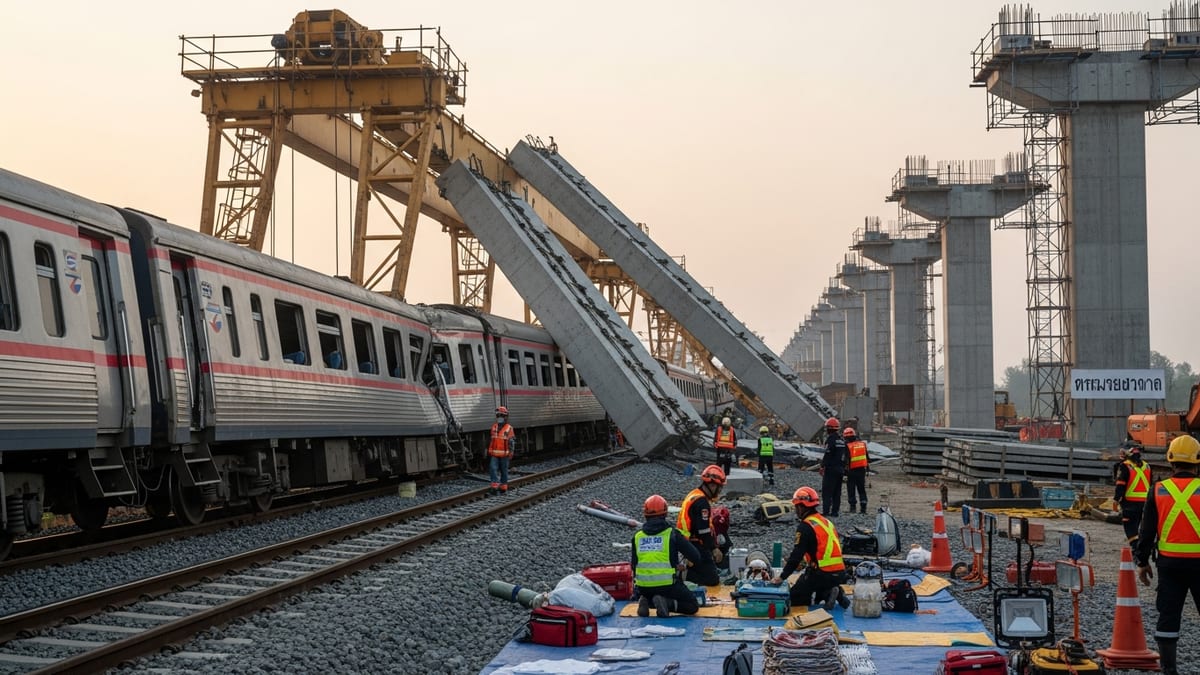
Freight Train Leaves Cars Off the Rails Near Key Crossing
Published coverage indicates that a freight train derailed on a line running through South Charleston, leaving several rail cars off the tracks and forcing a shutdown of the affected section as recovery work began. Initial reports describe a low-speed incident that did not result in serious injuries, but produced significant disruption for rail traffic and nearby streets.
According to information shared by regional news outlets, the derailment occurred near a busy at-grade crossing used by local drivers and close to commercial areas that line the rail corridor. Images from the scene show freight cars leaning at angles or fully off the rails, with ballast disturbed and sections of track visibly damaged.
Early summaries of the incident suggest that only a portion of the train left the rails and that no hazardous materials release has been identified. Publicly available information indicates that rail traffic through the area was halted while inspections and initial stabilization were carried out.
As of Thursday, crews were concentrating on rerailing equipment and clearing the right of way so that temporary operations could resume while permanent track repairs continue.
Specialized Wreck Crews Focus on Rerailing and Recovery
Derailment response typically unfolds in stages, and South Charleston appears to be following that pattern. Photographs and video taken from public vantage points show heavy wrecking equipment, cranes and maintenance vehicles positioned along the derailed consist as crews work car by car to lift, reposition or cut away damaged rolling stock.
Railroads generally bring in specialized contractors or in-house wreck crews trained to stabilize cars, remove spilled freight and protect any nearby utilities before major lifting begins. In South Charleston, publicly shared images indicate that workers are using side-boom tractors and cranes to nudge lighter cars back onto the rails where possible, while more heavily damaged units are being prepared for separate removal.
Once cars are rerailable, crews typically place temporary track panels and adjust the ballast so that equipment can be moved slowly out of the incident zone. Observers near the site report that multiple work windows have been scheduled through the day and night to move the process forward without extended breaks.
Industry data on similar incidents suggest that even when derailments are contained to a yard lead or secondary track, extensive checks on brake lines, couplers and wheelsets are needed before any portion of a train can be moved. That work appears to be ongoing at the South Charleston location.
Track Repair and Safety Inspections Underway
Once derailed cars are removed, the focus shifts to the track structure itself. Publicly available railway safety guidance notes that derailments typically damage not just the steel rails but also ties, fasteners and the crushed-rock ballast that maintains alignment. Initial imagery from South Charleston shows twisted rail and displaced ties, a clear sign that portions of the line will need to be rebuilt rather than simply adjusted.
Track maintenance teams working such incidents usually begin by cutting away bent rail, pulling out broken or split ties and excavating fouled ballast. Replacement rail sections are then brought in, aligned and welded or bolted into place. Ballast is re-compacted and tamped to restore the correct profile and elevation before the line is certified for use.
Reports referencing federal safety practices indicate that a series of inspections must be completed before full-speed operations are allowed to resume. These typically include visual checks, measurements of track geometry and, in some cases, ultrasonic or other tests to confirm that nearby undamaged rail has not been compromised.
In South Charleston, railroads are expected to keep speed limits reduced and limit the tonnage of passing trains for a period after repairs, a common precaution after any significant track disturbance.
Service Disruptions Affect Freight and Nearby Roads
The derailment has had immediate impacts on both rail logistics and local mobility. Published coverage notes that trains using the affected line have been held, rerouted over alternate corridors or operated on revised schedules while the blocked section remains out of service.
For freight shippers, these changes can translate into longer transit times and temporary congestion at nearby yards as railroads reconfigure their operations. In regions where a single main line carries a significant share of traffic, even a short-term outage can create ripple effects for days.
On the ground in South Charleston, motorists have experienced intermittent closures at rail crossings near the incident site as heavy equipment moves in and out and as crews work close to the roadway. Local reports describe detours around key intersections and the presence of flaggers and traffic control devices to guide drivers.
Residents close to the tracks are also dealing with added noise from generators, floodlights and heavy machinery required for overnight work, a typical side effect of intensive derailment recovery operations.
Ongoing Investigation and Wider Safety Context
While the immediate priority remains clearing the tracks and restoring service, attention is already turning to what caused the South Charleston derailment. According to published coverage of similar events across the country, investigations often examine the condition of the track, recent maintenance history, train handling records and any mechanical issues involving locomotives or cars.
Rail safety summaries show that most derailments are linked to a relatively small number of factors, including track defects, equipment failures and human error. National statistics indicate that many such incidents occur at low speeds and result in property damage and service disruption rather than casualties, although higher-speed events can have far more serious consequences.
In the South Charleston case, findings from railroad and regulatory inquiries are expected to inform any future changes to inspection schedules, speed restrictions or maintenance practices on the line. Publicly available information from past investigations in other states suggests that recommendations can range from upgraded track components to revised training or additional monitoring technology.
As crews continue to work along the right of way, rail observers and residents alike are watching for confirmation that the route can safely handle the return of regular traffic and that lessons from the derailment are incorporated into long-term safety planning.