


More news on this day
From a suburban swimming pool overrun by Canada geese to a series of derailments and service disruptions on busy rail corridors, early August is bringing fresh complications for travelers trying to squeeze the most from the final weeks of summer.
Get the latest news straight to your inbox!
Geese Turn Community Pool Into No-Swim Zone
A popular outdoor pool in a North American suburb has been temporarily closed after a flock of Canada geese took up residence on its decks and in the shallow end, according to local coverage and social media reports. Photos shared publicly show the birds congregating on pool furniture and walkways, leaving droppings that raise health and sanitation concerns for swimmers and staff.
Reports indicate that wildlife and parks staff are weighing short term deterrents such as noisemakers and decoy predators while longer term options, including capture and relocation, are evaluated. Similar management plans adopted in multiple states this year have emphasized nonlethal strategies at first, then structured relocation programs if flocks continue to foul public recreation areas.
Publicly available guidance from wildlife agencies in the United States and Canada highlights the same pattern seen at this pool: resident goose populations have expanded in manicured suburban landscapes where lawns, ponds, and artificial lakes create ideal habitat near human recreation facilities. For swimmers who rely on neighborhood pools during peak heat, that ecological shift is now a very visible inconvenience.
Families in the affected community have turned to splash pads, lakes, and private club pools while cleanup work continues. Operators have not announced a firm reopening date, but early indications suggest the pool will remain closed until surfaces can be thoroughly sanitized and test results confirm water quality has returned to safe levels.
Recent Train Derailments Ripple Through Passenger Networks
Rail travelers across several regions are reporting new disruptions linked to freight and passenger train derailments during the summer season. Public timelines assembled from transport bulletins and passenger forums show that a series of incidents, many involving freight trains, have forced temporary line closures and detours that affect long distance and regional passenger services.
In the western United States, reports of a freight derailment along a key mountain corridor in late March triggered several days of cancellations and bus substitutions for a major transcontinental passenger route. Travelers described last minute notifications, extended ground transfers around the blocked section of track, and uncertainty about when normal rail operations would resume.
Further east, passengers on a prominent Chicago to East Coast route encountered significant delays this spring after a derailment on a freight line used by both cargo and passenger trains. Publicly available status alerts documented temporary route closures and suspended departures while the damaged rolling stock was cleared and track inspections were completed.
Transit riders in at least one major metropolitan area also experienced a midsummer scare when a commuter or metro train partially left the rails near a suburban station. Passenger accounts posted online describe a brief fire near the track and a slow, controlled evacuation. Service on the affected line was substantially reduced while equipment was removed and rails inspected, causing crowding and missed connections for several days.
Safety Reviews and Infrastructure Stress in a Busy Travel Year
These incidents are unfolding in what has already been an intense period for rail safety discussions in North America and Europe. Investigative reports released in recent months highlight recurring themes, including heavy wear on aging track segments, extreme weather effects such as heat related rail buckling, and the challenges of safely operating longer, heavier freight trains on busy mixed use corridors.
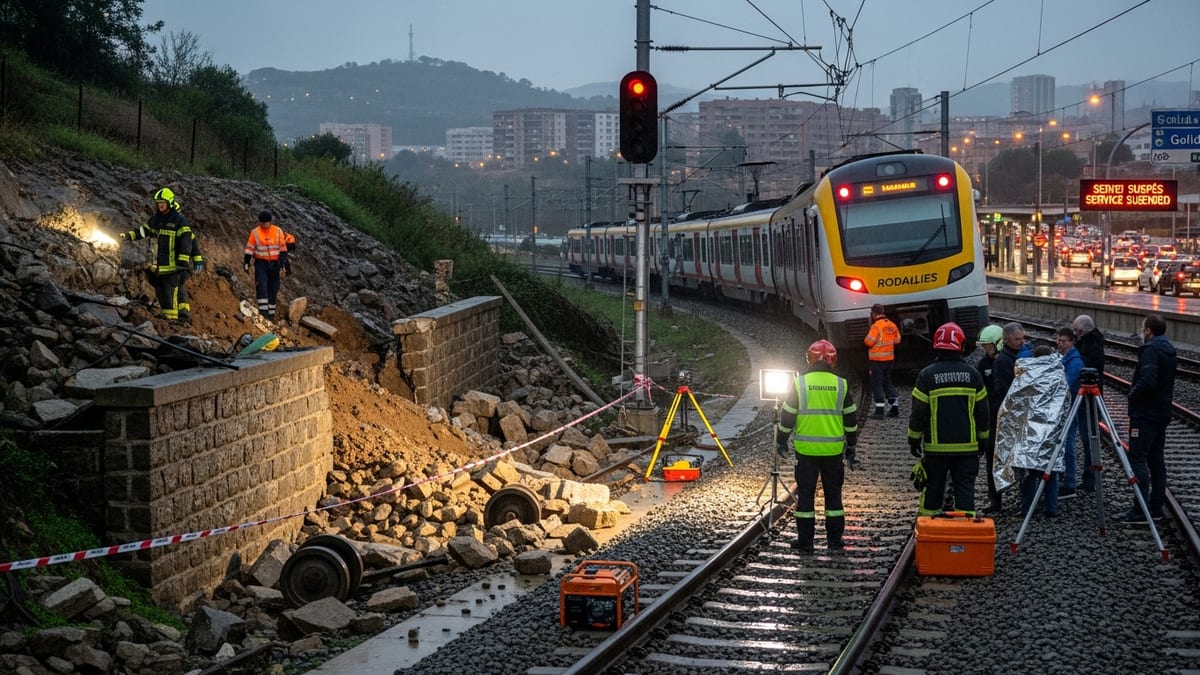
In Spain, for example, high profile derailments earlier this year prompted systemwide inspections on certain networks and renewed debate over how quickly infrastructure upgrades can keep pace with rising ridership and freight demand. Summaries of those investigations point to localized infrastructure failures, in some cases exacerbated by severe rainfall and flooding near the tracks.
Transportation policy documents in the United States for the 2026 period similarly underscore the link between maintenance backlogs, workforce pressures, and incident risk. Public planning materials outline proposals for expanded inspection technology, targeted funding for high risk corridors, and stronger coordination between freight railroads and passenger operators that share track.
For travelers, the practical effect is an environment where even a single derailment or blocked line can send ripple effects through multiple states or regions. Timetables show that when one long distance train is canceled or detoured onto slower routes, equipment and crews may arrive late to their next assignment, compounding delays days after the original disruption has been cleared.
What Travelers Are Facing on the Ground
Summer passengers caught up in these disruptions describe a mix of resilience and frustration. Online trip reports from June and July detail missed connections, abrupt day of travel cancellations, and overnight hotel scrambles when trains could not reach their destinations due to track closures. Some riders reported being shifted to chartered buses for long segments of their journey, changing a scenic rail trip into a highway slog.
In several cases, publicly available customer guidance suggests that travelers were advised to rebook on later departures or accept full refunds when their original trains were canceled because of a freight derailment ahead. While that flexibility limits financial losses, it does little to help those on tight schedules, such as students returning to campus or families with fixed vacation windows.
On urban and commuter networks, derailments and safety inspections have translated into longer headways and more crowded trains on remaining services. Academic and industry research on metro disruption patterns notes that even after normal schedules officially resume, irregular headways and equipment imbalances can lead to unpredictable waits and sudden surges in demand on specific departures.
For airport bound passengers who rely on regional rail as a key link in their itinerary, these uncertainties add another layer of risk. Some travel planners are now recommending wider connection buffers, especially where a single track corridor carries both heavy freight and passenger train volumes.
Top Travel Headlines to Watch This Week
Beyond the goose filled pool and ongoing derailment fallout, several other travel stories are capturing attention as the first full week of August unfolds. Rail advocates are closely tracking funding negotiations that could determine the future of at risk regional passenger routes in the central United States, with deadlines at the end of the summer season cited in recent public statements.
In the air sector, airline schedule adjustments heading into late August are reshaping connections at a number of hub airports. Industry dashboards show capacity being shifted toward leisure heavy sun and beach destinations, while some secondary business routes see modest reductions as carriers plan for the post Labor Day shoulder season.
Road travelers, meanwhile, are contending with a mix of record construction seasons and severe weather. State transportation agencies report multiple long term lane closures on major interstates for bridge and pavement work, leading to extended weekend backups near popular lake, mountain, and coastal destinations. In parts of the Midwest and South, heavy thunderstorms and flash flooding have added short notice closures to the mix.
The result is a summer landscape in which almost every mode of transport carries a higher risk of delay than travelers might expect. From birds at the neighborhood pool to freight trains on distant mountain passes, localized events are combining with broader infrastructure strains to shape how and when people are able to move.