


More news on this day
UK rail passengers have been hit by severe disruption after a major power failure at CrossCountry’s Birmingham control centre forced the operator to cancel most of its services across Britain on Sunday.
Get the latest news straight to your inbox!
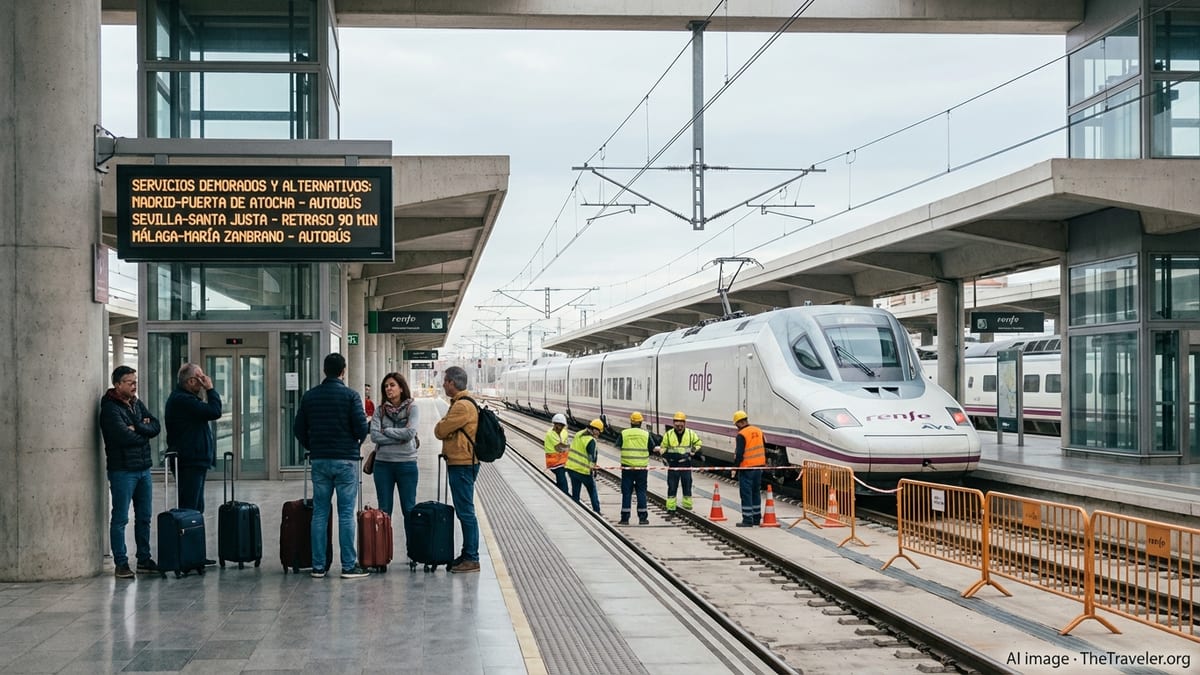
Systems Crash Halts Services Across the Network
Publicly available information shows that an electrical failure at the building housing CrossCountry’s control operations in Birmingham on 23 August left critical management systems unavailable. The outage affected software used by control teams to monitor trains, allocate crew and rolling stock, and route services across one of Britain’s largest long-distance rail networks.
According to published coverage, the operator responded by withdrawing almost all services “until further notice” for the rest of Sunday, describing the impact as significant disruption across almost all routes. Limited trains continued to operate only on the Peterborough – Cambridge – Stansted Airport corridor, alongside a handful of pre-planned rail replacement buses in the East Midlands.
National rail update pages and regional media reports indicate that routes linking major cities including Birmingham, Manchester, Newcastle, Glasgow, Edinburgh, Bristol, Cardiff, Leeds and Plymouth were among those affected. Many CrossCountry journeys simply disappeared from real-time journey planners, leaving passengers scrambling to replan at short notice.
The issue follows earlier network-wide incidents this month involving separate power and signalling failures in the north-west of England, which had already heightened concern among travellers about the resilience of key rail infrastructure.
Thousands of UK Travellers Face Cancellations and Overcrowding
Passenger journey planners and social media updates point to widespread last-minute cancellations across the day, with travellers in the Midlands and northern England particularly exposed. CrossCountry’s network normally carries long-distance flows that cut diagonally across Britain, meaning the outage hit both leisure and essential connections, including airport access and weekend events.
National Rail information services warned that remaining train operators on overlapping corridors would be extremely busy, especially on links to Manchester, Liverpool and Newcastle. With CrossCountry’s long-distance trains off the network, intercity and regional services run by other companies quickly became crowded, with limited spare capacity to absorb displaced demand.
Reports from regional outlets highlight travellers abandoned at intermediate stations where alternative operators are scarce or non-existent. On some cross-country corridors, such as between the South West and the North East, passengers were advised that no through rail options were available for much of the day, forcing complex detours via London or overnight changes of plan.
For UK and overseas visitors relying on rail for multi-stop itineraries, the sudden loss of services compounded challenges already posed by summer engineering work and recent extreme-weather timetable changes, creating a difficult operating environment across parts of the network.
Ticket Acceptance, Refunds and Delay Compensation
In response to the systems collapse, CrossCountry published guidance stating that tickets dated for travel on Sunday would be valid on specified alternative operators running similar routes. National Rail and journey planner updates confirm that acceptance arrangements were put in place on several intercity and regional carriers, allowing some passengers to complete journeys on different trains without extra cost.
Information shared through rail disruption portals indicates that affected passengers may be eligible for Delay Repay compensation, in line with existing rail industry schemes. Travellers whose services were cancelled or heavily delayed are advised to retain tickets and booking confirmations and to submit claims via the operator they were originally due to travel with.
For those who decided not to travel at all because of the outage, CrossCountry has stated through public information channels that full refunds are available from the original point of purchase. This includes advance-purchase tickets, which are normally more restricted, reflecting the scale of Sunday’s disruption.
Travel advisers recommend that anyone with unused tickets checks the latest guidance on CrossCountry and National Rail websites before applying, as processing times and claim routes can vary between online retailers, ticket offices and third-party booking platforms.
Knock-on Effects for Events, Tourism and Regional Travel
The outage coincided with a busy late-summer Sunday featuring sports fixtures and tourism travel, magnifying its impact. Coverage from national and regional outlets notes that supporters heading to football matches in cities such as Manchester, Liverpool and Newcastle were forced to seek last-minute alternatives, adding pressure to already busy services operated by other companies.
For the tourism sector, the disruption particularly affected visitors using CrossCountry’s long-distance links between the South West, the Midlands, northern England and Scotland. Coastal resorts, historic cities and key interchange hubs along these corridors rely heavily on weekend rail flows, both for domestic city-break visitors and inbound tourists exploring the UK without a car.
Regionally, communities on sections of line where CrossCountry is the dominant or sole operator experienced an almost complete absence of through trains during the outage. While some local services and replacement buses continued to run as planned engineering work alternatives, they were rarely able to substitute for the lost long-distance capacity.
Travel industry observers suggest that the incident may prompt renewed debate about network resilience, especially around the concentration of critical control functions for multiple routes in single locations and the contingency measures available when those hubs lose power.
Operator Targets Monday Return to Full Service
Later updates from CrossCountry, reported in national media, indicate that the company expects to restore a full timetable on Monday, subject to the successful recovery of systems at the Birmingham control centre. The operator has signalled that staff are working to bring trains and crew back into position across the network so that weekday commuter and business services can resume as normal.
Nevertheless, journey planners advise travellers to check live updates before setting out, particularly for early-morning departures on key intercity corridors. Rolling stock and crew imbalances from Sunday’s cancellations may still produce isolated delays or service alterations as the operation is reset.
Rail commentators note that this is the latest in a series of high-impact technology and power-related incidents affecting UK rail services in recent years. The scale of Sunday’s disruption, combined with its timing at the height of the summer holiday period, is likely to raise questions about back-up power provision, redundancy in control systems and the communication tools available when centralised IT platforms fail.
For now, the priority for passengers is to verify their specific journeys, make use of ticket acceptance where it remains in place and keep records of disruption to support any future refund or compensation claims arising from the sudden collapse of CrossCountry’s systems.
The Guardian: CrossCountry cancels almost all rail services after power cut hits control centre
Anadolu Agency: Major UK train operator cancels most services after Birmingham power outage
The Independent: CrossCountry cancels most services until further notice
Plymouth Plus: Almost all CrossCountry trains will be cancelled today