


More news on this day
Air travel across Europe faced a fresh wave of disruption over the weekend, as London’s main airports and several major continental hubs reported more than 150 flight cancellations and over 2,100 delays, straining already busy summer schedules for carriers and passengers.
Get the latest news straight to your inbox!
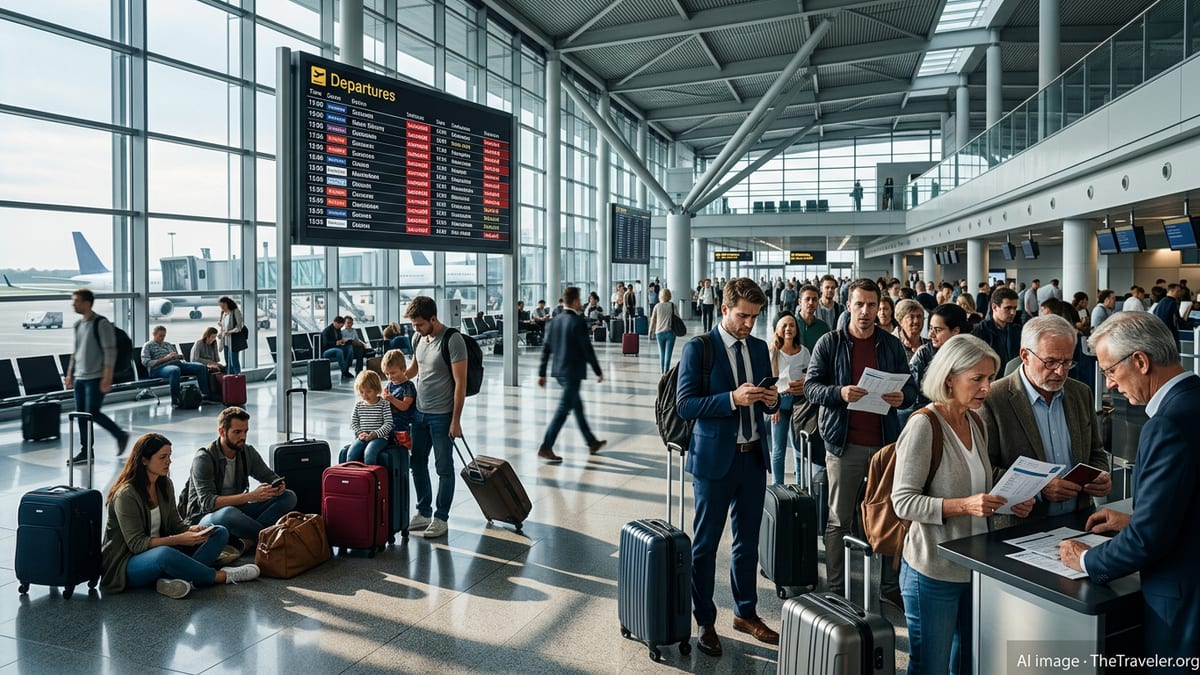
Pressure Mounts on London’s Congested Airspace
Publicly available data and disruption trackers indicate that London’s key airports, including Heathrow and Gatwick, have again become focal points for delays and cancellations during the peak August travel period. Air traffic control staffing issues in the UK, alongside operational bottlenecks, are contributing to a pattern of rolling disruption that can quickly ripple through airline schedules.
Recent statements from airlines highlight growing concern about the resilience of the UK’s air traffic control system. In mid-August, one major low cost carrier reported that UK air traffic control related delays had risen by more than 80 percent compared with the previous year, after more than 30 of its flights were held up in a single morning. The carrier framed these disruptions as avoidable and directly linked to staff shortages in the control network.
These operational strains are compounded by long running capacity constraints at Heathrow and Gatwick. Industry reports and punctuality datasets from recent summers show that even on relatively stable days, a significant share of arrivals and departures at London’s main hubs operate with moderate delays. When technical incidents or staffing gaps occur, that baseline congestion can quickly escalate into clusters of cancellations.
Travel rights organizations additionally point to earlier large scale events as evidence of how vulnerable the system remains. An analysis of a major disruption day in 2025, when a radar fault at the UK’s Swanwick air traffic control center led to the cancellation of more than 150 flights and widespread delays, is frequently cited as an example of how technical failures in the London airspace environment can scale up to affect almost all passengers on the network.
Fuel Shortages and Weather Add to Gatwick and Continental Strain
In early August, London Gatwick issued an alert to airlines warning that a jet fuel supply shortage could affect flight operations during one of the busiest stretches of the summer season. Guidance shared with passengers by consumer rights platforms explains that this type of supply constraint may force airlines to retime services, consolidate rotations, or in some cases cancel flights outright, especially where aircraft cannot reliably refuel at alternative points along their route.
Although Gatwick has continued to operate, the need to carefully manage fuel availability has been layered onto existing challenges with tight runway capacity and high traffic volumes. Each time an aircraft departure is slowed or rescheduled, that delay can cascade through the rest of the day’s rotations, contributing to the overall count of late departures and missed connections that travelers are now seeing across Europe.
Weather has also played a role in amplifying disruption this summer. Real time alert systems show that a significant share of current travel risk notifications for Europe are linked to weather related events, including storms and strong winds that periodically restrict airport operations. Some of these alerts are classified at a high impact level for airport delay, signaling that extended holding patterns, diversions, and tactical ground stops are in effect at certain hubs.
Observers note that when fuel constraints, adverse weather, and staffing pressures coincide, even briefly, the combined effect can be much larger than the sum of individual issues. For travelers, that often appears as a sudden spike in cancellations and a sharp rise in average delay times, even if severe weather itself may have passed or a technical problem has technically been resolved.
Major European Hubs See Knock On Effects
The latest wave of disruption is not confined to the United Kingdom. Data compiled by flight tracking and passenger rights services show that large hubs across the continent, including Rome Fiumicino, Paris Charles de Gaulle, and Amsterdam Schiphol, have also reported elevated levels of cancellations and late operations during recent weeks.
At Rome Fiumicino alone, figures for August indicate more than 150 cancelled flights so far this month, averaging over a dozen cancellations per active day. Disruption on core domestic and intra European routes, such as services to Catania and other Italian cities, has been particularly strong. Because many of these flights interconnect with long haul and regional services, schedule problems at one airport can quickly spread into other markets, including London bound services.
Earlier in the summer, an analysis by a global passenger rights firm found that a single day of disruption across a cluster of major airports including Heathrow, Gatwick, Schiphol, and Charles de Gaulle led to problems on more than 2,600 flights. When several hubs accumulate delays at the same time, the number of passengers affected grows rapidly, and recovery can take days as aircraft and crew are repositioned.
Industry research on airport reliability points out that this type of multi hub disruption is becoming more common as demand recovers and airlines intensify utilization of aircraft and crews. Reports released in early 2026 identify systemic pressures such as staffing shortages, infrastructure constraints, and recurring industrial action as ongoing risk factors for European aviation.
Staffing Gaps and Industrial Action Keep Reliability Fragile
Beyond technical faults and weather, labor issues continue to shape the reliability of air travel in Europe. In the UK, ongoing concerns about staffing levels at air traffic control centers have led airlines and consumer advocates to call for more transparency around contingency planning and investment in resilience.
Industrial action is also affecting smaller but strategically important facilities. Norwich Airport, for example, announced that a 24 hour strike by air traffic control staff later in August would lead to a full closure of the airport for that day, with no flights operating. Passengers booked to travel were advised to check directly with airlines for rebooking options, highlighting how quickly local disputes can convert into complete operational shutdowns.
Across the wider European network, recent history shows that air traffic control strikes in countries such as France can lead to the cancellation of more than a thousand flights over just a few days. Consulting and industry reports forecast that similar flashpoints are likely to recur in 2026 as negotiations over pay, staffing levels, and working conditions continue in multiple jurisdictions.
Analysts argue that these layered pressures, from local strikes to region wide staffing gaps, mean that the risk of sudden spikes in cancellations and delays is now a structural feature of European aviation. While not every day will see mass disruption, periods of relative calm can be interrupted without much warning when several stress factors align.
What Travelers Can Expect and How to Respond
Passenger rights organizations advise travelers to expect a busy and occasionally erratic operational environment across European airports through the remainder of the summer season. While overall flight volumes have recovered strongly, the supporting systems that keep flights on time have not always scaled at the same pace, leaving little margin for error during peak travel days.
Travel advisories recommend that passengers transiting through London or other major hubs monitor their flight status closely, keep airline apps and contact details up to date, and allow additional time for connections whenever possible. Given the current patterns of disruption, itineraries that rely on very tight transfer windows at congested hubs are more vulnerable to missed onward flights.
Consumer advocates further emphasize the importance of understanding legal protections. For flights departing from UK or EU airports, or operated by UK and EU based carriers, compensation and assistance rules under UK261 and EU261 may apply when cancellations or significant delays are not caused by extraordinary circumstances. Specialist claim services and official guidance outline when travelers may be entitled to refunds, rerouting, or financial compensation.
Although airlines and airport operators continue to adjust schedules, staffing, and contingency plans, recent disruption data suggests that passengers planning trips in late August and into early autumn should remain prepared for continued pockets of instability, particularly at London area airports and large European hubs that have already been under sustained pressure this year.
Sources: Ryanair corporate news on UK ATC delays; AirHelp report on Gatwick fuel shortage disruption; Rome Fiumicino August 2026 cancellation data; AirHelp analysis of multi hub European disruption; Norwich Airport update on industrial action