


More news on this day
Around 200 passengers who signed up to live at sea on a continuous “cruise for life” voyage have been abruptly ordered off their ship in Cambodia, after US-based operator Villa Vie Residences halted operations and left residents scrambling for somewhere to stay on land.
Get the latest news straight to your inbox!
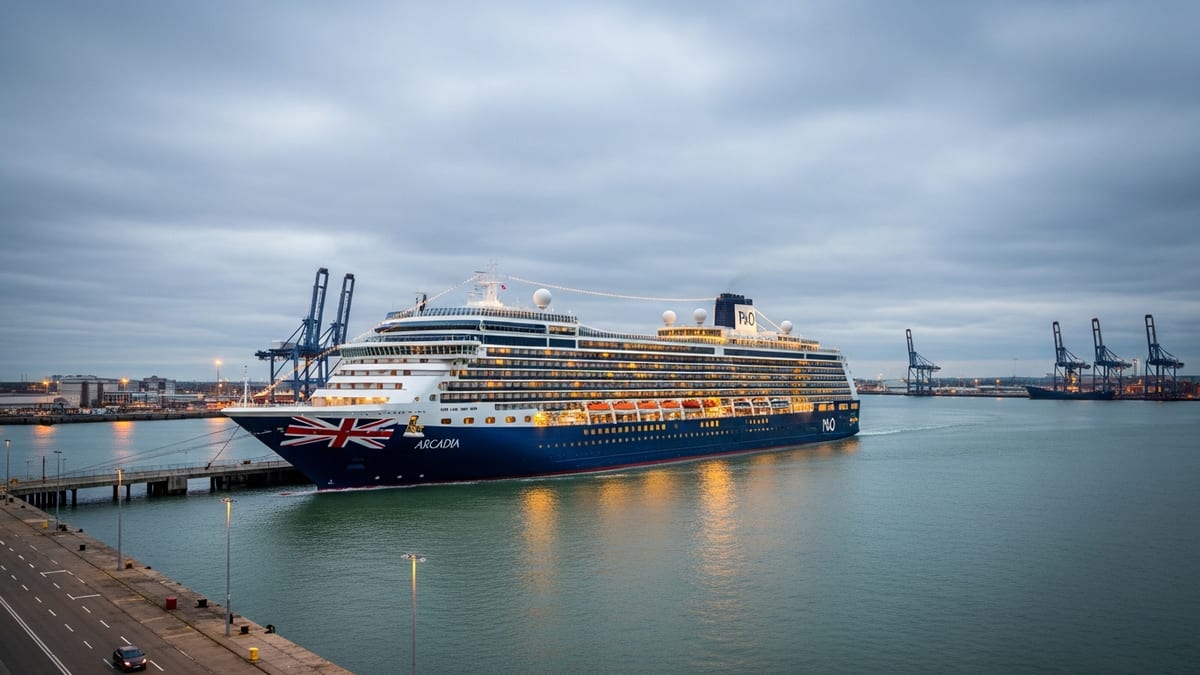
Residents told to leave ship in hours at Sihanoukville port
The residential vessel Villa Vie Odyssey has been docked this week in Sihanoukville, the main deep-sea port in southwestern Cambodia, where passengers were informed they had just hours to pack and disembark with all their belongings. Reports from Cambodian provincial officials and international media indicate that 203 guests and 156 crew arrived from Thailand on October 23, with the ship originally scheduled to continue to ports in Vietnam before the itinerary was cancelled.
Passengers describe receiving notice that they had roughly seven hours to vacate their cabins during the unplanned halt. Many had structured their lives around the multi-year voyage, selling homes and possessions to fund cabins marketed as long-term or even lifetime residences at sea. The sudden change left retirees, digital nomads and other residents searching for hotels and flights from a city that is not a major long-haul hub.
Some guests have already flown out of Cambodia, according to local statements cited in regional coverage, while others remain in Sihanoukville weighing options and costs. The Odyssey itself is expected to refuel and depart the Cambodian port in the coming days, but without its long-term residents on board.
Business model strained by fuel shock and lower-than-planned occupancy
Villa Vie Residences launched the Odyssey as a 200-metre residential cruise ship offering an “endless” itinerary around the world. Public descriptions of the program highlighted cabins that could be bought or rented for extended stays, with entry-level units reported at about 85,000 US dollars, and a schedule that began from Northern Ireland in October 2024 on a planned multi-year loop.
According to published statements from the company quoted in outlets including Channel NewsAsia, ABC News and Agence France-Presse, Villa Vie blamed what it called extraordinary increases in marine fuel costs in Asia following recent geopolitical tensions for making the model unsustainable. The operator indicated that per-cabin fuel charges, previously averaging around 1,800 US dollars per month, had risen to an estimated 6,000 to 8,000 dollars in the region, a jump it said could not reasonably be passed on to residents.
Coverage drawing on passenger blogs and earlier promotional material also points to structural pressures on the business. The ship reportedly never reached its advertised capacity of about 650 residents, with numbers peaking closer to 350, limiting revenue while fixed costs remained high. Passengers writing publicly about the experience have described launch delays, route changes and additional cash calls in recent months as the company sought to cover operating shortfalls.
Analysts following the nascent residential cruise segment have previously noted that these ships face airline-style exposure to volatile fuel markets without the scale or route flexibility of major cruise brands. Villa Vie’s suspension of the Odyssey in Cambodia highlights how quickly a spike in bunker fuel prices can unwind a model that depends on predictable monthly fees from a relatively small community of residents.
Stranded passengers navigate housing, refunds and onward travel
For residents suddenly discharged in Sihanoukville, the immediate challenge has been practical rather than legal: finding short-term accommodation and transport in a port city that most had not planned to use as a base. Passenger accounts shared with broadcasters and newspapers say some guests were taken by bus into the city and left to locate hotels on their own, while others turned to online forums and private social media groups to coordinate rooms and share information on flight options.
Villa Vie’s public statement, as reported by multiple outlets, said the company was working with residents to coordinate disembarkation and identify temporary living arrangements. However, coverage based on passenger testimony indicates that support on the ground has varied, with some residents paying out of pocket for hotels and last-minute airfares back to Europe, North America and Australia.
Questions over financial restitution are also emerging. Many passengers entered multi-year agreements, paid significant upfront sums or sold property to fund life at sea, and now face uncertainty over refunds or credits. At the time of writing, publicly available coverage does not detail a formal compensation plan or restructuring process beyond the suspension announcement, leaving residents to review contracts and, in some cases, seek legal or consumer advice in their home jurisdictions.
Travel industry commentators note that complex jurisdictional issues often arise when a ship is registered in one country, managed by a company in another and carrying residents from multiple nations. In such situations, resolving disputes over unused portions of long-term travel contracts can take months or longer, particularly if the operator is financially distressed.
Residential cruising concept under fresh scrutiny
The Odyssey episode is the latest test for the young but high-profile residential cruising niche, which promises an alternative to traditional retirement communities and long-stay rentals on land. Operators in this space market an itinerant lifestyle where residents unpack once and wake up in new destinations every few days, with medical facilities, co-working spaces and leisure amenities built into the ship.
Supporters argue that, when executed at scale, the model can combine elements of condominiums, timeshares and conventional cruises, spreading costs while allowing residents to budget for predictable monthly fees. The experience of Villa Vie’s passengers in Cambodia, however, illustrates how exposed residents can be when a single operator controls both housing and transport and then suspends operations in a foreign port.
Travel experts quoted in regional analysis suggest that future residential cruise projects may face closer scrutiny from potential buyers, including demands for clearer disclosures on fuel hedging, contingency reserves and minimum occupancy thresholds. Prospective residents may also seek independent legal review of contracts, paying particular attention to clauses covering itinerary changes, early termination of voyages and the operator’s obligations if a ship is taken out of service mid-journey.
For mainstream cruise lines that have experimented with extended “world cruise” segments, the situation serves as a reminder of reputational risks when guests are left far from home with little notice. While the Odyssey is a comparatively small ship, images of passengers walking down the gangway in Sihanoukville with luggage in hand have circulated widely on international news channels and social media, reinforcing questions about the resilience of life-at-sea retirement schemes.
What travelers can learn when booking long-duration voyages
For travelers considering long-duration cruises or residence-style programs, consumer advocates highlight a number of lessons from the Cambodia case. One is the importance of understanding how much of the fare is protected through escrow, trust accounts or government-backed schemes, and how much depends on the continuing solvency of the operator. Public information on the Villa Vie situation so far suggests that passengers hold contracts with the company rather than with a third-party financial guarantor.
Another consideration is flexibility in exit options. Some residential cruise schemes allow residents to resell their cabins or terminate agreements with defined notice periods and published buyback formulas, while others impose stricter conditions. Without transparent secondary markets or clear exit paths, residents may face difficulty recovering value if they wish to leave early or if operations are disrupted.
Travel insurers are also likely to revisit policy language after high-profile disruptions of this kind. Standard cruise policies often focus on trip interruption and medical coverage, and may not fully address multi-year residential arrangements. Travelers committing substantial savings to long-term life at sea may need specialized policies, and should confirm in writing whether insolvency, extraordinary fuel surcharges or forced disembarkation in a third country are covered events.
For now, the Odyssey’s former residents are scattered between Cambodian hotels, onward flights and new plans, as the ship prepares to sail without them. Their experience in Sihanoukville has turned a niche retirement fantasy into a cautionary tale that is likely to influence how both operators and travelers approach the promise of a cruise for life.