


More news on this day
A new update to United Kingdom travel advice for parts of the Gulf region is intensifying debate around Formula One’s Middle Eastern races, raising fresh questions for UK fans planning trips to Bahrain, Saudi Arabia and Qatar during the 2026 season.
Get the latest news straight to your inbox!
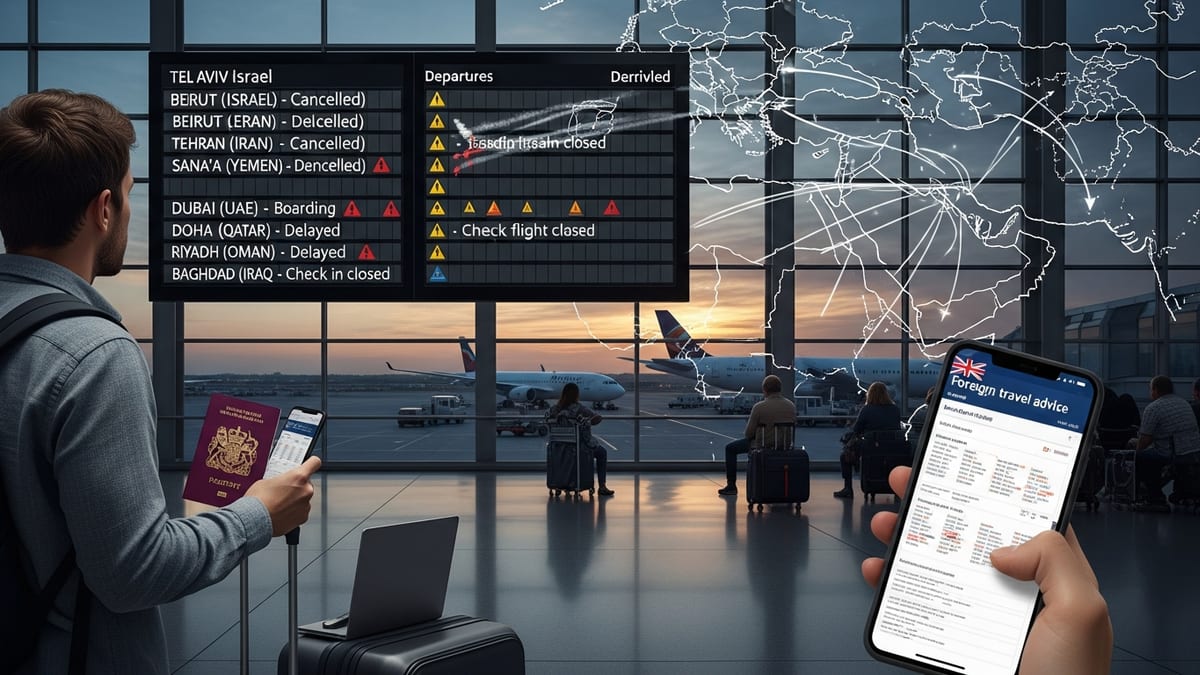
Updated UK Guidance Highlights Safety and Rights Concerns
Recent revisions to the UK Foreign, Commonwealth & Development Office (FCDO) guidance for several Gulf states have refocused attention on security risks, regional tensions and human rights records at a time when Formula One is deepening its footprint in the Middle East. Publicly available FCDO advice has continued to flag the potential for missile or drone attacks linked to wider regional conflict, as well as the possibility of unrest or disruption near strategically sensitive sites.
Although the wording varies by country, the guidance continues to urge travellers to keep abreast of local developments, follow official announcements and maintain a high level of awareness in crowded places and around key infrastructure. For motorsport followers, that covers international airports, fan zones and large sporting venues that host Grand Prix events, as well as urban coastal areas such as Jeddah’s Corniche and Doha’s Lusail corridor.
At the same time, rights organisations and campaign groups have kept up pressure on host governments over issues including restrictions on free expression, the treatment of migrant workers and the use of security laws. Their reports, widely covered in international media, are increasingly referenced alongside official travel advice by UK travellers weighing whether to attend high-profile races in the region.
Formula One’s Expanding Gulf Footprint
The Gulf region has become central to Formula One’s long-term strategy. The 2026 calendar, confirmed by Formula One and the sport’s governing body, places Bahrain, Saudi Arabia and Qatar as key fixtures in a 24-race season that stretches from March to December. According to the latest published schedule, the Gulf Air Bahrain Grand Prix is associated with an October race at Sepang in Malaysia for 2026, after earlier plans for an April slot at Sakhir were disrupted by regional instability. Separate coverage of the official calendar shows Qatar’s round at Lusail International Circuit set for the weekend of 27 to 29 November 2026.
Saudi Arabia’s Jeddah Corniche Circuit, originally pencilled in for an April 2026 Grand Prix soon after Bahrain, has been at the centre of the calendar reshuffle. Publicly accessible summaries of decisions by Formula One and the Fédération Internationale de l’Automobile indicate that the event was cancelled in response to heightened security concerns following an escalation of conflict involving Iran. Motorsport media and legal analysis note that the Bahrain race was moved to Malaysia, while Saudi Arabia’s round was dropped entirely from the 2026 season.
Qatar remains scheduled near the end of the campaign as part of a Middle Eastern double-header with Abu Dhabi. Travel companies and hospitality providers are already marketing weekend packages built around the Lusail race, with some explicitly advising UK guests to monitor any changes to Foreign Office guidance as the date approaches, given the fluid regional situation.
Human Rights Record Deepens Fan and Sponsor Debate
Beyond immediate security questions, the updated UK advice is feeding into a broader conversation among fans, civil society groups and sponsors about the ethics of staging marquee sporting events in countries facing sustained human rights criticism. International watchdogs have for several years documented concerns over labour conditions linked to major construction projects, criminalisation of some forms of protest and limits on media and online expression in parts of the Gulf.
Coverage in European and Middle Eastern outlets shows that rights advocates have used the growing prominence of F1 in Bahrain, Saudi Arabia and Qatar to highlight individual cases and broader legislative frameworks. They argue that global competitions risk providing reputational benefits to host governments unless stronger human rights safeguards are incorporated into race contracts and event planning. These arguments have resurfaced as the 2026 calendar evolves and as the UK reiterates that travellers should be aware of local laws, including those that differ markedly from UK norms on public behaviour and speech.
Within the sport, teams and commercial partners are publicly presenting their involvement in Gulf races as part of a global series that must adapt to a variety of legal and cultural environments. Published corporate social responsibility reports increasingly reference due-diligence processes for high-risk markets, although campaigners contend that disclosures on how those processes apply specifically to Gulf races remain limited.
Practical Implications for UK Fans Planning Gulf Race Trips
For UK-based travellers, the intersection of heightened regional tensions, evolving FCDO advice and shifting race dates means more planning and vigilance than in previous seasons. The latest calendar information shows that while the Bahrain-branded race associated with 2026 will now run at Malaysia’s Sepang International Circuit in early October, many travel agencies continue to promote Bahrain’s dedicated motorsport facilities for future seasons. Meanwhile, the confirmed Qatar Grand Prix from 27 to 29 November 2026 at Lusail and the traditional season finale in Abu Dhabi on 4 to 6 December are shaping up as the primary Gulf options for those intent on combining winter sun with top-level racing.
Consumer travel coverage recommends that fans booking trips to Qatar or the United Arab Emirates build flexibility into flights and accommodation wherever possible, opting for refundable rates or comprehensive travel insurance that covers changes arising from security developments. Industry analysts point out that the sudden cancellation of the Saudi Arabian Grand Prix for 2026 and the relocation of Bahrain’s race show how quickly major events can be reshaped when political and security calculations change.
In addition to security and scheduling, visitors are encouraged by publicly available guidance to take careful note of local laws in each destination. This includes strict rules on public conduct, social media use, alcohol consumption and behaviour that may be considered offensive or provocative. Travel experts highlight that penalties can be significantly more severe than in the UK, underscoring the importance of consulting the latest official advice shortly before departure.
Growing Calls for Clearer Standards in High-Risk Destinations
The combination of UK travel warnings, calendar disruption and sustained rights criticism is intensifying calls for clearer standards governing how and where major sports expand. Commentators in international media and specialist sports law publications suggest that Formula One’s experiences in the Gulf are becoming a test case for future decisions about events in regions facing conflict or systemic human rights concerns.
Some policy analysts argue that governments issuing travel advice and sports bodies awarding hosting rights currently operate on parallel tracks, with limited coordination beyond baseline security assessments. They note that UK travellers can encounter situations where a race proceeds as scheduled while official guidance simultaneously urges heightened caution or avoidance of specific border regions and critical infrastructure.
The evolving 2026 season underlines how quickly factors affecting fan safety and comfort can shift. For now, UK travellers contemplating Gulf races are being encouraged by publicly available information to check both the latest FCDO advisories and the most recent calendar updates from Formula One before committing to expensive, long-haul trips. As the sport continues to pursue new markets, the tension between commercial ambitions and travel-risk signals from governments is likely to remain a central concern for fans and organisers alike.