


More news on this day
A residential world cruise marketed as an “endless” voyage has come to an abrupt stop in Cambodia, leaving more than 200 long-term residents scrambling for housing and flights home after soaring fuel costs forced the Villa Vie Odyssey to suspend operations.
Get the latest news straight to your inbox!
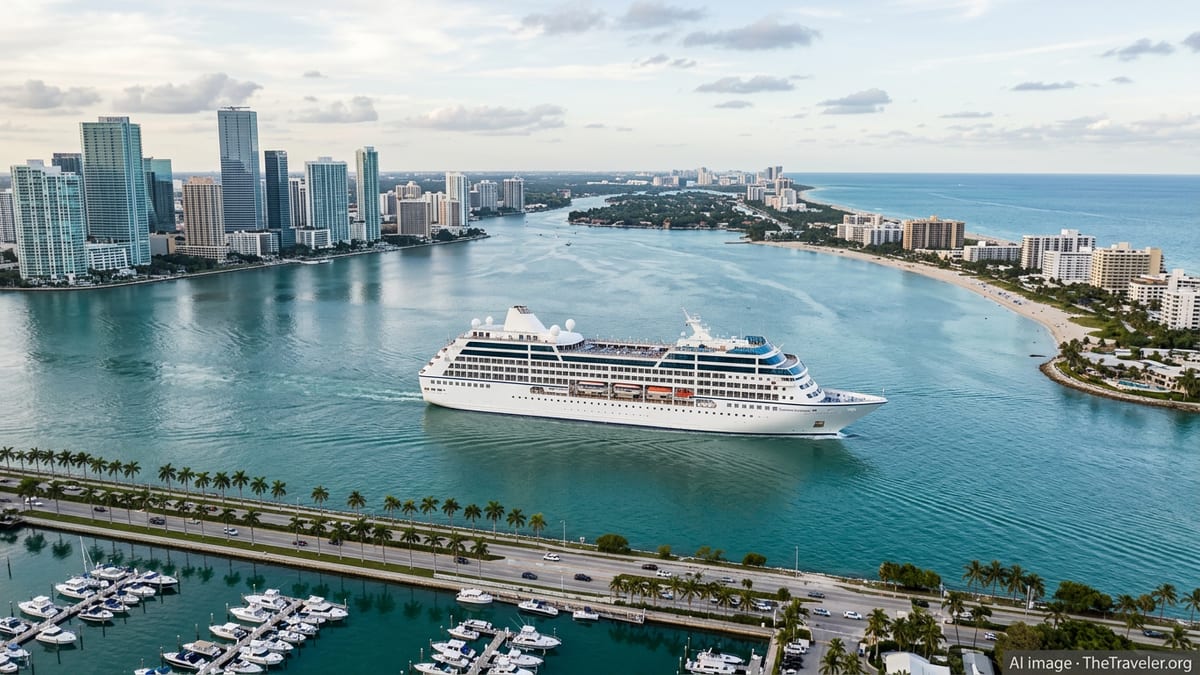
Residential ship’s three-year voyage cut short in Sihanoukville
The Villa Vie Odyssey, operated by Florida based company Villa Vie Residences, had been sailing a continuous world itinerary since 2024, offering buyers the chance to live at sea by purchasing full ownership or long leases on cabins. According to published coverage in outlets including Reuters, Associated Press and The Guardian, the ship entered Cambodian waters in late October and docked at Sihanoukville, on the Gulf of Thailand, where its journey effectively ended.
Residents were informed this week that the company was suspending the cruise after what it described in public statements as “extraordinary increases” in fuel costs, linked to the wider oil price surge following the Iran conflict. Reports indicate that passengers received an early morning notice on October 27 giving them only hours to prepare to disembark in Sihanoukville.
Local and regional media describe scenes of confusion as residents, many of whom had sold homes or given up long term rentals to move aboard the ship, tried to arrange last minute hotel stays and international flights from Cambodia. With the Odyssey now in lay up at Sihanoukville port and no firm date for future sailings, the vessel’s much promoted “endless world cruise” has effectively been terminated.
Fuel costs jump from under $2,000 to as high as $8,000 per cabin
Publicly available information from Villa Vie Residences and coverage in international media outline the scale of the fuel cost surge that ultimately forced the shutdown. In earlier planning documents and marketing material, the company based its business model on monthly fuel allocations per cabin of around $1,800. By October 2026, reports citing the operator indicate that figure had climbed to between $6,000 and $8,000 per cabin in certain Asian waters.
The escalation reflects the broader rise in marine fuel prices across Asia this year, as shipping, aviation and logistics companies all contend with higher oil costs and regional supply disruptions. Trade and travel publications have noted that residential ships are particularly exposed because they follow long, slow world itineraries that leave little flexibility to re route away from high cost regions or shorten voyages to save fuel.
In messages shared with residents and later reported by travel media, Villa Vie Residences linked its financial distress directly to these operating expenses. The company had already introduced additional fuel surcharges earlier in the year, but those increases were not enough to cover the gap between rising bunker prices and the fixed payments many residents had locked in when they bought their units.
Residents face sudden housing, visa and travel challenges
The decision to halt the cruise in Cambodia has left residents dealing with a complex set of practical and legal issues. Cambodia offers visa on arrival or e visa options to many nationalities, but passengers disembarking in Sihanoukville at short notice must still secure the correct status and decide whether to remain in the coastal city, travel overland to Phnom Penh, or depart quickly on international flights.
Reports in global and regional outlets describe passengers hastily booking hotels in Sihanoukville and Phnom Penh and trying to coordinate onward travel, often while separated from some of their belongings that were still being processed from the ship. Some residents were reportedly off the vessel on excursions when the suspension notice was issued and had to return to a ship that was already winding down operations.
For many, the financial impact may be as significant as the immediate disruption. Residential cruise customers typically pay substantial upfront sums for cabins, then commit to monthly fees covering operations, food and services. According to travel industry analysis, some Villa Vie Odyssey residents had invested the bulk of their retirement savings into the project, expecting years of continuous travel that have now ended after just over two years at sea.
The sudden closure also raises questions about travel insurance coverage. Standard cruise policies are not generally designed for open ended residential arrangements, and early commentary from insurance specialists quoted in travel media suggests that many residents may find they have limited protection for lost future travel or depreciation of their cabin investments.
Operator pursues restructuring as industry watches closely
Villa Vie Residences has indicated, through statements cited by major news organizations, that it is seeking restructuring and recapitalization options over the next 60 days. The company has not announced any concrete plan to resume sailings of the Odyssey, and industry analysts note that placing a large ship into extended lay up in Cambodia suggests a prolonged pause rather than a brief operational interruption.
The situation is being closely watched by the wider cruise and hospitality sectors because the Villa Vie Odyssey was positioned as one of the more accessible entries into the residential cruise niche. That model, which turns cabins into long term homes rather than short stay vacation suites, has attracted increased interest in recent years as remote work and flexible retirement lifestyles become more common.
By contrast, the best known residential ship, MS The World, has operated for more than two decades with a small number of ultra high net worth owners, giving it a financial cushion that analysts say helps absorb operating shocks such as fuel spikes. The difficulties at Villa Vie highlight the challenge of adapting the concept to a broader, less wealthy customer base that is more sensitive to sudden cost increases and less able to absorb unexpected assessments.
Specialist cruise publications suggest that lenders and prospective investors in other planned residential ships are likely to scrutinize fuel assumptions and contingency planning more aggressively in the wake of the Odyssey’s troubles. Developers behind similar projects may now face tougher questions about hedging strategies, emergency reserve funds and clear protocols for supporting residents if voyages are interrupted far from their home countries.
Broader questions for travelers considering life at sea
The end of the Villa Vie Odyssey’s voyage in Cambodia is prompting a wider discussion about risk for travelers considering long duration or residential style cruises. Commentators across travel media note that while living at sea can offer a sense of community and predictable costs when things go to plan, it also concentrates housing, transport and leisure expenses into a single provider. If that provider encounters financial difficulty, residents can suddenly lose not only a vacation, but what had effectively become their primary home.
For those now stranded in Sihanoukville, the coming weeks will involve practical decisions about where to live next, whether to pursue legal remedies for lost value, and how quickly they can re establish life on land. Cambodia’s coastal city, more often a short stop on Southeast Asia itineraries, has unexpectedly become a temporary hub for a global community of displaced seafarers comparing options and sharing information.
Travel analysts say the episode is likely to have a lasting impact on how residential cruises are marketed and regulated. Prospective residents may look more closely at corporate balance sheets, fuel hedging policies, and contingency guarantees before committing their life savings to an at sea lifestyle. At the same time, regulators and consumer advocates in major source markets such as the United States and Europe may revisit how existing cruise and package travel protections apply when a ship is not just a holiday but also a long term home.