


More news on this day
Hundreds of cruise passengers left “stranded” after a serious air conditioning failure cut short their voyage are being flown home, as the ship’s operator races to repair the vessel and contain mounting criticism over the disruption.
Get the latest news straight to your inbox!
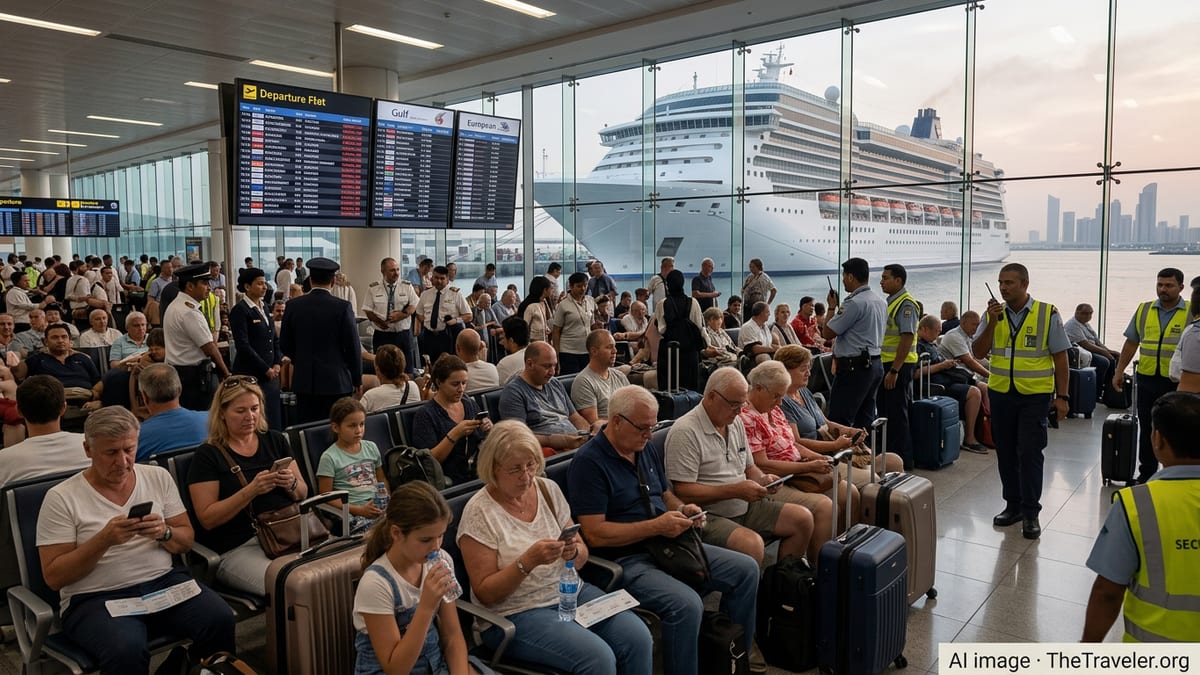
Voyage cut short after air conditioning breakdown
The incident unfolded when a large ocean-going cruise ship suffered a widespread air conditioning failure partway through an itinerary in warm-weather waters, according to recent travel industry coverage. With cabins and interior spaces rapidly heating up, normal operations were disrupted and onboard comfort deteriorated for guests and crew.
Reports indicate that engineers initially attempted repairs at sea, but the issue proved more complex than first anticipated. As temperatures inside parts of the ship climbed and refrigeration-dependent services were affected, the line opted to abandon the original schedule rather than continue sailing under compromised conditions.
The cruise, which had been marketed as a multi-day holiday featuring a mix of port calls and sea days, instead turned into an unscheduled lay-up. Passengers described being stuck onboard with limited cooling in some areas and uncertain information about how and when they would be able to return home.
Travel reports describe the situation as leaving guests effectively “stranded” once it became clear the vessel would not be completing its scheduled route or returning promptly to its original turnaround port.
Repatriation plan shifts from sea to air
With the itinerary abandoned, attention turned to getting passengers home. Publicly available information from the cruise sector indicates that the line began organizing a large-scale airlift, combining charter services and rebooked commercial flights from nearby hubs.
According to recent cruise-industry reporting, guests were gradually disembarked to shore accommodation while flights were arranged in waves over several days. Priority was reportedly given to those with tight onward connections, medical needs or long-haul journeys, with others told to expect staggered departures as aircraft seats became available.
Similar repatriation efforts have occurred in previous cruise disruptions involving mechanical or power failures, where operators chartered aircraft and worked with partner airlines to move thousands of people home once a voyage was cut short. In those cases, guests were transported to regional airports and then distributed onward via connecting flights, a pattern that appears to be echoed in the latest air conditioning failure incident.
The current operation is expected to continue until the last group of affected holidaymakers has been flown back to their home countries or connecting gateways, after which the ship will move to a repair facility with only a skeleton crew on board.
Passengers report discomfort and communication gaps
Accounts shared in travel coverage and on social media describe uncomfortable conditions after the cooling systems went down, particularly for passengers in interior cabins and upper-deck spaces exposed to strong sun. Some travelers reported seeking refuge in public areas that still had partial ventilation while others queued for assistance at guest services desks.
Beyond the physical discomfort, several passengers have raised concerns about communication, saying updates on the technical problem and onward travel plans were at times sporadic or confusing. In previous high-profile cruise disruptions, similar criticism has often centered on the clarity and frequency of information rather than on the safety response itself.
Consumer advocates note that, even when safety is not directly at risk, the combination of heat, uncertainty and changing schedules can create significant stress for guests, particularly older travelers or families with young children. Clear timetables for disembarkation and flights, along with practical support at airports and hotels, are seen as crucial elements of any large-scale repatriation effort.
Some passengers have also questioned how long the vessel operated with reduced cooling before the decision was taken to cancel the remainder of the cruise, a point likely to receive further scrutiny as more technical details emerge.
Financial impact and compensation questions
The air conditioning breakdown and subsequent repatriation are expected to carry a significant financial cost for the cruise operator. Industry analyses of previous mechanical failures indicate that arranging charter flights, hotel stays, port fees and emergency repairs can run into millions of dollars, on top of revenue lost from canceled sailings.
Passengers are closely watching for details on refunds and compensation. In broadly similar cases involving propulsion or power problems, operators have typically offered pro-rated fare refunds, future cruise credits or a combination of both, along with covering reasonable transport and accommodation costs linked to the disruption. The exact package can vary depending on the duration of the interrupted voyage and the consumer protection rules that apply in the relevant jurisdiction.
Travel insurers are also likely to play a role, particularly for guests whose onward plans were complicated by missed flights, tours or hotel bookings. Policy wording often distinguishes between supplier failure, itinerary changes and force majeure, meaning individual outcomes can differ widely even among passengers on the same ship.
Analysts suggest the episode may also influence future pricing, as the line factors in the cost of repairs and potential reputational effects, especially if upcoming itineraries need to be adjusted while the vessel is out of service.
Spotlight on ship maintenance and contingency planning
Although full technical findings have not yet been published, the incident has added to ongoing debate about onboard maintenance standards and contingency planning in the modern cruise industry. Past cases documented in operational incident reports highlight that failures in power, ventilation and other core systems, while rare in the context of total cruise volumes, can cause severe disruption when they occur.
Cruise operators generally stress that ships are designed with multiple layers of redundancy and that technical problems are usually resolved without impacting safety. However, experts quoted in prior industry studies have argued that heat-related comfort issues, even when not life-threatening, deserve greater attention as vessels continue to operate in hotter climates and at higher occupancy levels.
The latest disruption is likely to prompt questions about how air conditioning and associated electrical systems are monitored, particularly in regions where outside temperatures remain high throughout the day and night. It may also feed into regulatory and classification-society discussions about inspection regimes and reporting requirements when passenger comfort systems are severely degraded.
For travelers, the incident serves as another reminder that even highly choreographed cruise itineraries can be derailed by technical faults. As repatriation flights continue to take passengers home, attention is turning to how the ship’s operator will rebuild trust, address any shortcomings identified in post-incident reviews and reassure future guests that the vessel will return to service with its essential systems fully restored.