


More news on this day
Rail crews have cleared derailed freight cars from a key corridor near Bensalem’s Neshaminy Falls station in Bucks County, restoring rail operations even as a multiagency investigation into Tuesday’s crash continues.
Get the latest news straight to your inbox!
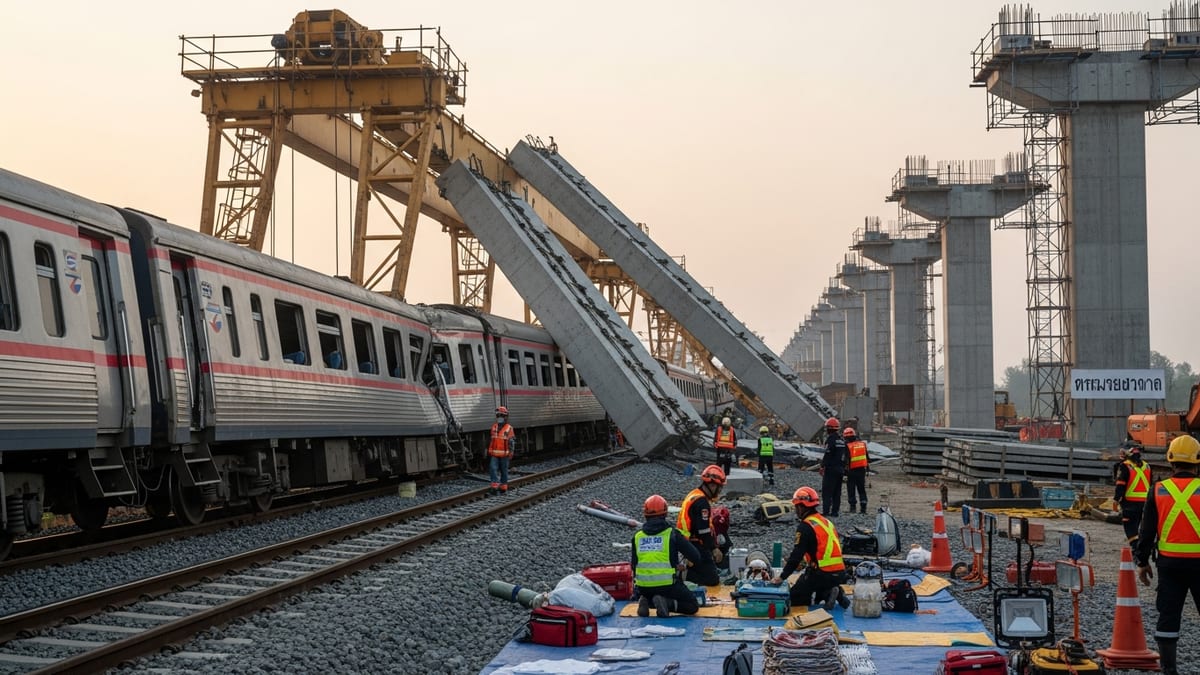
Cleanup Advances After Bucks County Freight Derailment
Publicly available information shows that work crews spent much of Tuesday night and Wednesday morning lifting overturned railcars and stabilizing track infrastructure after a CSX freight train derailed in Bensalem Township on June 30. Thirteen cars near the rear of the eastbound train left the tracks between Bristol Road and Street Road, a stretch of line that parallels residential neighborhoods and the Neshaminy Creek.
Local and regional news coverage indicates that heavy equipment was brought in to right several cars that had tipped on their sides and to remove damaged rolling stock from the right of way. By early Wednesday, the majority of visibly derailed cars had been separated and cleared from the main track area, allowing rail personnel to focus on assessing ties, ballast and signaling equipment.
Reports from the scene describe a complex cleanup operation, with cranes, loaders and work trains converging on the narrow corridor between the Neshaminy Falls commuter stop and nearby streets. While the full cost and timetable for permanent repairs have not been detailed, transportation bulletins suggest that the priority has been to reopen the freight route safely while keeping nearby passenger services operating with minimal disruption.
No Hazardous Leaks Reported After Initial Fears
Early alerts on Tuesday urged residents in parts of Bensalem to shelter in place because the freight consist included cars labeled for potentially hazardous commodities. According to published coverage, hazmat specialists, firefighters and emergency medical crews staged along the corridor as they evaluated whether any tank or hopper cars had been breached.
Follow up reports on Wednesday indicate that inspections did not find any release of hazardous materials from the derailed segment of the train. Air monitoring and visual checks around the damaged cars were cited in news accounts as factors behind decisions to lift the shelter in place guidance and reopen nearby roads, including Bristol Road, once the scene was stabilized.
The lack of confirmed leaks contrasts with recent high profile freight derailments elsewhere in the United States that involved chemical releases and long term environmental remediation. Commentators in regional outlets note that, although the Bensalem crash caused visible damage and rail disruption, current evidence points to a largely contained incident from an environmental and public health standpoint.
Investigators Focus on Track, Equipment and Train Makeup
The cause of the Bucks County derailment remains under review. Public information from police statements and rail company updates indicates that the CSX train was hauling roughly 70 or more cars when the trailing section left the rails, sending more than a dozen cars off line while the head end remained upright.
Transportation analysts quoted in recent coverage suggest that investigators are likely examining multiple factors, including the condition of the track structure, the performance of wheels and axles on the derailed cars, train handling, and the distribution of weight along the consist. Similar probes by the National Transportation Safety Board in other freight derailments have previously linked crashes to broken rails, defects in undercarriage components and issues with track bed drainage, among other causes.
Rail safety advocates point out that the Bensalem line carries both freight and passenger traffic, increasing interest in how the infrastructure performed when the cars left the tracks. While no injuries have been reported in connection with this incident, the location near homes, businesses and a commuter station has amplified attention on the findings that will emerge from the technical investigation.
Travel Disruptions and Detours for Rail and Road Users
For travelers and commuters, the derailment created immediate ripple effects across lower Bucks County. According to regional traffic reports, Bristol Road was closed between Old Lincoln Highway and Spruce Avenue for several hours on Tuesday and into the evening while cranes and heavy trucks maneuvered around the site. Drivers heading between Bensalem, Trevose and nearby I 95 were redirected to alternate corridors, adding congestion on parallel routes.
Rail travel impacts have been more nuanced. The derailed train was operating on CSX freight tracks adjacent to the Neshaminy Falls station, part of a corridor that also hosts passenger services. Published service alerts indicate that passenger trains continued to run, though some schedules were adjusted and riders reported slower speeds as trains passed work zones and equipment staged near the right of way.
Travel industry observers note that the Bensalem derailment underscores how freight incidents can quickly affect regional mobility even without a major hazardous release. Road closures around rail crossings, detours for buses and shuttles, and temporary changes to commuter rail operations can all ripple into longer travel times for residents, visitors and workers moving through the Philadelphia suburbs.
Renewed Attention on Freight Safety in Urban Corridors
The Bensalem crash arrives amid a broader national conversation about freight rail safety and the movement of hazardous materials through densely populated areas. Recent federal reports have highlighted a long term downward trend in overall train accident rates, yet high impact derailments near communities continue to generate calls for upgrades to track maintenance, tank car standards and emergency preparedness.
Regional commentators are drawing connections between the Bucks County derailment and other incidents that, while different in scale, share common themes around infrastructure aging and the challenges of mixing heavy freight traffic with busy passenger corridors. In Bensalem, the sight of multiple freight cars strewn beside a commuter stop has renewed public interest in how routes are inspected and how quickly potential defects are addressed.
Advocacy groups and transportation policy specialists cited in news coverage argue that this episode may add momentum to efforts to harden rail corridors that pass close to homes, schools and shopping districts. For travelers using rail to reach and move within the Philadelphia region, the incident serves as a reminder that the reliability of daily journeys is closely tied to the condition of the freight infrastructure that often runs just a few feet from passenger platforms.