

More news on this day
The long‑detained cruise ship Gemini has been formally seized in Greece after creditors pursued the vessel for unpaid debts, while reports indicate its remaining crew, who say they have gone months without wages, are preparing to leave the ship.
Get the latest news straight to your inbox!
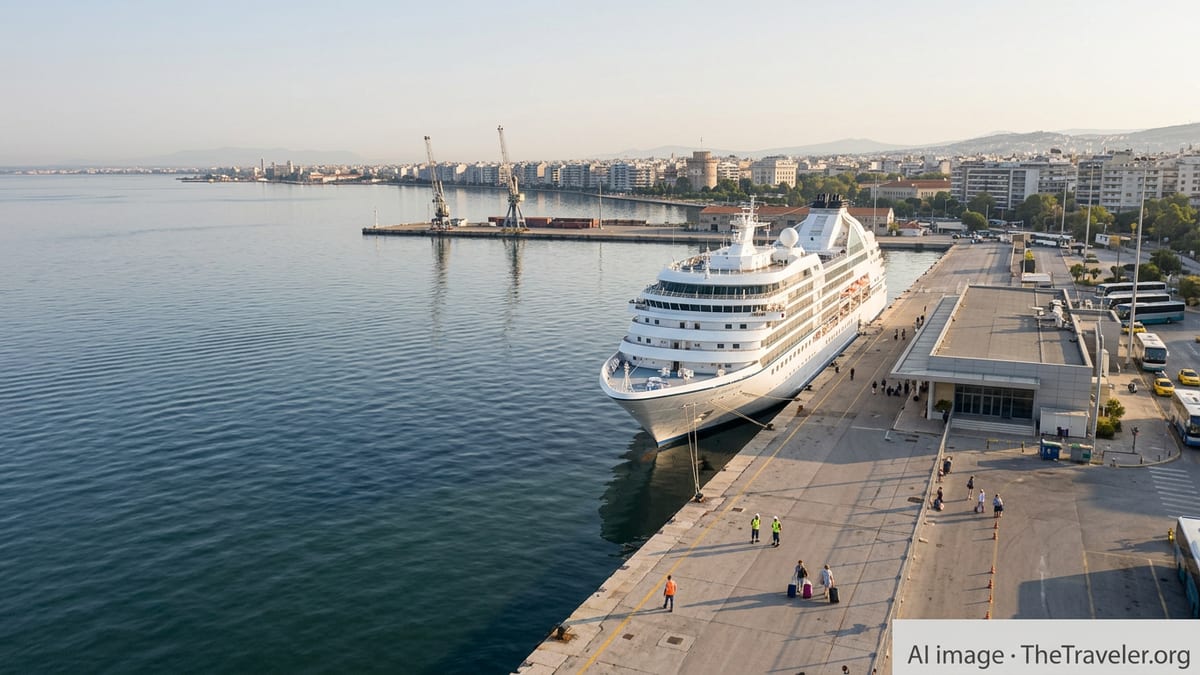
Detained Vessel at the Center of a Financial Dispute
The 1992-built cruise ship Gemini, operated in recent years by Turkish company Miray Cruises, has been under arrest in Greek waters for months following legal claims brought by creditors. Published coverage indicates that a Turkish bank, a protection and indemnity insurer and at least one service provider sought court-ordered security over alleged unpaid obligations, leading to the ship’s continued detention in Greece.
Reports describe the ship lying idle near the Greek port of Piraeus and around Salamis Island while legal proceedings unfolded. Gemini, once marketed for short Eastern Mediterranean and Black Sea itineraries, has instead become a symbol of mounting financial pressures on smaller cruise operators attempting to restart or expand operations after the pandemic-era downturn.
Industry analyses note that Miray Cruises had promoted new seasons and ambitious deployment plans for Gemini, including extended regional programs, even as the vessel’s status in Greece remained uncertain. The eventual seizure in favor of creditors, according to public information, marks a decisive step in a dispute that had already sidelined the ship from commercial service for an extended period.
The case illustrates how even relatively modest-sized cruise ships can be drawn into complex cross-border financial entanglements, involving lenders, insurers and maritime service firms that rely on court action in port states to secure outstanding claims.
Unpaid Wages and Stranded Maritime Workers
Parallel to the financial dispute over Gemini is a human story unfolding on board. According to reports from maritime-focused outlets and regional media, a reduced crew has remained on the ship under difficult conditions, with several members stating they have not received wages for months.
Accounts describe a skeleton complement of seafarers tasked with maintaining basic safety, machinery and hotel systems on a ship that is no longer sailing. Commentary from seafarer organizations and labor observers highlights Gemini as one more example in a broader pattern in which crews can become effectively trapped on arrested vessels while legal and commercial disputes play out around them.
Publicly available information on recent maritime labor campaigns shows that international unions and welfare groups have been documenting rising numbers of wage claims and abandonment cases in multiple regions. Gemini’s situation in Greece is being cited in that context, adding a high-profile cruise ship to a list more often dominated by cargo and offshore support vessels.
For the crew members still aboard Gemini, the long-running uncertainty has reportedly created growing frustration. With no clear timeline for either a sale or a resolution of the court proceedings, the workers have increasingly turned their attention to securing their own rights to leave the vessel and pursue claims for the pay they say is owed.
Crew Plans to Disembark as Seizure Solidifies
Recent coverage in Greek and international shipping media indicates that, following the ship’s formal seizure for creditor claims, many of the remaining crew are now preparing to disembark. Reports suggest that some crewmembers have already initiated repatriation arrangements, while others are weighing whether to stay on board to safeguard potential wage claims linked to the vessel’s eventual sale.
Maritime legal commentators note that, under widely recognized principles, claims for unpaid wages generally rank as high-priority maritime liens when a vessel is sold by order of a court. However, the practical process for seafarers to recover money can be lengthy and uncertain, especially when several creditors compete for limited sale proceeds. In Gemini’s case, observers say that the decision by crew to leave reflects both fatigue over deteriorating working conditions and hope that shore-based representation may now better protect their interests.
As the ship’s operational future grows more remote, the crew’s departure would also mark a symbolic turning point. An arrested passenger ship without an active complement on board underscores that Gemini has shifted fully from being a functioning cruise vessel to a distressed asset awaiting a legal and commercial outcome.
For the port communities around Piraeus and Salamis, the prospect of a mostly unmanned cruise ship sitting under arrest highlights the strain such cases can place on local infrastructure and services, even when passengers are no longer involved.
Broader Concerns Over Seafarer Welfare and Abandonment
The Gemini case is drawing attention within the maritime sector to ongoing concerns about seafarer welfare, particularly around unpaid wages, repatriation and so-called abandonment. International labor bodies have repeatedly reported millions of dollars in unpaid wages recovered each year on behalf of crews worldwide, signaling the scale of the issue.
Analysts point out that while bulk carriers and small cargo ships are traditionally overrepresented in abandonment statistics, high-profile passenger vessels like Gemini can focus public attention on the problem in a way that working ships rarely do. Images of a cruise ship immobilized in Greek waters, combined with reports of unpaid crew preparing to leave, resonate strongly with the traveling public and tourism-focused economies.
Observers also note that the situation raises questions about the effectiveness of existing regulatory systems, including flag-state oversight, port-state controls and financial guarantees that are intended to protect crew members from precisely these outcomes. As Gemini’s legal saga continues, advocates are calling for closer scrutiny of how operators demonstrate their ability to meet wage and welfare obligations before vessels are permitted to run extended commercial programs.
For Greece, a country whose economy and global image are closely tied to both shipping and tourism, the prolonged detention of a foreign-managed cruise ship with an unpaid crew adds urgency to ongoing discussions about how to prevent similar incidents and how to respond when they do occur.
Implications for Cruise Passengers and Eastern Mediterranean Tourism
While Gemini has not been operating regular cruises during its detention, its seizure still carries implications for the perception of cruising in the Eastern Mediterranean. Travelers who had followed earlier marketing of ambitious itineraries involving the ship may see the case as a cautionary example of the financial volatility that can affect smaller operators.
Tourism analysts say that established cruise brands with larger fleets and stronger balance sheets remain better positioned to navigate such disruptions, but they also acknowledge that destination-focused markets like Greece can be vulnerable when individual ships are suddenly removed from service. Reduced capacity, even on a single vessel, can affect local suppliers, tour operators and port revenues.
At the same time, industry commentary suggests that the Gemini dispute may prompt regulators and port authorities across the region to look more closely at the financial resilience and labor practices of companies seeking to homeport or base ships in their waters. Closer scrutiny of wage payment records, crew contracts and protection mechanisms could become a more routine part of port access and permitting discussions.
For would-be passengers, the story of Gemini serves as a reminder to pay attention not only to itineraries and onboard amenities, but also to the business stability and labor track record of cruise operators. As the ship remains under arrest in Greece and its unpaid crew moves toward disembarkation, the longer-term impact of this case is likely to be felt in how regulators, investors and travelers evaluate risk across the regional cruise market.