


More news on this day
Britain’s decision to ease its travel warning for the United Arab Emirates is being read across the Gulf as a vote of confidence in the country’s stability, with analysts pointing to fresh momentum for Dubai’s core UK visitor market, hotel performance and airline capacity planning.
Get the latest news straight to your inbox!
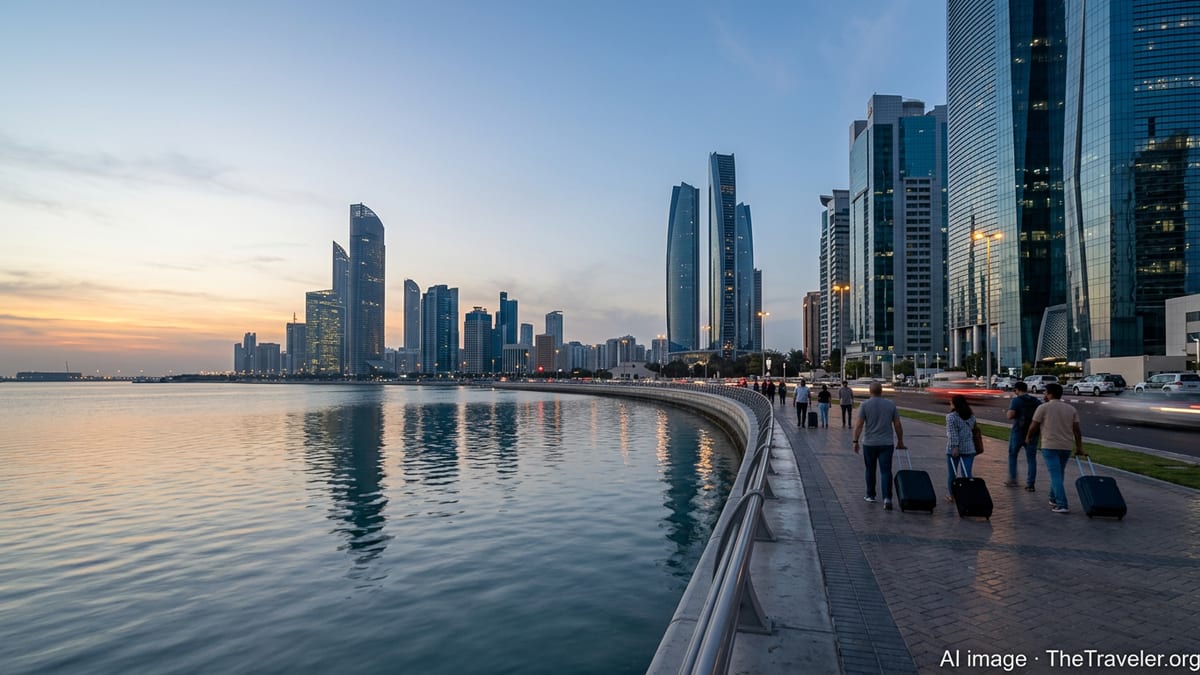
Travel Advisory Move Reframes Risk Perception
The adjustment in the UK Foreign, Commonwealth & Development Office’s stance on travel to the United Arab Emirates follows a turbulent period in which British guidance had advised against all but essential journeys, weighing heavily on tour operators and travel insurance coverage. The removal of that broad restriction effectively normalises leisure travel once more, even as the advisory continues to highlight underlying regional security risks.
Publicly available UK government information shows that the FCDO continues to flag a threat of terrorism and regional instability, but the overall message has shifted away from blanket deterrence and toward informed, risk-aware travel. Industry observers say that nuance matters for both consumer sentiment and corporate decision-making, especially in a market where British travellers are among the most valuable long-haul segments.
Specialist travel risk consultancies note that foreign office advisories play an outsized role in shaping airline scheduling, insurance terms and tour operator programming. A step down from an effectively prohibitive posture toward a more permissive, cautionary tone typically unlocks pent-up demand from travellers who had been hesitant to proceed without clear governmental reassurance.
For the UAE, and Dubai in particular, the change helps counterbalance headlines about wider regional tensions by underscoring that key source markets are once again prepared to endorse mainstream tourism to the country, even while maintaining strong wording on personal security awareness.
Dubai Counts on Resilient British Demand
Dubai’s tourism authorities have long identified the United Kingdom as one of the emirate’s most important feeder markets, consistently ranking near the top in annual visitor tables. Visitor data released by Dubai’s Department of Economy and Tourism in recent years shows robust British arrival numbers, supported by dense air connectivity and a strong preference for winter sun, city breaks and stopover stays among UK travellers.
Market reports indicate that UK bookings softened during the period when travel from Britain to the UAE was discouraged, as travellers re-routed winter holidays to Mediterranean and Canary Island destinations with lower advisory levels. With the UK now easing its stance, tour operators and online travel agencies are reporting renewed interest in Dubai city stays, family resort breaks and cruise add-ons departing from the emirate’s ports.
Travel agents active in the Gulf and European markets say the UK decision provides a clearer framework for customers who had been unsure whether standard insurance would remain valid for leisure trips. Once foreign office wording shifts away from discouraging travel, mainstream underwriters are more inclined to treat the destination under their normal risk models, which in turn supports the sale of higher-value long-haul packages.
For Dubai hoteliers and attraction operators, British visitors are particularly prized for their length of stay and spending patterns, including strong demand for premium beach properties, dining and retail. The easing of the travel warning is therefore being welcomed as a critical factor in sustaining the emirate’s efforts to keep visitor numbers on a record-setting trajectory.
Hotel Occupancy and Rate Growth Find New Support
Industry data compiled by consultancies and tourism authorities shows that Dubai’s hotels entered 2026 from a position of strength, posting among the highest occupancy rates globally and maintaining firm average daily rates compared with many competing sun-and-city destinations. That resilience has been attributed to a diversified demand base that includes regional leisure travellers, international conferences, major events and extended-stay guests.
Analysts had warned, however, that prolonged caution from major European source markets such as the UK could gradually erode occupancy, particularly in the higher-end beachfront and city-center segments that rely on long-haul leisure and corporate accounts. The latest adjustment in British travel advice helps to offset that risk by signalling that tour series, group incentives and winter charter programs can once again be scheduled with greater confidence.
Hotel asset managers in the Gulf suggest that the advisory change may encourage owners to proceed with renovation timelines and new development commitments that had been under review. Improved visibility on British and broader European demand supports more optimistic revenue forecasts, especially for properties opening in 2027 and beyond that will need a strong base of repeat international guests.
For operators on the ground in Dubai, the expectation is that a friendlier UK travel environment will bolster shoulder-season performance and help smooth out occupancy between marquee events, reinforcing the city’s strategy to promote year-round visitation rather than relying solely on peak winter months.
Aviation and Hub Connectivity Stand to Gain
Dubai’s role as a global aviation hub means that any shift in major governments’ travel advisories reverberates quickly through airline networks. The eased UK stance is expected to support schedule planning for carriers operating frequent services between British airports and Dubai, both for point-to-point tourism traffic and for connecting passengers travelling onward to Asia, Africa and Australasia via the UAE.
Publicly available information from airline booking channels already indicates a gradual rebuilding of capacity on some UK–UAE routes, with carriers using a mix of widebody aircraft and carefully targeted frequencies to match demand. The prospect of more relaxed travel guidance gives network planners greater confidence to restore additional frequencies, especially around peak holiday periods and major sporting and cultural events hosted in Dubai.
Airport analysts point out that UK-origin passengers are disproportionately represented among transfer flows through Dubai to Indian Ocean resorts, Southeast Asia and Australia. As confidence rises, the benefit for the UAE extends beyond inbound tourism figures to encompass its role as a linchpin connecting Europe with long-haul leisure destinations further east.
The broader aviation ecosystem, including ground services, catering, maintenance and retail concessions, also stands to gain from a fuller recovery in UK traffic. More consistent passenger volumes support investment in upgraded terminals and passenger experience initiatives that have become a hallmark of Dubai’s airport strategy.
Regional Context Keeps Focus on Risk Management
Despite the positive signal for tourism and aviation, the UK’s guidance on the UAE continues to underline persistent regional security concerns, reflecting a landscape shaped by tensions across the wider Middle East. Advisories from multiple Western governments still highlight the possibility of missile, drone or terrorist incidents affecting airspace, infrastructure or crowded public places.
Travel risk experts stress that advisories are not declarations that a destination is either safe or unsafe, but rather tools to encourage informed decision-making. In the UAE’s case, the UK’s move to ease its travel warning reflects an assessment that current conditions allow for mainstream tourism, provided visitors maintain awareness of their surroundings and follow local security instructions.
For Dubai’s tourism sector, the task now is to reinforce that message by continuing to prioritize visible safety measures and clear communication with international partners. Tour operators and airlines, in turn, are incorporating updated advisory language into their customer information and booking terms, guiding travellers on insurance, cancellation flexibility and practical steps to stay informed before and during their trips.
The result is a more balanced narrative around UAE travel: one that acknowledges the realities of the regional security environment while recognizing the country’s role as a mature, globally connected tourism and aviation hub. With the UK’s latest move, Dubai gains a renewed platform to court British travellers and demonstrate the resilience of its visitor economy.