

More news on this day
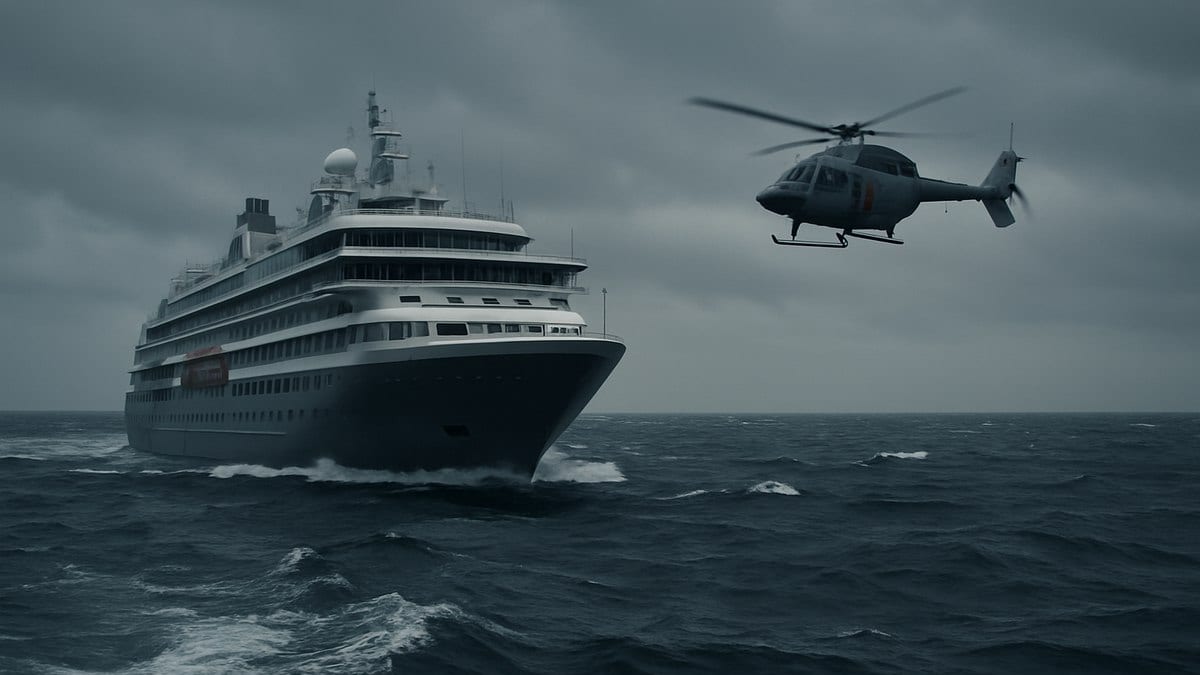
What began as a once-in-a-lifetime expedition through the South Atlantic has spiraled into an anxious mid-ocean quarantine, as passengers on the Dutch-flagged cruise ship MV Hondius remain stranded amid a deadly outbreak of Andes hantavirus that has already claimed at least three lives and left global health agencies racing to trace those who disembarked before the alarm was raised.
Get the latest news straight to your inbox!
Dream Voyage Turned High-Seas Health Emergency
The MV Hondius departed Ushuaia at the southern tip of Argentina in early April with about 150 passengers and crew from more than 20 countries, marketed as a polar-style adventure taking in remote Atlantic islands and wildlife-rich coasts. According to published coverage, the ship’s itinerary carried it north through the South Atlantic toward Cape Verde and the eastern Atlantic, far from the rodent habitats usually associated with hantavirus in South America.
During the voyage, several travelers developed acute respiratory symptoms that initially resembled severe flu or pneumonia. Publicly available timelines indicate that the first fatal case, a Dutch passenger with a recent travel history in South America, became seriously ill in late April before dying ashore in South Africa. Another passenger, a German woman, later died on board, and a third death has been linked to the same cluster.
Only after multiple severe cases were investigated did specialized laboratory tests confirm infection with Andes virus, a rare hantavirus strain known to circulate in parts of Argentina and Chile. Disease profiles compiled by the World Health Organization and regional health agencies describe Andes virus as unusual among hantaviruses because it has, under specific conditions, spread between people through close and prolonged contact.
The sudden realization that a pathogen associated with high fatality rates and potential person to person transmission was circulating on a confined vessel transformed the Hondius from expedition ship to floating quarantine, with many passengers unable to disembark while international health agencies assessed the risks.
Passengers Caught Between Quarantine Protocols and Port Restrictions
Reports from European and African outlets describe the Hondius lingering off the coast of West Africa while health authorities assessed how and where to safely receive the ship. Cabo Verde, which initially played a role in the response, applied strict controls as information about the outbreak evolved. With evidence of a rare but deadly respiratory illness on board, port states weighed humanitarian obligations against concern over importing a high consequence infection.
Meanwhile, passengers and crew remained in a form of rolling isolation at sea. Publicly available information indicates that cabins were repurposed for medical observation and that on-board movement was tightly managed to reduce close contact. European health agencies report that targeted infection prevention measures were introduced, including use of masks, enhanced cleaning, and ventilation checks in shared spaces, while the ship awaited permission to dock.
For those on board, the experience has combined the disorientation of a long voyage with the uncertainty of an evolving health emergency. Travel forums and news features describe guests tracking updates from the World Health Organization, the Africa Centres for Disease Control, and European disease control bodies, while trying to interpret shifting risk assessments that describe the global threat as low but the individual consequences of infection as potentially severe.
Authorities in Spain have stated that the ship is now heading toward the Canary Islands, where a carefully staged disembarkation and decontamination process is expected. Plans described in Spanish and European reporting include transporting passengers in small, controlled groups, health screening on arrival, and follow up monitoring coordinated with national systems once travelers return home.
Tracing Those Who Left Before the Alarm
One of the most complex elements of the episode has unfolded far from the Hondius itself. According to coverage from European and North American outlets, more than two dozen passengers left the ship at earlier ports or during medical transfers before Andes virus infection was confirmed and before systematic contact tracing began. These travelers then dispersed to at least a dozen countries, including the Netherlands, Switzerland, the United Kingdom, the United States, and South Africa.
Publicly available information shows that several of these former passengers have since tested positive for hantavirus infection, with some requiring intensive care. At least one critically ill patient in South Africa and additional confirmed cases in Europe have been linked to the voyage, prompting a coordinated international effort to identify close contacts on flights and in transit hubs.
Health ministries and international agencies now describe a wide ranging tracing operation, focused not only on those who shared cabins or dining tables on board, but also on airline passengers and airport workers who may have had prolonged close contact with infected travelers after they left the ship. Because the incubation period for Andes hantavirus can stretch from one to six weeks, according to technical briefings, the window for symptom onset in exposed individuals remains open well beyond the end of the cruise itself.
For travel planners and tour operators, the situation illustrates how a localized maritime outbreak can rapidly become a multi country investigation. Governments are relying on passenger manifests, airline booking data, and self reporting by travelers to reconstruct who may have been exposed before strict isolation protocols were put in place on the Hondius.
Understanding Andes Hantavirus and the Risks at Sea
Hantaviruses are a family of pathogens typically spread by contact with infected rodents or their droppings, particularly in rural or wilderness settings. In the Americas, some strains can cause hantavirus pulmonary syndrome, a severe illness that progresses from flu like symptoms to potentially life threatening respiratory failure. According to scientific summaries referenced in recent coverage, reported fatality rates for this syndrome often range between 30 and 40 percent.
The Andes virus identified in the Hondius cluster is regarded as a special case. Technical documents from global and European health bodies describe it as the only hantavirus for which limited person to person transmission has been documented, mainly in family clusters and among close contacts in Argentina and Chile. Transmission is thought to occur primarily through respiratory droplets during extended, close interaction, such as sharing a household or spending hours in confined spaces.
These characteristics are significant in a cruise setting, where passengers dine together, join group excursions, and share lounges and corridors over many days. Although experts cited in outlets such as CBS News, Live Science and Smithsonian Magazine stress that hantavirus outbreaks on ships are extremely rare compared with more familiar pathogens like norovirus, they also note that prolonged exposure in enclosed environments can amplify risks when a virus capable of human transmission is present.
At the same time, international organizations emphasize that the overall public health risk beyond the directly affected travelers remains low. Briefings from the World Health Organization and Africa CDC frame the event as a serious but contained cluster among a small, well defined population, in contrast to the community wide spread seen with highly contagious respiratory viruses.
New Scrutiny for Expedition Cruises and Global Travel Protocols
The Hondius incident is already prompting scrutiny of how quickly emerging health threats are recognized and communicated in the cruise sector. According to timelines reconstructed by European newspapers, the first serious illness linked to the ship occurred in mid April, but confirmation of hantavirus infection came later, after initial tests for more common respiratory pathogens proved negative. During this interval, some passengers disembarked and flew home, unaware that they might have been exposed to a rare virus.
Industry observers note that cruise operators are obliged to report outbreaks of certain illnesses under international health regulations, yet the system relies heavily on the speed of diagnosis and the capacity of local health facilities. With a pathogen as uncommon as Andes virus, even high quality hospitals may need days to obtain specialized tests, leaving a critical gap in which passengers can move across borders before the nature of the threat is clear.
Public dialogue following the outbreak is also turning toward the particular risks associated with niche expedition voyages that combine remote destinations, extended itineraries and relatively small vessels. While these ships carry fewer people than mainstream mega cruises, they often spend longer periods far from advanced medical care, and their passengers tend to share close quarters in lounges, zodiacs and dining rooms throughout the journey.
Health agencies responding to the Hondius cluster have urged travelers to stay informed about basic infection prevention measures, including respiratory hygiene and prompt medical attention for unexplained fevers or breathing difficulties after travel in regions where hantaviruses circulate. For now, the focus remains on safely evacuating the remaining passengers, decontaminating the vessel and learning how a virus usually linked to South American rodents triggered one of the most unusual maritime health emergencies in recent memory.