

More news on this day
Indian nationals are reported to be among the nearly 150 passengers and crew stranded at sea after a deadly outbreak of Andes hantavirus on the Dutch-flagged expedition vessel MV Hondius, turning a polar cruise into an evolving international public health incident.
Get the latest news straight to your inbox!
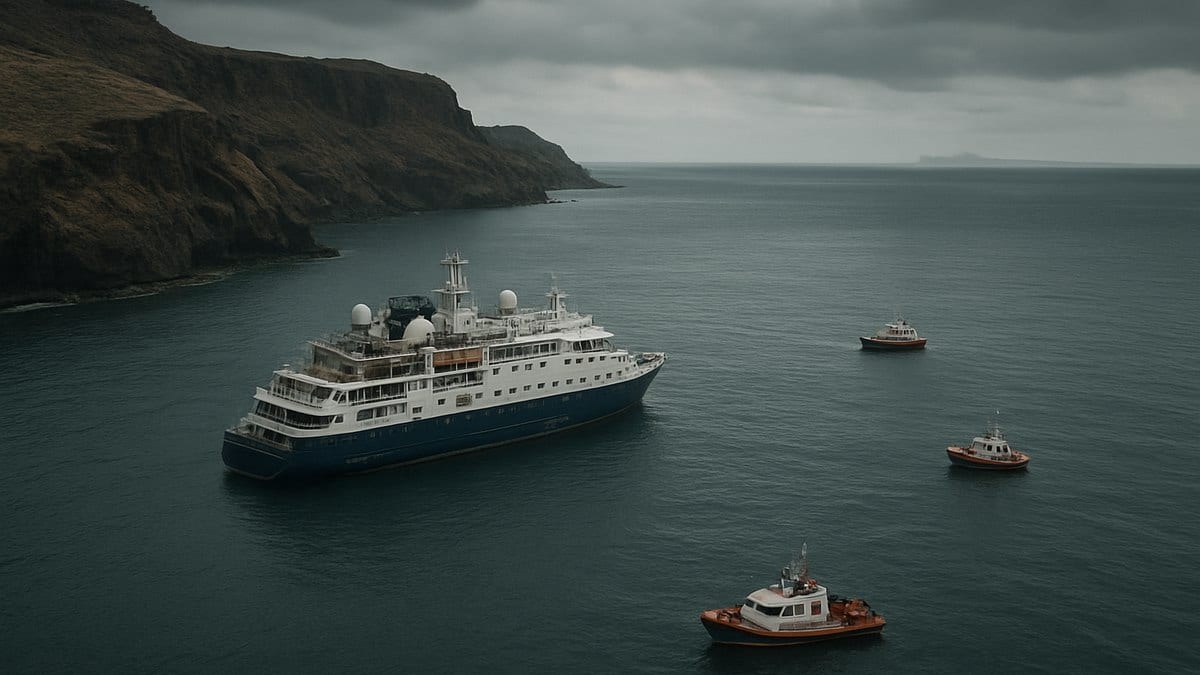
Rare Virus Turns Remote Expedition Cruise Into Global Incident
The MV Hondius, operated by Dutch company Oceanwide Expeditions, left the southern tip of Argentina in late March on a weeks-long voyage through Antarctica and remote South Atlantic islands before heading north toward Cape Verde. The ship, designed for ice-strengthened expedition cruising rather than mass tourism, was carrying around 150 people when severe respiratory illness began to spread on board in April.
According to published coverage, at least three passengers have died and several others have been hospitalized in multiple countries with confirmed or suspected infection by Andes hantavirus, a rare strain most commonly associated with rodent exposure in parts of South America. Publicly available information from health agencies indicates that five of eight closely monitored cases linked to the voyage have now tested positive, with more secondary cases considered possible due to the virus’s long incubation period.
The outbreak was first reported while the vessel was crossing the Atlantic toward Cape Verde, an island nation off West Africa. The ship initially remained in Cape Verdean waters as local authorities limited disembarkation, effectively leaving most passengers and crew confined to the vessel while international evacuation and referral plans were arranged for the sickest individuals.
Epidemiological updates from European and African public health institutes describe the incident as a rare maritime cluster of a pathogen that is usually seen in land-based outbreaks. The combination of a remote voyage, delayed recognition and the potential for limited person-to-person spread has drawn comparisons with early cruise-linked health crises during the COVID-19 pandemic, although current risk assessments for the wider public remain low.
Passengers From Multiple Countries, Including India, Caught Onboard
Reports from national health agencies and media outlets in Asia and Europe indicate that the passenger list of MV Hondius includes citizens from at least a dozen countries. Coverage in Japan, Singapore and European outlets has highlighted the presence of their nationals on the ship, while Indian travelers are understood to be among those stranded based on regional reporting that references South Asian passengers on the affected voyage.
Detailed manifests have not been made public, but cruise industry and consular sources cited in international coverage suggest that the expedition, which departed from Ushuaia via South America’s southernmost routes, drew a significant number of long-haul travelers from outside Europe, including from India. Many had booked the niche itinerary months in advance, attracted by the combination of Antarctic landscapes and remote Atlantic islands that are otherwise difficult to reach.
Indian nationals on board are described in press accounts as part of mixed-nationality tour groups and independent travelers, some of whom disembarked earlier at remote ports before the outbreak was formally recognized. Because several dozen passengers reportedly left the ship during the voyage, including at the British territory of Saint Helena, contact tracing has widened to include onward destinations in Africa, Europe and Asia.
Travel advisers in India and elsewhere are now fielding questions from concerned families and clients booked on similar expedition cruises. Publicly available advisories stress that the incident appears to be linked to specific exposures on this voyage rather than a generalized threat to all cruise travel, but they also call for heightened awareness of health histories and route details when planning complex, multi-stop itineraries.
From Ushuaia to Cape Verde: How the Outbreak Unfolded
Chronologies compiled by international media and regional broadcasters in Spain outline a voyage that began in late March in Ushuaia, Argentina, before visiting South Georgia, the South Orkney Islands and the Weddell Sea. The vessel then continued north toward remote South Atlantic islands such as Tristan da Cunha and Saint Helena, ultimately steering for Cape Verde as passengers began to fall seriously ill.
The first fatality linked to the cruise occurred in mid-April, when a passenger who had become unwell on board died after being transported off the ship and later treated in South Africa. Two more deaths were subsequently reported among former passengers, with hospitalizations in South Africa and several European countries, including the Netherlands, Germany and Switzerland, according to widely cited hospital and health agency summaries.
Investigators have been exploring the possibility that one or more passengers contracted the virus during pre-cruise travel in South America, potentially through exposure to contaminated rodent droppings in rural or wilderness settings. Analyses published by public health institutes and summarized in international coverage note that Andes hantavirus is endemic in certain parts of Argentina and Chile, and that symptoms can take days to weeks to appear, complicating efforts to pinpoint the precise place and time of infection.
As the scale of the outbreak became clearer, the ship’s route turned into a matter of public health interest. Authorities in Cape Verde and Spain weighed port access requests against fears of importing additional cases. While some severely ill individuals and crew were transferred ashore under strict isolation for onward evacuation, the bulk of passengers and staff remained confined to cabins and common areas while laboratory results and international coordination progressed.
Understanding Andes Hantavirus and Transmission Concerns
Hantaviruses are a family of viruses typically spread to humans through contact with infected rodent urine, droppings or saliva. According to publicly available fact sheets from global and regional health agencies, most hantavirus infections around the world are not associated with human-to-human spread and tend to be linked to rural or wilderness exposures.
The strain identified in connection with the MV Hondius, however, is Andes virus, a subtype first recognized in South America. Medical literature and current advisories describe Andes virus as an uncommon but notable exception because limited person-to-person transmission has been documented in close-contact settings, often involving household members or caregivers exposed to respiratory secretions from severely ill patients.
Clinical descriptions from national infectious disease institutes characterize Andes hantavirus pulmonary syndrome as a rapidly progressive illness beginning with fever, muscle aches and gastrointestinal upset, followed within days by severe respiratory distress and, in some cases, shock. Case fatality rates in published series are substantially higher than for many respiratory infections, which has contributed to heightened concern around the MV Hondius cluster.
Despite these features, current threat assessments from European public health bodies classify the risk to the general population as very low. Analysts note that transmission requires close contact with infected bodily fluids or aerosols, and that extensive community spread from previous Andes virus clusters has not been documented. Nevertheless, the cruise environment, with shared cabins and enclosed spaces, is viewed as a setting where intensive infection-control measures are warranted.
Repatriation, Tracing and What It Means for Future Travel
As of early May, publicly available information suggests that the MV Hondius has begun or is preparing a controlled sail toward Spanish territory, after days effectively marooned off Cape Verde. Several critically ill patients have already been evacuated for hospital care, while others with milder symptoms are under observation on land in South Africa and Europe.
National health agencies in countries with passengers on board, including in Asia and Europe, have initiated contact-tracing protocols. This includes efforts to reach travelers who left the ship during intermediate stops and continued their journeys on commercial flights, as well as monitoring close contacts such as cabin mates and family members. For Indian nationals and others who may have returned home or onward to third countries, cooperation between airlines, tour operators and public health authorities has become a pivotal element of the response.
For the global travel industry, the MV Hondius situation is emerging as the first major infectious-disease test of the post-pandemic era involving a cruise ship. Expedition operators specializing in Antarctic and Arctic itineraries are expected to face renewed scrutiny of onboard medical capabilities, passenger screening and contingency planning for rare but severe pathogens acquired during land excursions.
Travel specialists say that, while the statistical likelihood of encountering Andes hantavirus on a future cruise remains extremely low, the incident underscores the importance of understanding the health context of remote-region itineraries. Prospective travelers from India and other long-haul markets are being advised, through publicly posted guidance, to review route maps, pre-cruise land components and medical preparedness as closely as they consider wildlife viewing or luxury amenities.