

More news on this day
Hundreds of cruise passengers remain stranded off the coast of Cape Verde after a deadly hantavirus outbreak aboard the Dutch-flagged expedition ship MV Hondius left three people dead and sparked an urgent international health response in early May 2026.
Get the latest news straight to your inbox!
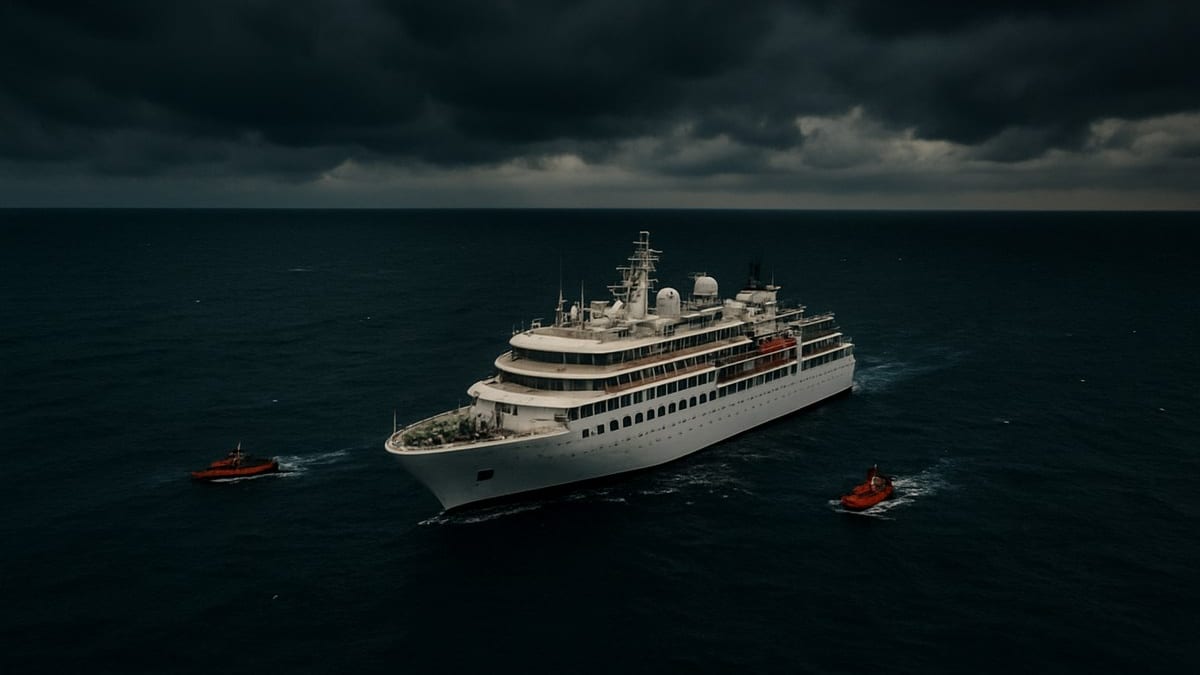
From Dream Voyage to Health Emergency
The MV Hondius, an expedition cruise ship sailing under the Dutch flag, departed South America in early April on what was billed as a remote Atlantic adventure. Within weeks, the voyage had turned into a health crisis, as a cluster of severe respiratory illnesses emerged among passengers. Publicly available information from international health agencies describes a pattern of sudden fever, gastrointestinal symptoms and rapid progression to pneumonia and acute respiratory distress in affected travelers.
The first known passenger to fall seriously ill developed symptoms in early April and died on board several days later, according to timelines released by health authorities. Additional cases appeared over the following weeks, but the rare nature of hantavirus infection meant the illness was not immediately recognized. By the time laboratory tests began to point toward Andes hantavirus as the likely cause, the ship had already continued its itinerary across the South Atlantic.
As concerns mounted, the Hondius was prevented from fully disembarking its guests when it reached Cape Verde. Images from the port of Praia have shown the ship anchored offshore while local officials and international experts worked to assess the risks. Reports indicate that as of May 6 and 7, at least seven people linked to the voyage had been counted as confirmed or suspected cases, including three fatalities, one person in critical condition and several others with milder symptoms.
Passengers Held Offshore as Cases Mount
For the roughly 150 passengers who remained on board in early May, the outbreak translated into an abrupt and uncertain quarantine at sea. Coverage from Cape Verde and European outlets has described a situation in which guests were not allowed to come ashore, with shipboard activities restricted as medical assessments and testing continued. The vessel’s medical facilities, designed for routine seasickness and minor injuries, have faced the strain of managing a severe viral illness while coordinating with onshore hospitals for potential evacuations.
European and international health briefings indicate that the ship’s location off Cape Verde was chosen to allow access to air ambulances and specialized care in multiple countries, while limiting potential exposure in local communities. At least one crew member and several passengers have been reported as requiring urgent hospital treatment in Europe and South Africa after leaving the ship under controlled conditions.
For travelers still confined to their cabins or common areas, the experience has drawn comparisons to the early months of the COVID-19 pandemic, when the Diamond Princess and other cruise ships became symbols of the global health emergency. This time, however, experts emphasize that hantavirus behaves very differently, with limited human-to-human transmission documented and no sign of a fast-moving community outbreak beyond the ship.
Global Hunt for Passengers Who Disembarked Early
Complicating the response, dozens of travelers left the Hondius before the outbreak was formally identified. According to published coverage from international wire services, more than two dozen passengers from at least a dozen countries disembarked in Europe on April 24 without systematic contact tracing, nearly two weeks after the first on-board death. Subsequent reports suggest that health agencies across four continents have been working to track those individuals and anyone they may have encountered.
National public health bodies in the Netherlands, Spain, South Africa, the United Kingdom and other countries have issued alerts and guidance to clinicians to be on the lookout for recent travelers who report compatible symptoms following cruise ship travel. Africa’s continental health agency has also described an ongoing effort to coordinate case-finding and risk assessments among states that received passengers or port calls linked to the voyage.
Because hantavirus infections can have an incubation period of several weeks, the ultimate scope of the cluster may not be clear for some time. Public information from the World Health Organization and the European Centre for Disease Prevention and Control notes that more cases could emerge among people who were exposed on board and returned home before feeling unwell.
What We Know About Andes Hantavirus Risk
The strain suspected in the cruise ship cluster, Andes hantavirus, is a rare pathogen primarily linked to rodent populations in parts of South America. Medical references explain that humans typically become infected through contact with the urine, droppings or saliva of infected rodents, often in rural or wilderness settings. The virus can cause hantavirus pulmonary syndrome, a severe illness marked by flu-like onset that can rapidly progress to respiratory failure and shock, with a significant fatality rate.
Unlike the coronavirus responsible for COVID-19, hantaviruses are not usually associated with sustained person-to-person transmission. However, limited spread of Andes hantavirus between close contacts has been documented in past outbreaks in Argentina and Chile. That history, combined with the confined environment of a cruise ship and shared excursions on land, is driving detailed investigations into exactly how passengers on the Hondius were exposed.
Technical assessments published by European and global health agencies outline several hypotheses, including potential environmental contamination in storage areas or cabins, exposure during shore activities in endemic regions, or rare human-to-human transmission in close quarters. At this stage, officials working with these organizations continue to describe the risk to the broader public as low, while urging enhanced infection control in ports and hospitals that receive returning travelers.
Travel Industry Under Renewed Scrutiny
The outbreak has placed the expedition cruising sector back under the microscope, highlighting ongoing questions about how the industry manages novel or unexpected health threats. Publicly available statements from European health agencies emphasize the importance of rapid reporting under international health regulations when clusters of severe illness appear on ships, as well as the need for clear lines of coordination between operators, flag states and destination countries.
For travelers, the Hondius incident is a stark reminder that even highly specialized itineraries marketed around wildlife, remote landscapes and scientific lectures carry elements of health risk. Travel advisors and risk experts note that prospective passengers may wish to pay closer attention to operators’ medical capabilities, evacuation arrangements and flexibility in re-routing or cancelling voyages when unexplained illnesses arise.
In the near term, travel insiders expect increased scrutiny of cruise itineraries that pass through regions where zoonotic diseases such as hantavirus are known to circulate. Port authorities in Africa, Europe and South America are already being urged by public health bodies to reinforce screening and reporting procedures for ships that have treated serious respiratory illness on board.
As the MV Hondius remains anchored off Cape Verde, the immediate priority for international responders is to care for those who are ill and to safely return healthy passengers and crew to their home countries. For the wider travel world, the episode is likely to shape debates about preparedness and transparency long after the last stranded traveler steps ashore.