


More news on this day
New laboratory and field evidence indicates that air pollution generated by cruise ships in port cities may not only harm lungs and hearts, but also make residents more vulnerable to viral respiratory infections such as the common cold and COVID-19.
Get the latest news straight to your inbox!
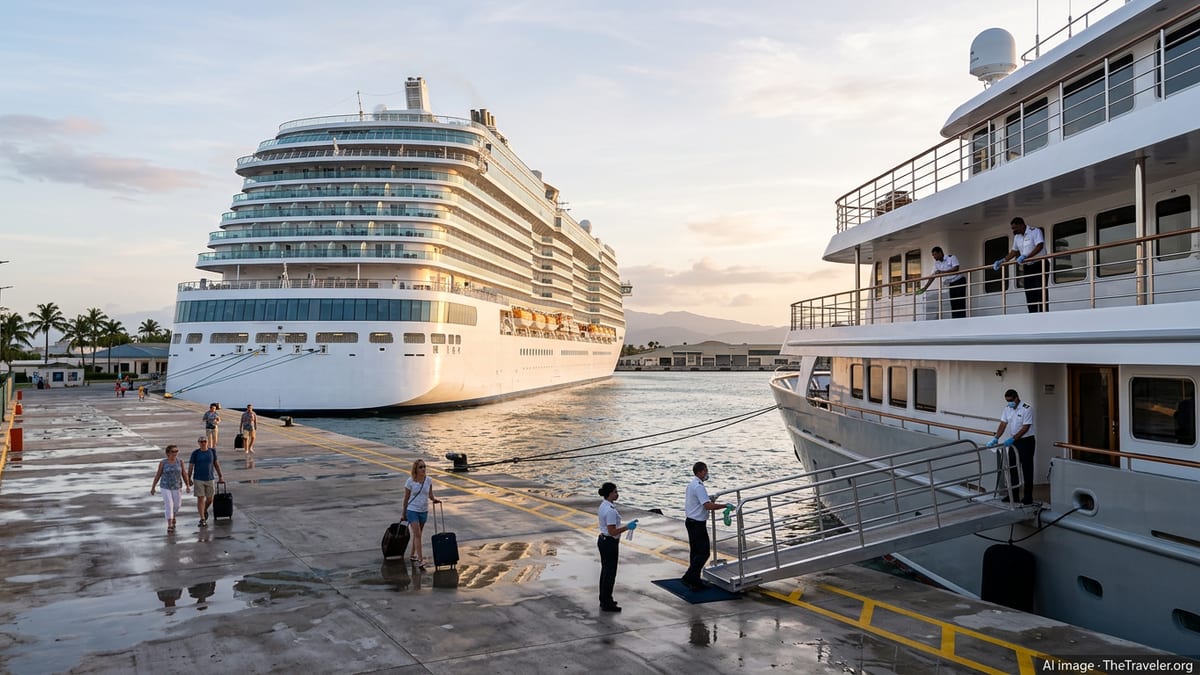
New research connects ship exhaust to viral vulnerability
Fresh findings from respiratory toxicology research suggest that ultrafine particles released by cruise ships can prime human airways for more severe viral infections. In a study published in late June 2026 in the journal Environment International, scientists examined particulate matter collected near cruise terminals and tested its effects on human airway cells in controlled conditions.
According to publicly available summaries of the work, the researchers focused on ultrafine particulate matter, far smaller than typical urban dust, generated when ships burn heavy fuel oil at or near port. These particles were found to be enriched with trace metals associated with marine fuels, including vanadium, which are not typically present in such concentrations in many land-based pollution sources.
When bronchial epithelial cells were exposed to these particles and then infected with viruses including rhinovirus, a cause of the common cold, and a model of SARS-CoV-2, the virus behind COVID-19, the pollution appeared to dampen the cells’ antiviral defenses. The study reports reduced interferon signaling, a crucial early immune response, and a corresponding increase in viral replication compared with unexposed cells.
The authors concluded that, despite fuel-quality rules introduced over recent decades, particulate emissions associated with cruise operations could have a disproportionate effect on susceptibility to respiratory infection for people living and working near busy ports.
Port cities already face elevated pollution from cruise activity
The new biological evidence arrives as port cities continue to grapple with the air-quality impacts of a fast-growing cruise industry. Health impact assessments and emissions inventories from Europe, Asia and the Mediterranean indicate that cruise ships can be major contributors to local concentrations of nitrogen oxides, sulfur oxides and fine particulate matter when they maneuver and run engines while docked.
A recent analysis of European cruise traffic released in 2024 found that emissions of key pollutants from cruise vessels around major ports, including Barcelona and Marseille, increased between 2019 and 2022 as passenger volumes rebounded. The report showed higher total emissions of sulfur oxides and fine particles over that period, even as cleaner fuels and exhaust treatment systems have been progressively deployed.
Academic research focused on individual ports has reached similar conclusions. A modeling study centered on Marseille reported that cruise arrivals were associated with marked hourly rises in nitrogen dioxide, sulfur dioxide and particulate matter measured across the city. Separate work on an Asian seaport showed that maritime emissions, influenced by sea and land breezes, can move pollution from the waterfront into densely populated neighborhoods.
More recent port-specific inventories, such as a 2024 assessment of cruise calls at Istanbul’s Galataport, document substantial emissions of particulate matter and gaseous pollutants during both maneuvering and hoteling phases. Publicly available abstracts from these studies highlight concerns that populations living closest to cruise terminals may carry the greatest exposure burden.
Mechanisms point to inflammation and weakened antiviral defenses
The emerging research does not claim that cruise ship pollution directly causes viral outbreaks. Instead, it points to biological pathways through which exposure to specific ship-derived particles could make common infections easier to catch and potentially harder to fight.
In cell-based experiments, ultrafine particles from cruise exhaust appeared to trigger inflammatory responses in airway tissues while simultaneously blunting antiviral signaling. Vanadium-rich particles, in particular, were linked to reduced production of interferons, molecules that help cells mount an early defense when viruses attempt to replicate. When these defenses were weakened, viruses such as rhinovirus and SARS-CoV-2 were able to reproduce more efficiently in exposed cells.
These findings align with a broader body of air-pollution research suggesting that long-term or repeated exposure to fine and ultrafine particles can inflame the respiratory tract, aggravate asthma and chronic lung disease, and alter immune responses. Health agencies have previously warned that people with underlying conditions, as well as children and older adults, may be especially sensitive to particulate pollution in general.
The ship-focused study adds detail by indicating that not all particles are equal. The authors argue that ultrafine particles generated by heavy fuel combustion in marine engines, enriched with particular metals, may have distinct toxicological profiles compared with particles originating from traffic or other urban sources.
Growing pressure for shore power and tighter marine fuel rules
As cruise traffic returns to and in some regions surpasses pre-pandemic levels, the new evidence is likely to intensify debates about how strictly shipping emissions should be controlled near cities. Environmental groups and some municipal leaders in Europe and North America have long called for mandatory shore power connections at cruise berths so vessels can switch off their engines while in port.
Reports from advocacy organizations note that only a fraction of global cruise berths currently offer shore power, though the number of equipped ports is rising as local and national governments invest in infrastructure. Where shore power is available and used, it can significantly cut local emissions of nitrogen oxides, sulfur oxides and particulate matter during docking periods, provided the electricity grid itself is relatively low in pollution.
International maritime regulations have already lowered the sulfur content allowed in most marine fuels, and special emission control areas around parts of North America and northern Europe impose stricter limits. However, the ultrafine particle study suggests that even fuels compliant with these standards may still generate biologically active metal-rich particles that are not directly regulated under current frameworks.
Policy analysts observing the sector indicate that regulators may face pressure to revisit standards on exhaust treatment, fuel composition and monitoring of ultrafine particles in and around ports, particularly in densely populated coastal cities where cruise tourism is expanding.
Implications for public health in coastal communities
The interaction between ship emissions and infectious disease risk remains an emerging field, and researchers caution that more work is needed to translate laboratory findings into population-level estimates. Even so, public health specialists note that the new toxicology data strengthen the case for treating cruise-related air pollution as a factor in respiratory vulnerability in port communities.
During the COVID-19 pandemic, cruise ships drew scrutiny as settings where respiratory viruses could spread quickly among passengers and crew. Subsequent guidance from health agencies has concentrated largely on ventilation, sanitation and outbreak management onboard. The latest evidence suggests that attention may also be warranted on the air that residents breathe at the water’s edge when large vessels are at berth.
Health impact assessments in several European and Mediterranean ports have already linked shipping-related pollution with increased mortality and hospital admissions from cardiovascular and respiratory diseases. If ultrafine particles from cruise exhaust further weaken local populations’ defenses against circulating viruses, the combined effect could be greater than previously estimated.
For now, experts emphasize the importance of improved monitoring of ship-related emissions, more granular studies of neighborhood-level exposure near terminals, and coordinated strategies that align tourism development with air-quality and infection-prevention goals in the world’s busiest cruise ports.