


More news on this day
As cruise bookings climb and new ships enter service, passengers are focusing less on rock walls and water slides and more on practical details such as walkable ports, flexible policies for children and the changing value of loyalty points.
Get the latest news straight to your inbox!
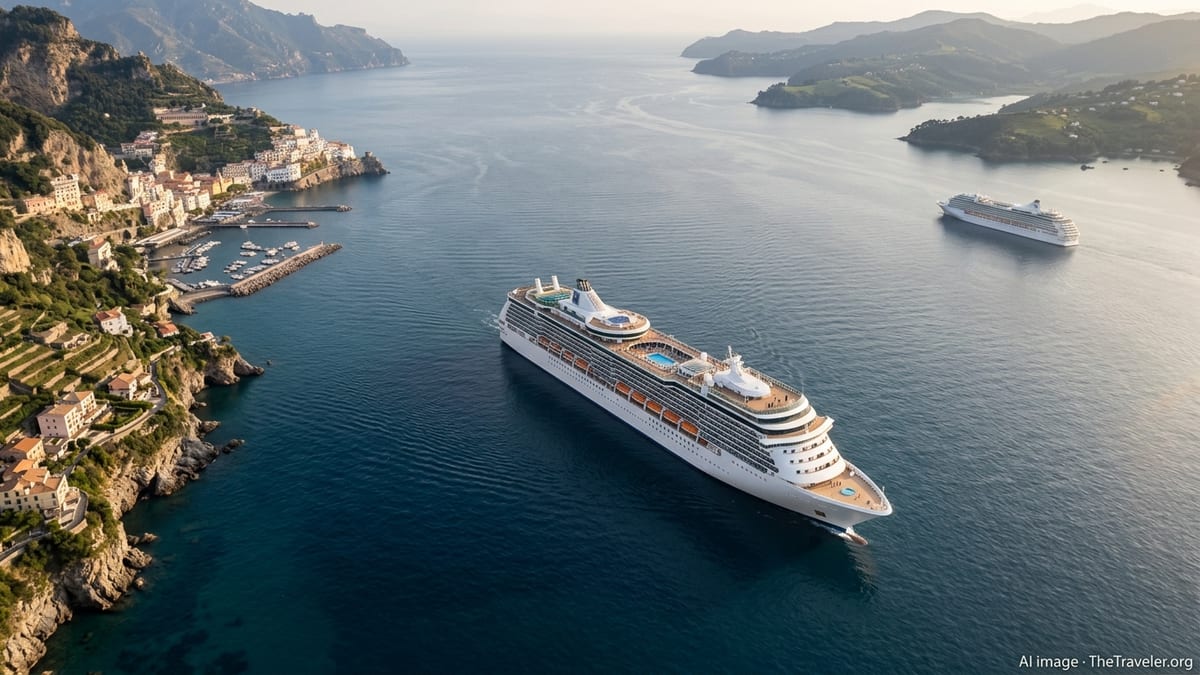
Ports Where You Can Simply Walk Off the Ship
One of the biggest shifts in cruise planning is a growing emphasis on ports where passengers can step off the gangway and immediately explore on foot, without needing a tour bus or long shuttle ride. Recent port guides highlight destinations such as San Juan in Puerto Rico, Willemstad in Curaçao and several Norwegian fjord towns as examples where the historic center or waterfront promenade begins a short stroll from the pier. In these places, passengers can spend more time wandering and less time sitting in traffic between ship and city.
Analyses of Caribbean and Mediterranean port layouts describe San Juan as a standout for walkability, with its cruise piers located at the edge of Old San Juan’s cobbled streets and fort-topped headlands. In many cases, beaches, cafes and major landmarks lie within a 10 to 20 minute walk of the terminal, allowing families and budget travelers to design their own day ashore. Similar patterns appear in compact ports such as Ketchikan in Alaska or Alesund in Norway, where the town center sits in direct view of the ship.
By contrast, itineraries that list ports with a city name in brackets, such as references to Hamburg for ships docking in Kiel, often signal that a longer transfer is required. Public information from cruise planners indicates that passengers are increasingly checking these details before booking, weighing whether a marquee port name actually means easy access. Some travelers now describe the ability to walk straight into town as a deciding factor when comparing similar sailings.
Safety and accessibility remain part of that calculation. Online community reports suggest that many mainstream Caribbean and European ports feel comfortable to explore during the day, while others may be better suited to guided excursions or ship-sponsored shuttles. The result is a more nuanced approach, with experienced cruisers studying port maps, recent traveler reports and mobility considerations before assuming that any stop will be a simple walk-off day.
Longer Days and Overnight Stays Change the Port Equation
The push for walkable experiences is intersecting with another trend: longer calls and overnight stays in port. Industry features and destination reports note that several lines are designing itineraries around extended time in cities such as Seville, Ho Chi Minh City, Reykjavik and Bermuda. Smaller and destination-focused brands are promoting series of late stays and double overnights that give guests up to 48 hours in a single port, allowing time to see both daytime landmarks and nightlife.
Coverage of 2024 and 2025 schedules across Europe and the Caribbean shows a measurable increase in overnight calls, particularly in regions like the Baltic and Northern Norway, where staying after dark can be essential for experiences such as viewing the northern lights. Surveys by cruise associations also point to a wider traveler appetite for “slower” itineraries that favor deeper immersion over a rapid sequence of brief stops.
For passengers, the practical impact is significant. Longer calls can make public transport and independent touring more attractive, since there is less pressure to rush back for an early sail away. A port that might feel marginal with six hours alongside can become a highlight with 14 or 24 hours, especially when the terminal sits close to the city center. Travel writers note that this extra time can help offset the frustration when a port is slightly less walkable, allowing guests to justify a train ride or taxi into town while still enjoying unstructured exploration on foot once there.
However, overnight and extended calls are not yet universal. Market reviews from northern Europe show that while the number of overnights has risen year on year, many ports still host only single-day visits. Larger oceangoing vessels face additional constraints, from berth capacity to local regulations on ship emissions and late-night operations. As a result, itineraries featuring clustered overnight stays or multiple walk-off friendly ports are becoming a kind of premium product for travelers who prioritize time ashore.
How Cruise Loyalty Programs Are Evolving
Cruise loyalty programs are also in flux, prompting travelers to reconsider how much weight to give brand allegiance when choosing a sailing. Guides published in 2025 comparing major lines describe a crowded field of programs, from Royal Caribbean’s Crown and Anchor Society and Norwegian’s Latitudes Rewards to the Captain’s Circle on Princess and the evolving rewards structure at Carnival Cruise Line. While the details vary, most programs now offer a familiar mix of priority check-in, discounted or complimentary Wi-Fi, laundry credits and occasional cabin or dining perks as passengers climb the tiers.
Recent updates indicate that some cruise companies are taking cues from airlines and hotels by tying status more closely to onboard spending as well as nights sailed. Carnival, for example, is preparing to roll out Carnival Rewards in June 2026, a program that will use a combination of points and stars linked to cruise fares, onboard purchases and spending on a co-branded credit card. Financial and travel publications suggest this shift may favor high-spend guests, particularly those booking suites or adding significant onboard extras.
Separately, Norwegian Cruise Line Holdings has introduced a cross-brand “status honoring” initiative that allows loyalty members of Norwegian, Oceania Cruises and Regent Seven Seas Cruises to enjoy comparable recognition across all three brands. Corporate materials outline that guests can book different styles of voyage, from family-focused megaships to smaller luxury vessels, while retaining their earned level. Analysts view these developments as part of a broader competition for repeat customers in a market where new capacity continues to arrive.
Commentary across consumer travel media also highlights increasing debate about the real-world value of cruise loyalty. Some long-time cruisers argue that benefits for mid-tier members can be modest compared with simply shopping for the best itinerary and price, while top-tier perks remain out of reach for many families who sail infrequently. In this environment, the advice appearing in many independent guides is to treat loyalty benefits as a bonus, rather than the main reason to choose a specific line.
What Loyalty Means for Families and Kids
For families cruising with children, the intersection of loyalty programs and kids policies has become a particular focus. Publicly available comparisons of family benefits show that most major lines allow loyalty points to accrue for all guests in a stateroom, including children, although the rules on how those points are counted can differ. Some programs base accrual purely on nights sailed, while others blend nights with fare type or cabin category, potentially rewarding families who book larger cabins or higher categories.
Travel experts note that while a child may technically earn status over time, family cruisers often find the most tangible benefits in early and mid-tier perks such as priority check-in, access to special events and discounts on internet packages. These can make embarkation day smoother and help manage the digital needs of teenagers without significantly increasing the trip budget. High-end benefits such as complimentary suite upgrades or concierge services, by contrast, are more commonly reserved for guests with extensive sailing histories.
Policies around kids clubs and youth activities form another layer of complexity. Cruise line websites outline age-based eligibility, opening hours and reservation systems for supervised programs, from nursery care for infants on select fleets to structured clubs for younger children and teen lounges. On many ships, children can attend youth programs regardless of loyalty status, but families with higher-tier membership may receive early booking windows for limited-capacity activities, preferred time slots or discounts on paid experiences such as specialty dining or arcade packages.
At the same time, industry observers emphasize that cruise pricing and promotional campaigns can have a larger impact on family budgets than loyalty perks alone. “Kids sail free” or reduced-third-and-fourth-guest offers appear periodically across several mainstream brands, effectively lowering the cost for families booking multiple cabins or traveling with extended relatives. When these promotions align with a family’s preferred school holiday dates, the savings can outweigh the value of incremental loyalty benefits for an occasional cruiser.
Planning a Smarter Cruise: Balancing Ports, Policies and Points
Against this backdrop, cruise specialists increasingly recommend a more analytical approach to planning. Rather than starting with a single favorite line, many advisors suggest first listing the types of ports that matter most, from highly walkable historic centers to beach-oriented stops or remote expedition landings. Travelers can then look for itineraries that cluster these experiences, taking note of which ports allow easy independent exploration and which might require higher excursion budgets.
Once a shortlist of sailings is in place, loyalty considerations can be layered on. For guests already close to a meaningful tier, choosing a departure that nudges them into the next level could bring real-world advantages, such as Wi-Fi credits for working parents or priority access for families trying to maximize time in the pool or waterpark. For newer cruisers still at the base level across all lines, comparative analyses indicate that choosing the right itinerary, ship layout and cabin configuration often has a greater impact on overall satisfaction than the early stages of any loyalty scheme.
Families in particular are advised to read the fine print on both kids policies and loyalty terms. This includes understanding minimum age rules for group childcare, whether advance reservations are required for nurseries or popular kids clubs, and if higher tiers offer practical perks that match their needs. A family traveling with toddlers may value laundry discounts and flexible dining more than priority tender tickets, while those with older teens could prioritize late-night activities and reliable connectivity.
As cruise companies adapt to shifting traveler expectations, the interplay between walkable ports, extended stays, family offerings and loyalty program design is shaping how passengers experience life at sea. The emerging pattern in 2026 suggests that informed planning, rather than brand habit alone, is becoming the key differentiator for travelers seeking to make the most of their time both on board and ashore.