


More news on this day
Rail travel in Great Britain has surged to its highest level in more than a century, with new data indicating that annual passenger journeys have now exceeded all previous records on the modern network.
Get the latest news straight to your inbox!
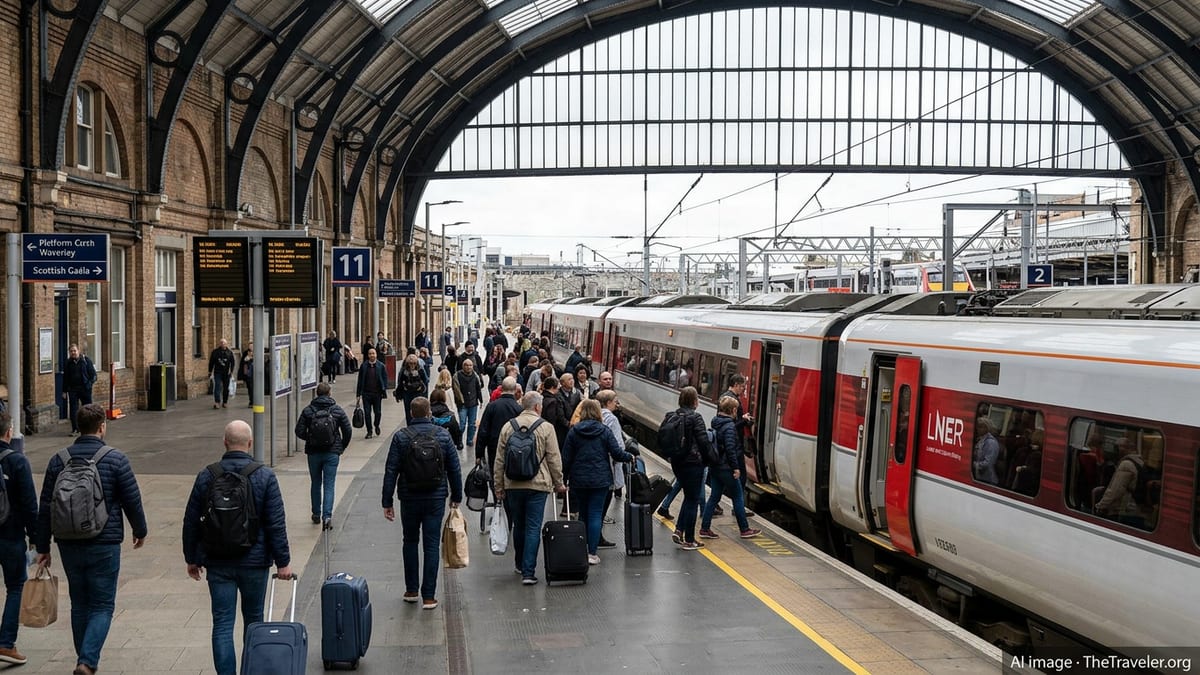
Record-breaking journey numbers on the rails
Recent figures from the Office of Rail and Road and other publicly available datasets show that rail passengers in Great Britain made around 1.73 billion journeys in the 12 months from April 2024 to March 2025. That represents a clear increase on the 1.61 billion journeys recorded in 2023 to 2024 and takes usage back to, and slightly beyond, the volumes seen immediately before the pandemic.
Separate analysis of the regulator’s most recent station-usage and journey data points to an even more dramatic milestone for the following reporting year. Provisional numbers for April 2025 to March 2026 suggest that journeys on the national network, including newly integrated services such as the Elizabeth line, have risen further still, pushing overall usage above any level previously recorded since the national rail statistics series began.
Long-run comparisons indicate that current levels of rail travel are higher than at any point since the early twentieth century, when steam-era networks handled large volumes of short-distance commuting and holiday traffic. While methods of counting passengers have changed over time, analysts note that the combination of sustained growth over the past three decades and the post-pandemic rebound has taken modern rail usage to historic highs.
Industry-focused commentary attributes the rise to a combination of factors: a broad return to office and leisure travel, the opening of new or upgraded routes, and targeted fares that encourage flexible and off-peak journeys. These elements have combined to offset structural shifts such as hybrid working and online shopping that, in theory, could have permanently reduced demand.
How the pandemic slump gave way to a rapid rebound
The latest figures represent a sharp turnaround from the collapse in demand seen during the height of the COVID-19 pandemic, when journey numbers fell to levels last experienced in the Victorian era. At the low point in 2020 to 2021, passenger journeys on the mainline network were less than a third of the pre-pandemic total, reflecting government restrictions, public health concerns and changes in commuting behaviour.
Recovery began as travel rules were eased, with journey volumes steadily rising through 2022 and 2023. By the 2023 to 2024 financial year, published coverage indicates that passenger numbers had already returned to around 90 percent of pre-COVID levels, with particularly strong growth on regional and leisure-focused routes. The most recent annual data confirms that this trend has not only continued but intensified, pushing usage beyond the previous high point reached in 2019 to 2020.
Analysts note that the pattern of rail use has changed, even as total volumes have grown. Commuter peaks, especially into major city centres, remain important but are generally less pronounced than in the past, while off-peak and weekend services have seen comparatively faster growth. This shift is reshaping how capacity is planned, where new rolling stock is deployed and which parts of the network are prioritised for investment.
The sustained rebound is occurring despite widely reported disruptions related to industrial action, weather events and infrastructure failures. Commentary from transport consultancies suggests that underlying demand for rail remains strong, and that many passengers who switched to cars or remote working during the pandemic have since re-integrated train travel into their routines, particularly for longer intercity or suburban journeys where rail continues to offer time and cost advantages.
London’s Elizabeth line and station growth reshape the map
One of the most striking features of the latest data is the impact of new and expanded infrastructure, notably the Elizabeth line across London. Publicly available figures indicate that the high-capacity cross-city route has now reached well over 250 million journeys a year, placing it among the busiest heavy-rail corridors in Europe and making a significant contribution to the national totals.
The knock-on effects of the Elizabeth line and other upgrades are visible in the latest station-usage rankings. Large London termini and central hubs continue to dominate, but there has been rapid growth at interchange points where new services connect with the wider National Rail network. Stations such as Tottenham Court Road and Bond Street, for example, have advanced sharply in the usage tables as additional rail flows are channelled through newly built or expanded platforms.
Outside the capital, regional centres in the North of England, the Midlands and Scotland have also experienced notable increases in entries and exits. Office of Rail and Road regional statistics for 2024 to 2025 show year-on-year growth in both intra-regional and inter-regional journeys, suggesting that rail is gaining ground for medium-distance trips as well as traditional commuting. Smaller stations on popular leisure routes, including coastal and national park destinations, have likewise reported strong seasonal peaks.
These shifts are prompting questions about how future capacity should be distributed across the network. Growth at urban interchanges and on cross-city routes supports the case for further investment in high-frequency metropolitan services, while rising volumes at regional hubs underline the importance of reliable interurban connections for economic development and tourism.
Capacity, crowding and performance pressures
Historic levels of demand are bringing renewed attention to longstanding issues of capacity and reliability. Government statistics on crowding and Office of Rail and Road performance reports show that several urban and intercity routes now operate close to, or at, their practical limits during peak periods. In major cities, passengers continue to report standing for long distances and encountering busy concourses at the busiest times of day.
On-time performance and service availability have also come under scrutiny. Data released over the past two years highlight the number of planned services that are partially or fully cancelled, alongside punctuality measures that, in some regions, have fallen short of pre-pandemic benchmarks. Observers argue that high usage magnifies the impact of every disruption, since individual cancellations or delays can affect larger numbers of passengers than in previous decades.
Industry and government documents describe a range of responses, including timetable changes intended to improve resilience, targeted infrastructure renewals to address bottlenecks and the introduction of new rolling stock with greater capacity. However, the combination of record passenger numbers, ageing assets on some routes and funding constraints means that progress is uneven across the network.
Commentary from passenger watchdogs and transport think tanks stresses that the perception of reliability will be crucial in sustaining current demand levels. If frequent crowding and delays persist, there is a risk that some travellers will revert to private cars or other modes, particularly for discretionary leisure trips that have driven much of the recent growth.
What rising usage means for fares, decarbonisation and policy
The surge in rail travel is unfolding against a complex policy backdrop. Official documents on rail finance show that fare revenue has risen sharply alongside passenger numbers, narrowing but not eliminating the gap between operating costs and income. Debates continue over how the balance should be struck between taxpayer support and passenger contributions, particularly at a time of wider pressure on public finances.
At the same time, higher rail usage is viewed by many transport analysts as a key component of national decarbonisation plans. Rail accounts for a relatively small share of domestic transport emissions compared with road and aviation, so shifting more journeys from cars and planes to trains is widely seen as an efficient way to cut carbon output. Policy papers on net zero frequently highlight the need to both expand rail capacity and make services more attractive if climate targets are to be achieved.
Proposals for structural reform, including the creation of a new guiding body under the planned Great British Railways brand, are framed in part around this growth trajectory. Publicly available information on these reforms suggests that policymakers are seeking a more integrated approach to timetabling, ticketing and infrastructure planning, with the aim of making it easier for passengers to navigate the system and for operators to respond to demand.
With passenger numbers now at their highest level in over a century and likely to keep rising if current trends persist, decisions taken over the next few years on investment, pricing and governance are expected to shape Britain’s rail network well into the middle of the century. The challenge for policymakers and the industry will be to convert record usage into a service that feels modern, reliable and accessible across all parts of the country.