


More news on this day
Royal Caribbean has taken delivery of its newest Icon-class cruise ship, a record-breaking mega vessel capable of carrying nearly 10,000 passengers and crew, underscoring how fast the cruise industry is scaling up its biggest ships.
Get the latest news straight to your inbox!
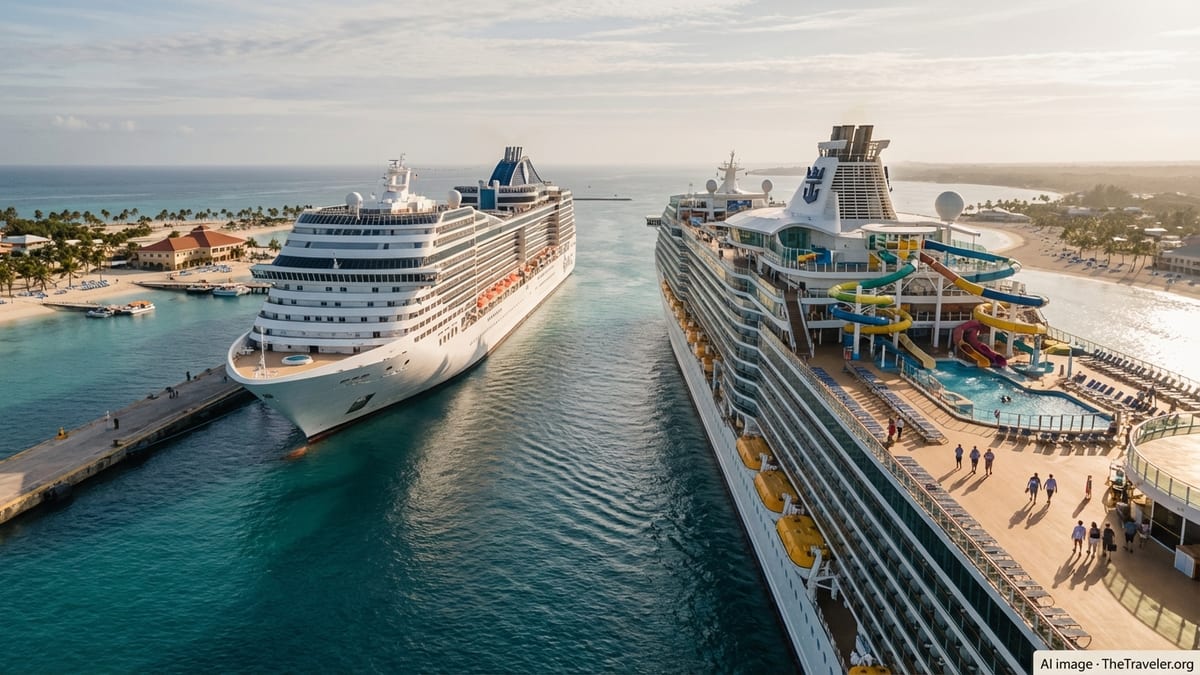
A New Giant Joins the Icon Class
The latest addition to Royal Caribbean’s Icon class arrives as the line doubles down on ultra-large ships built to function as floating resort cities. Publicly available information on the new vessel’s design and capacity indicates that, at maximum occupancy, the ship can host roughly 7,600 guests along with more than 2,000 crew members, pushing the total number of people on board close to the 10,000 mark.
The company’s first Icon-class vessel, Icon of the Seas, entered service in early 2024 and quickly became known as the world’s largest cruise ship, with capacity figures in a similar range. Industry coverage now points to a follow-up Icon-class ship that continues this trend, matching or slightly exceeding the size and headcount of its predecessor while refining the onboard experience.
Shipyard reports and cruise trade coverage describe the new vessel as a multi-neighborhood ship, spreading passengers across distinct themed zones to help manage crowds at this unprecedented scale. The delivery marks another milestone in the long-running collaboration between Royal Caribbean and European shipyards that specialize in constructing some of the world’s most complex civilian vessels.
While precise interior details continue to emerge, the new Icon-class ship is positioned at the very top of Royal Caribbean’s fleet hierarchy in both size and onboard offerings, ahead of its Oasis- and Quantum-class ships.
Capacity on the Scale of a Small City
The headline figure surrounding the new ship is its ability to hold nearly 10,000 people at once, a number that has become a focal point for both supporters and critics of mega-ship cruising. At double occupancy, the passenger count is significantly lower, but when fully loaded with every berth filled and crew included, the ship approaches the size of a small town at sea.
Analysts note that operating a vessel of this magnitude requires intricate planning for everything from embarkation logistics and crowd management to food supply, wastewater handling and safety procedures. Cruise commentators often compare these new giants to iconic ocean liners of the past to illustrate how much the industry has grown in terms of tonnage, passenger numbers and onboard complexity.
Supporters argue that such scale allows Royal Caribbean to pack a vast number of amenities onto a single hull, spreading costs across thousands of guests and enabling competitive pricing for what is marketed as a resort-style vacation. The near-10,000-person capacity also gives the line flexibility to fine-tune itineraries and revenue strategies across cabins, specialty dining, shore excursions and onboard entertainment.
At the same time, the sheer size of the ship intensifies ongoing discussions about what happens in the event of delays, weather disruptions or port congestion, with critics pointing to the logistical challenge of moving so many people through terminals and destinations in a short window of time.
Design Focused on Neighborhoods, Thrills and Water Features
Renderings and early descriptions indicate that the new Icon-class ship follows the neighborhood-based layout pioneered on some of Royal Caribbean’s largest vessels. Distinct areas group pools, water parks, entertainment venues and family activities together so guests can find what they want without traversing the entire ship.
Industry reports highlight an expansive water park complex as one of the ship’s key draws, echoing the “floating water park” reputation of Icon of the Seas with multiple slides, splash zones and large pools. The design appears aimed squarely at families and multigenerational groups, with activities concentrated on upper decks and quieter spaces carved out elsewhere for adults.
Below the top-deck thrills, the ship layers a wide range of dining options, from large main restaurants to casual eateries and specialty venues that require reservations. Public descriptions emphasize variety and repeat-visit appeal, a necessity on weeklong or longer sailings where thousands of guests will be seeking different experiences throughout their trip.
The interior layout also borrows from land-based resorts and urban districts, with promenades, entertainment hubs and green spaces designed to make the ship feel less like a single enormous structure and more like several compact neighborhoods stitched together.
Environmental Scrutiny for LNG-Powered Mega Ships
Like other new-build cruise giants entering service in recent years, Royal Caribbean’s latest Icon-class ship is designed to run primarily on liquefied natural gas, or LNG. Published technical specifications and environmental assessments describe LNG as a cleaner-burning fuel than traditional marine heavy fuel oil in terms of local air pollutants such as sulfur oxides and particulates.
However, the use of LNG has also drawn criticism from environmental groups because of concerns over methane slip, where unburned methane escapes into the atmosphere. Methane is a potent greenhouse gas, and campaigners argue that leaks along the fuel supply chain and from ship engines can offset some of LNG’s climate advantages.
Royal Caribbean and other major cruise operators have framed LNG as a transitional fuel while they explore future technologies such as methanol, biofuels, shore power and, longer term, alternative propulsion concepts. Shipyard disclosures show that many new vessels, including this Icon-class addition, are being built with space and flexibility for future retrofits as regulations and technologies evolve.
The environmental debate around LNG-powered mega ships continues to shape public perception of very large cruise vessels. While some travelers focus primarily on onboard amenities and itinerary options, others are weighing the climate implications of vacationing at sea on the largest ships ever built.
What the New Delivery Means for Itineraries and Ports
With delivery complete, attention now shifts to where Royal Caribbean will deploy its newest mega ship and how ports will adapt to handling nearly 10,000 people arriving and departing within a matter of hours. Industry schedules and port announcements typically reveal deployment plans months in advance, highlighting homeports, turnaround days and marquee destinations.
In recent years, the line has concentrated many of its largest ships in the Caribbean and North American markets, pairing them with upgraded or purpose-built terminals capable of processing large volumes of guests. Private island destinations and heavily developed resort ports have also played a critical role, offering infrastructure that can absorb the impact of a ship of this size.
Port planners and local authorities often study passenger flow, ground transportation, and excursions carefully before committing to regular calls from mega ships. For destinations, the upside includes substantial visitor spending and marketing visibility, while the challenges revolve around congestion, environmental impact and the need to protect local character in the face of mass tourism.
The arrival of Royal Caribbean’s newest Icon-class vessel adds another high-capacity ship to the global cruise fleet, intensifying competition for travelers while keeping the spotlight firmly on how the industry manages growth at the very top end of the size scale.