


More news on this day
Neighborhoods in Coweta County, Georgia, were cut off for hours after a CSX freight train partially derailed near Newnan over the weekend, blocking key road crossings and forcing residents to find long detours around the stalled rail cars.
Get the latest news straight to your inbox!
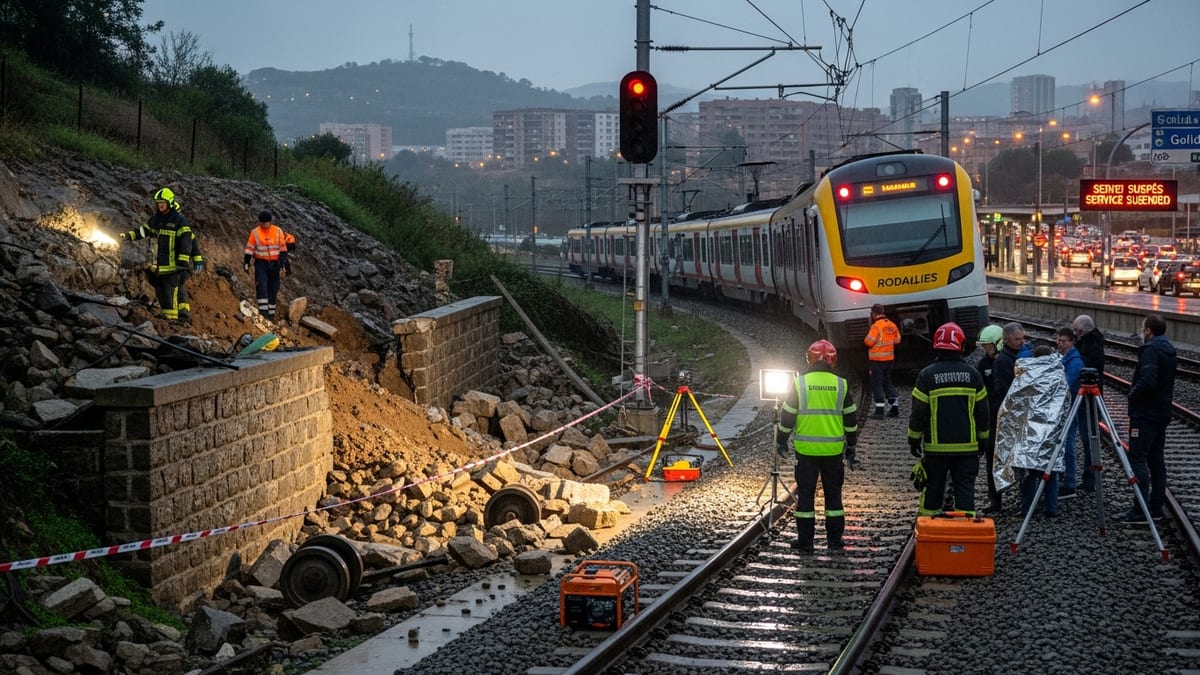
Rail incident near Newnan halts local movement
Publicly available information indicates the incident occurred on Sunday morning, June 28, when a wheelset on an intermodal railcar of a CSX train left the tracks near Herring Road in unincorporated Newnan. The derailment did not involve a high-speed crash or major pileup, but the positioning of the affected cars effectively sealed off access for several nearby neighborhoods.
Coverage from Atlanta-based outlets describes cars stopped at crossings for extended periods while crews assessed the scene and positioned heavy equipment. With the train immobilized across intersections, residents on both sides of the tracks reported being unable to exit or enter their subdivisions without traveling several miles out of their way.
Reports indicate the train was moving along a corridor that carries frequent freight traffic through Coweta County, part of a network that connects the Atlanta region to ports and distribution hubs across the Southeast. The derailment underscored how quickly a localized rail problem can ripple through daily routines in fast-growing suburban areas.
According to published coverage, there were no reported injuries and no hazardous materials were released. CSX representatives noted that only a single railcar’s wheelset derailed and that the remainder of the consist remained upright, allowing crews to focus on rerailing and inspection rather than large-scale debris removal.
Neighborhoods stranded as crossings stay blocked for hours
Residents in affected Coweta County neighborhoods found themselves unexpectedly stranded as the stalled CSX train blocked multiple crossings at once. Local news photographs and video show vehicles stacked at intersections with flashing warning lights, with drivers eventually turning away after it became clear that the wait would be lengthy.
With no precise estimate on reopening times early in the response, some residents reportedly parked on one side of the crossing and walked around the blocked area on foot, while others postponed errands, work shifts or family visits. For households with medical appointments or time-sensitive commitments, the lack of direct access created particular concern.
Travel patterns in the area rely heavily on a small number of east west routes that pass the rail line. When those crossings are blocked simultaneously, navigation apps often offer only long, looping detours that add significant time to short trips. Published coverage indicates that drivers were pushed onto smaller county roads, where congestion and confusion grew as more residents attempted to bypass the closure.
The disruption echoed complaints that surface in many rail-adjacent communities when long trains or incidents block crossings for extended periods. While freight rail plays a central role in regional logistics, Sunday’s derailment illustrated how bottlenecks can feel especially acute in suburban neighborhoods with limited alternative routes.
No spills reported as crews work to rerail train
CSX and contractor crews responded to the scene with specialized equipment designed to lift and rerail freight cars. Publicly available information shows that the work focused on stabilizing the affected car, inspecting the track structure and ensuring that nearby cars remained secure before any movement resumed.
Reports from the scene indicate there were no hazardous materials involved in the derailed railcar and no signs of fuel leaks or cargo spills. That helped keep the incident primarily a transportation and logistics problem rather than an environmental or public health emergency, a notable distinction given high-profile derailments elsewhere in recent years.
Mechanical issues involving a wheelset are among the scenarios that railroads train for extensively. While a full investigation will review the condition of the equipment and track, published coverage notes that the rest of the train stayed aligned on the rails, limiting structural damage to both the consist and the rail bed.
Once the railcar was returned to the track and safety checks were completed, crews shifted focus to clearing the crossing and reopening local roads. The blocked neighborhoods gradually regained access, although some drivers faced residual congestion as traffic patterns normalized.
Derailment renews scrutiny of freight traffic through suburbs
The Coweta County derailment fits into a broader pattern of rail incidents that, even when relatively minor from a safety standpoint, significantly disrupt local mobility. Recent examples involving CSX in Georgia and other states have shut roads, delayed commuter rail, or stranded passengers for hours, feeding ongoing debates about how freight networks intersect with everyday life in growing communities.
Transportation analysts frequently point to a tension between the efficiencies gained by running long, heavy freight trains and the practical realities for residents who live near single-track corridors and at-grade crossings. When a train stalls or derails, those crossings become chokepoints, and neighborhoods can effectively become islands until the line is cleared.
In fast-growing counties outside Atlanta, residential development has edged closer to long-established freight corridors. As Coweta County’s experience shows, that proximity amplifies the impact when something goes wrong, even in a derailment that avoids serious damage or hazardous releases.
Rail safety advocates and local planners have increasingly highlighted strategies such as grade separations, improved warning systems and better real-time communication with residents to mitigate the fallout from rail incidents. While such projects are expensive and often slow to materialize, each new disruption tends to bring renewed attention to how critical these corridors have become for both national freight and neighborhood connectivity.
Questions about preparedness and communication
Sunday’s derailment also raised familiar questions about how communities receive information when key routes are suddenly cut. According to regional news reports, drivers initially had little clarity on how long crossings would remain blocked, leaving many to guess whether to wait or seek alternate paths.
In recent years, several rail-served communities have explored text alerts, social media updates and partnerships with mapping platforms to provide quicker notice of closures tied to rail incidents. The Coweta County disruption is likely to add urgency to those conversations, particularly for neighborhoods that rely on only one or two direct connections to main roads.
Published coverage of similar events suggests that clearer protocols can help residents plan around closures, avoid unnecessary congestion and ensure that emergency services maintain reliable access. While Sunday’s derailment produced no injuries, it highlighted how closely daily life in many suburban areas is intertwined with rail operations that are largely controlled from outside the community.
As cleanup concludes and normal freight schedules resume through Coweta County, transportation observers note that the incident will likely be studied as another case of how a single railcar off the tracks can reshape travel patterns for an entire morning. For residents who were stranded on quiet subdivision streets waiting for crossings to clear, it served as a vivid reminder of both the benefits and vulnerabilities that come with living next to a major freight corridor.