


More news on this day
France is enduring a record-breaking heatwave in late June 2026, with large parts of the country under top-level heat alerts, transport networks under strain and tourism hotspots shortening hours or closing as temperatures regularly pass 40C.
Get the latest news straight to your inbox!
Red Alerts and Record Temperatures Across France
Recent bulletins from the national weather service show that most of mainland France has spent the last week under high-level heatwave vigilance, with many departments upgraded to red alert as temperatures climbed above 40C in cities across the country. Nighttime temperatures have also remained unusually high, leaving little chance for buildings or infrastructure to cool.
Public health data released in recent days indicates a sharp increase in emergency room visits linked to heat stress, particularly among older people and those with pre-existing conditions. National monitoring reports point to hundreds of suspected heat-related deaths and a marked rise in calls to health hotlines as the heatwave stretches on.
Climate attribution scientists examining this episode describe it as part of a broader pattern of more frequent and intense European heatwaves, noting that night-time temperatures and the length of the event distinguish it from many earlier episodes. For travelers, this means that even familiar destinations and seasons can now pose unexpected health and logistical challenges.
French authorities at national and local levels continue to update heat plans, recommending that residents and visitors limit outdoor activity during the hottest hours of the day, seek shade and air-conditioned spaces where possible and pay particular attention to children and older adults.
Flight Disruption and Airport Precautions
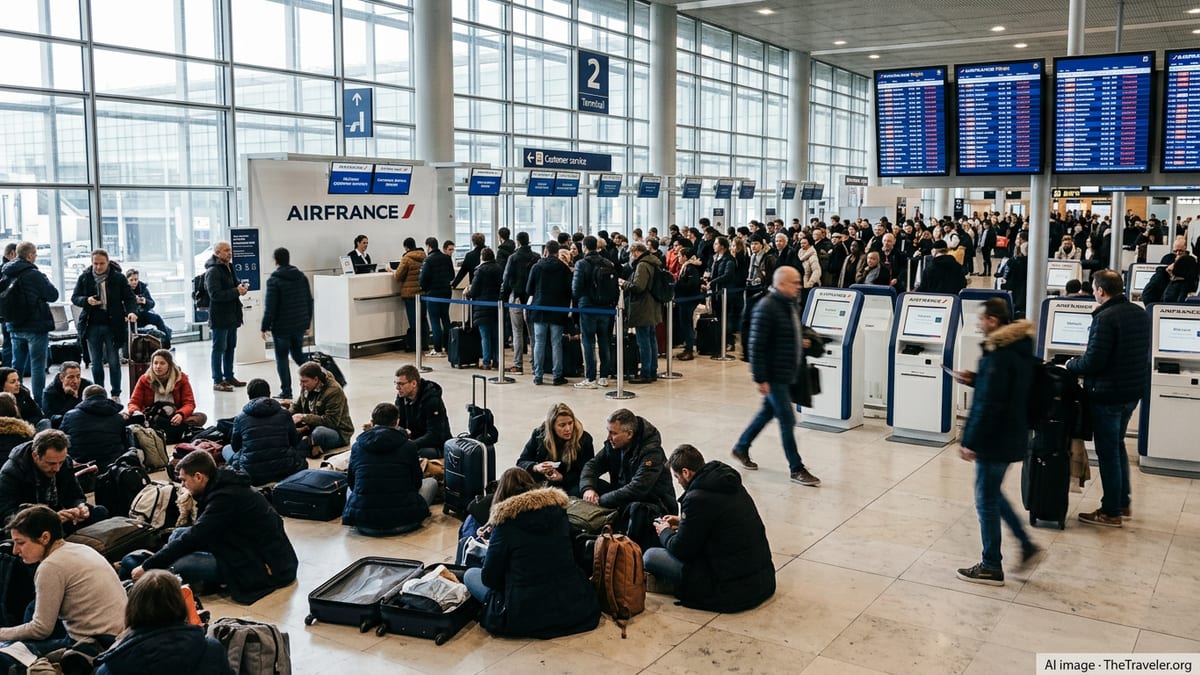
Major airports including Paris Charles de Gaulle and Orly are operating, but aviation and travel industry reports highlight weather-related knock-on effects across Europe, with delays and schedule changes rippling through hubs in France. High temperatures can lengthen aircraft take-off rolls and affect ground operations, particularly during peak afternoon heat.
Airlines have begun advising passengers to monitor flight status closely and to plan extra time at airports in case of disruption. Some carriers are adjusting schedules to shift the heaviest operations to cooler parts of the day, while ground crews work shorter rotations to reduce time spent on the tarmac in full sun.
Travelers may also encounter heat-adaptation measures at airports, such as shaded boarding areas, modified bus transfers between terminals and aircraft, and longer waits for baggage where staff are rotated more frequently. While these steps are designed to protect workers and passengers, they can add to journey times, particularly at busy holiday periods.
For those with tight connections, travel experts now recommend choosing itineraries with longer layovers within France and elsewhere in southern Europe during heat alerts, and considering early-morning or late-evening departures where possible to reduce exposure to peak temperatures.
Rail Cancellations, Slower Trains and Urban Transport Strain
The heatwave is having a significant impact on rail travel in France. Published timetables and operator updates show a wave of pre-emptive cancellations on long-distance Intercités routes in recent days, particularly on lines between Paris and the southwest and central regions. Transport coverage explains that prolonged extreme heat can cause rails to expand, overhead lines to sag and rolling stock to overheat.
On high-speed and regional services, trains that do operate may run more slowly through the hottest parts of the day to reduce stress on infrastructure. This can lengthen journey times and compress peak-hour capacity, especially on busy holiday and commuter routes.
Urban networks are also feeling the pressure. In the Paris region, public information from transport operators warns of hotter-than-usual conditions on older metro lines and some suburban rail services, where air conditioning is limited or nonexistent. Passengers are urged to carry water, avoid crowded carriages where possible and reconsider non-essential journeys at the height of the heat.
International routes are affected too. Cross-Channel travel advisories from recent days note that extreme temperatures have led to the cancellation of some services between London and Paris, with operators encouraging more vulnerable passengers to postpone trips and offering fee-free exchanges where schedules allow.
Closures and Adjusted Hours at Tourist Sites
Tourism and local media reports indicate that many popular attractions across France are adjusting to the heat by shortening opening hours, closing during the hottest part of the day or limiting outdoor activities. In Paris and other major cities, some parks, monuments and riverside spaces have introduced temporary restrictions when temperatures peak.
Museums and large cultural institutions, which often have more robust climate control, are promoting extended evening openings instead, offering visitors an opportunity to explore collections in cooler conditions. However, capacity limits may apply, and queues can still form, particularly when daytime outdoor sightseeing becomes uncomfortable or unsafe.
Along the Atlantic and Mediterranean coasts, beach destinations remain busy, but local authorities have issued repeated reminders about the danger of sudden temperature changes when entering the water after prolonged sun exposure. Recent national bulletins highlight an uptick in drownings during the current heatwave period, often linked to attempts to cool off rapidly.
Travelers heading to rural or mountainous regions should also be aware of the elevated wildfire risk associated with prolonged heat and dry vegetation. Some hiking trails and forested areas may be temporarily closed or subject to access controls, especially in the south of France, where firefighting services are on heightened alert at the start of the summer season.
Practical Safety Guidance for Visitors
Public health agencies in France stress that visitors face many of the same risks as residents during a heatwave, but may be less accustomed to navigating them. For tourists unaccustomed to high temperatures, the combination of jet lag, alcohol consumption, long days of sightseeing and crowded public transport can quickly lead to dehydration and heat exhaustion.
Health guidance emphasizes simple but strict habits: drink water regularly even if you do not feel thirsty, prioritize shade and air-conditioned spaces in the middle of the day, and wear light, loose clothing and a wide-brimmed hat. Sunscreen should be reapplied frequently, especially when walking long distances or using outdoor transport links where shade is limited.
Travel planners advise reorganizing itineraries around the heat rather than trying to maintain pre-planned schedules. Morning and late evening are better suited to outdoor landmarks and walking tours, while the afternoon is best reserved for indoor museums, shopping centers or rest in accommodation with adequate cooling. Many travelers in Paris and other large cities are already adopting a siesta-style rhythm, returning to hotels or apartments during peak heat before heading out again after sunset.
Anyone experiencing symptoms such as dizziness, headache, nausea, confusion or a rapid heartbeat is urged by public health messaging to move immediately to a cool place, sip water and seek medical assistance if symptoms do not improve. Visitors are also encouraged to check local heat alerts each day for their department, available through weather bulletins and local media, and to stay informed about any fresh travel advisories issued as the 2026 heatwave evolves.