


More news on this day
Thousands of rail passengers were left stranded across eastern India on October 30 as Cyclone Arnab disrupted services along the busy Howrah–Chennai corridor, prompting the East Coast Railway to activate extensive safety and contingency measures at major stations and vulnerable sections of track.
Get the latest news straight to your inbox!
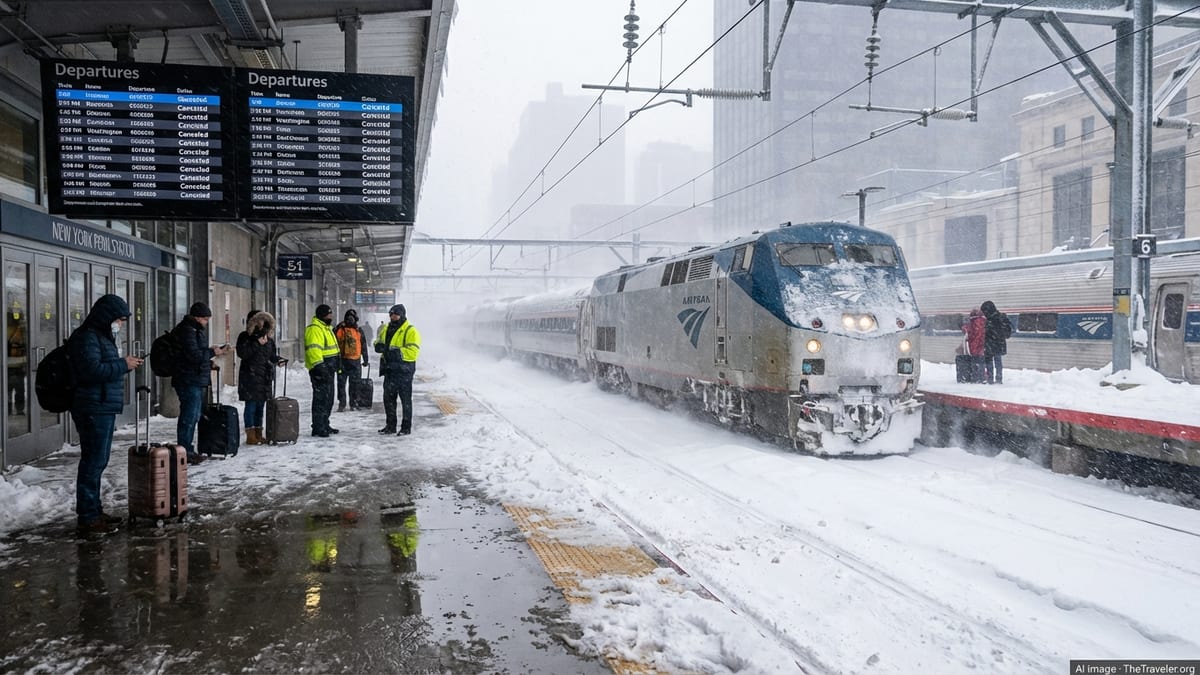
Major cancellations along the Howrah–Chennai coastal corridor
Rail traffic on the Howrah–Chennai main line has been hit by widespread cancellations, diversions and short terminations in response to heavy rain and rising river levels linked to Cyclone Arnab. Reports indicate that on Thursday alone, at least 36 trains were cancelled and 30 diverted after floodwaters in Odisha’s Ganjam district pushed the Bahuda river beyond the danger mark at two key railway bridges on the route, forcing operations to be curtailed as a precautionary measure.
According to national media coverage, Indian Railways has now cancelled more than 40 services between October 29 and November 1, with around 70 others affected by partial cancellations, diversions or regulation. Long distance services connecting Odisha, Andhra Pradesh and West Bengal have been hit, including multiple express trains and at least one Vande Bharat service operating in the coastal belt.
Earlier bulletins noted that over 100 services across several railway zones had already been cancelled or rescheduled in the days leading up to landfall, as the storm intensified over the Bay of Bengal. The steps form part of a broader risk‑reduction strategy intended to keep trains away from flood‑prone bridges, low‑lying sections and areas vulnerable to landslides or embankment erosion.
These suspensions have resulted in heavy crowding at junctions that remain operational, particularly in Odisha and northern Andhra Pradesh, where thousands of passengers have been left waiting for alternative arrangements or onward connections.
ECoR activates control rooms and field monitoring
Within the impact zone, East Coast Railway has moved into a high‑alert posture, with control and emergency monitoring cells functioning around the clock. Regional news outlets report that a dedicated cyclone cell has been opened at the Rail Sadan headquarters in Bhubaneswar, complementing divisional control rooms overseeing train movements in affected sections.
Publicly available information indicates that roughly 600 kilometres of coastal and near‑coastal track are under close observation, including critical bridges and culverts in southern Odisha and north coastal Andhra Pradesh. Track and bridge inspectors, patrolmen and gang staff have been deployed to monitor water levels, scour around bridge piers and the stability of embankments, especially where previous events have shown vulnerability.
Internal disaster management plans made available by East Coast Railway outline detailed protocols for cyclonic conditions, including instructions to halt trains short of vulnerable bridges, restrict speeds in high‑wind zones, and keep accident relief trains and medical units on standby. These guidelines also call for coordination between operations, engineering, electrical and medical teams to enable rapid inspection and phased restoration once wind speeds and water levels begin to fall.
Reports from the corridor suggest that these measures are currently focused on sections close to overflowing rivers, such as the Bahuda in Ganjam district, where sustained rainfall associated with Cyclone Arnab has led to a sharp rise in discharge under key bridges serving the Howrah–Chennai main line.
Stranded passengers face delays as special services and amenities roll out
With numerous long‑distance trains cancelled or held at upstream stations, major junctions in Odisha and Andhra Pradesh have seen a surge in stranded passengers. Visuals and local reports from stations such as Visakhapatnam, Vizianagaram, Srikakulam Road and Palasa describe crowded waiting halls where travellers are waiting for clarity on revised schedules or possible diversions.
To reduce congestion and assist those stuck mid‑journey, Indian Railways is operating at least one unscheduled special train between Visakhapatnam and Palasa in the affected belt. According to published coverage, the service is intended to move passengers from stations where through trains have been terminated early or are skipping stops because of waterlogging and reduced line capacity.
Station‑level arrangements have been strengthened in response. Help desks have been set up at key East Coast Railway hubs including Bhubaneswar, Visakhapatnam, Vizianagaram, Srikakulam Road, Palasa and Ichchapuram to provide information on cancellations, diversions, refunds and rebookings. Reports indicate that catering units have been instructed to maintain sufficient stocks of drinking water and basic meals, while backup power supplies and additional lighting have been readied to keep waiting areas functional during any extended outages.
Travel advisories issued by other zones affected by Cyclone Arnab, such as South Central Railway and South Coast Railway, are being echoed across East Coast Railway territory. Passengers are being urged through public announcements and media updates to check real‑time train status on official railway enquiry platforms before setting out, and to be prepared for last‑minute changes as weather and track conditions evolve.
Safety protocols take priority as cyclone nears and crosses coast
Cyclone Arnab intensified into a very severe cyclonic storm over the Bay of Bengal earlier in the week, before approaching the Andhra Pradesh and Odisha coastline with forecast wind speeds in the range of 125 to 135 kilometres per hour and higher gusts. The India Meteorological Department’s red and orange alerts for districts along the corridor prompted railway zones to shift into pre‑emptive safety mode, temporarily prioritising infrastructure protection and passenger safety over schedule adherence.
Standard operating procedures circulated within East Coast Railway outline that during cyclonic storms, trains should not be allowed onto bridges where water levels are near or above danger marks, nor into sections prone to washouts or falling trees. If a train is caught between stations when conditions deteriorate, guidelines call for it to be halted at the nearest safe location, with onboard staff responsible for keeping passengers informed and arranging first aid if needed.
In recent days, these principles have been visible in operational decisions across the broader region. National‑level updates highlight that hundreds of kilometres of coast‑adjacent track are under strict watch, while emergency materials such as boulders, sandbags and ballast have been pre‑positioned near known trouble spots to shore up embankments or approaches to smaller bridges.
Disaster management documents for East Coast Railway also emphasise post‑storm priorities, including rapid assessment of track geometry, bridge integrity and signalling equipment before any resumption of normal speed operations. The staged restoration process typically starts with light engine runs, followed by limited passenger services, once engineering teams confirm that the cyclone’s rainfall and winds have not compromised safety.
What rail passengers should know in the coming days
For travellers holding tickets over the next several days on routes through Odisha and coastal Andhra Pradesh, publicly available advisories stress the importance of repeatedly checking train status, even after initial confirmation. Given the dynamic nature of cyclonic systems, services that appear to be operating in the morning can still be cancelled, rescheduled or diverted later in the day if conditions worsen along their path.
Railway guidance notes recommend that passengers heading to or from the affected belt plan for longer journeys and possible layovers, carrying essential medicines, light snacks and water, particularly when travelling with children or elderly family members. At stations, travellers are encouraged by official notices and announcements to follow instructions from railway staff regarding platform changes, regulated boarding and the use of designated waiting areas during spells of heavy rain or strong wind.
Refund arrangements for cancelled trains are being facilitated through ticket counters and digital platforms, with extra counters opened at some busy junctions during cyclone‑linked disruptions. Passengers whose trains have been short‑terminated or who are stranded far from their destination are being directed to station help desks for information on alternative services, including any additional specials introduced once conditions permit.
While the precise timeline for a full resumption of normal services will depend on the pace at which rains ease and rivers recede, East Coast Railway and neighbouring zones continue to signal that safety will remain the overriding consideration. Until inspections confirm that key bridges, embankments and signalling equipment are secure, travellers along the cyclone‑affected corridor are likely to experience ongoing delays and short‑notice alterations to long‑distance schedules.