


More news on this day
The Czech Republic has started introducing 5G connectivity inside key railway tunnels, marking a significant step in efforts to remove mobile signal blind spots on major corridors and prepare the network for next generation digital rail systems.
Get the latest news straight to your inbox!
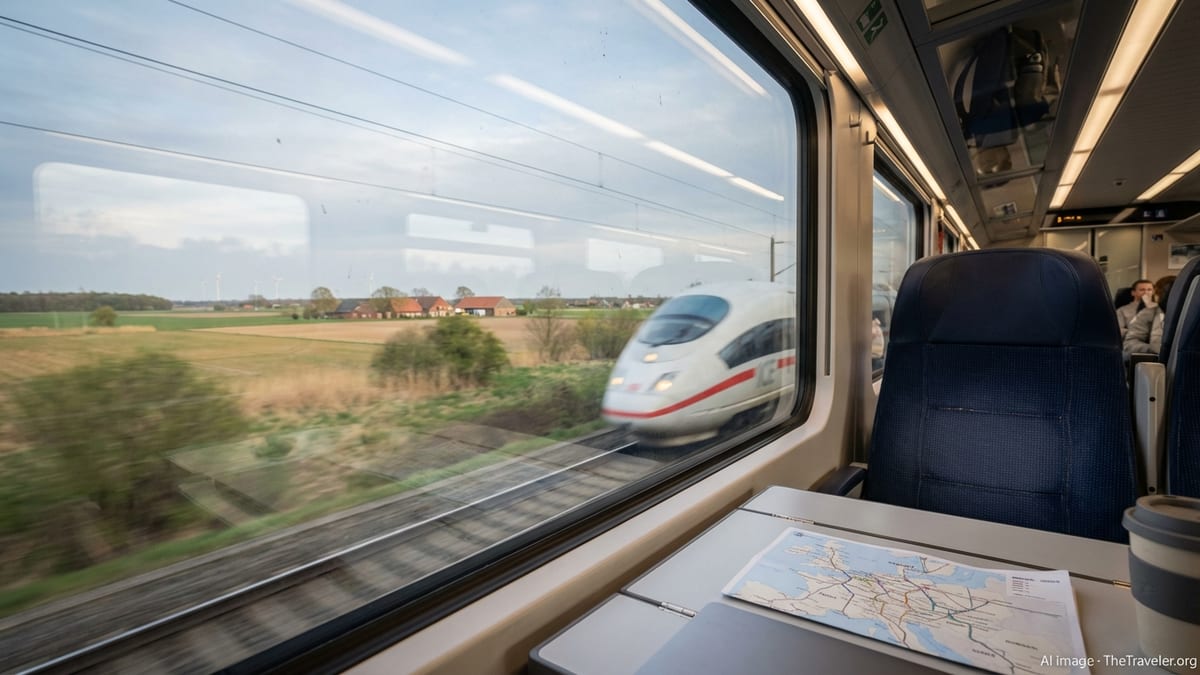
First railway tunnels gain continuous 5G coverage
Recent reports from Czech rail and telecom industry outlets indicate that the first sections of railway tunnels on priority transit corridors are now fully served by 5G networks. Mobile operators, working in coordination with the national rail infrastructure manager Správa železnic, have installed dedicated equipment to carry high speed signals through previously disconnected underground sections.
The work follows several years of nationwide 5G deployment on open track and along highways, where coverage obligations were linked to the country’s spectrum auctions. Publicly available information from the Czech Telecommunication Office shows that operators have already achieved near complete 5G coverage along key corridors at trackside, and are now extending that connectivity into tunnels themselves as part of a multi year rollout.
The initial tunnel upgrades focus on long, high traffic structures on routes linking Prague with major regional cities. Industry coverage notes that these pilot locations are being used to fine tune technical solutions such as in tunnel repeaters and leaky feeder cables that can reliably carry 5G signals at high train speeds and in challenging underground conditions.
While exact commercial timelines vary by operator and corridor, published monitoring reports indicate that the first upgraded tunnels already provide continuous 5G coverage from portal to portal, eliminating the “silent” gaps that passengers and onboard systems previously experienced.
Passenger connectivity and safety seen as main benefits
The most visible change for travelers is expected to be more stable mobile connectivity during journeys that pass through long tunnels. With 5G coverage, passengers should experience fewer dropped calls and more consistent data speeds, supporting activities such as video streaming, remote work and real time messaging without interruption when trains go underground.
Sector analyses also highlight potential benefits for onboard Wi Fi systems, which often rely on mobile networks to provide backhaul. Continuous 5G coverage through tunnels can allow operators to maintain a steady connection to trackside infrastructure, reducing the sharp slowdowns and outages that are common when trains move between open sections and signal dead zones.
Beyond passenger comfort, the new coverage is being closely linked with safety and operational resilience. Public documents on Czech rail digitalization plans state that reliable broadband mobile communications are increasingly important for real time monitoring of rolling stock, support systems for train drivers and rapid information exchange in emergencies. Extending 5G into tunnels is viewed as a critical step in making those functions dependable along the entire route.
Emergency response scenarios are a particular focus, with technical briefings describing how robust in tunnel connectivity can help coordinate rescue teams, transmit video from the scene and maintain communication with passengers if an incident occurs underground.
Foundation for future FRMCS rail communication system
The 5G rollout in tunnels is also closely tied to preparation for the Future Railway Mobile Communication System, known as FRMCS. This new European standard is intended to replace the long serving GSM R technology that currently underpins railway voice and data communication on many lines.
Project information published by rail sector platforms explains that FRMCS is designed to work on top of 5G networks and provide mission critical services for signaling, train control and other operational applications. To support this, continuous 5G coverage along tracks, including inside tunnels, is considered a prerequisite on main corridors.
Czech infrastructure planning documents describe a phased implementation in which selected pilot routes are equipped with 5G radio coverage and evaluated for their readiness to host FRMCS services. Tunnels have been identified as a high priority component in these pilots, as communication reliability is most difficult to guarantee in enclosed, interference prone environments.
By moving early to equip tunnels with 5G, rail authorities and operators aim to shorten the path to FRMCS deployment once the standard is finalised at European level. This is seen as strategically important for meeting wider goals on capacity, punctuality and cross border interoperability.
Technical approach tailored to challenging tunnel environment
Delivering 5G services in long, curved or deep tunnels presents a series of technical challenges. Publicly available technical briefings from engineering and telecom firms involved in the Czech projects describe a mix of outdoor base stations at tunnel portals and specialised equipment mounted inside the structure.
In many cases, passive or active repeaters and so called leaky feeder cables are used to propagate the radio signal along the tunnel length. These systems effectively act as elongated antennas running parallel to the track, ensuring that radio coverage remains stable even when trains travel at high speed and through bends that would otherwise block direct signals from outside masts.
Engineers also need to consider the presence of existing rail systems such as power lines, signaling cables and ventilation equipment. The 5G solution must be installed in a way that does not interfere with those systems and can withstand the vibrations, temperature variations and humidity typical of heavy rail tunnels.
According to sector case studies, the Czech deployments are also being designed with future capacity increases in mind. Infrastructure for additional spectrum bands or more advanced 5G features can be added later without extensive reconstruction, allowing the system to adapt as passenger demand and rail digitalization projects grow.
Part of a broader European push to digitize rail corridors
The introduction of 5G in Czech railway tunnels forms part of a wider European effort to bring high capacity mobile networks to key transport routes. Policy papers on the continent’s 5G corridors initiative describe an ambition to provide uninterrupted advanced connectivity along major rail and road axes, supporting both passenger services and connected, automated mobility.
Czech authorities have been involved in several cross border projects and studies under European funding programmes that test 5G and future communication systems in real operating conditions. These initiatives examine handovers between networks at borders, performance at high speed and the integration of telecom infrastructure planning with rail investment schedules.
As more tunnels and open track sections in the Czech Republic gain 5G coverage, observers expect closer alignment with these European pilots. The country’s central location on routes between Germany, Austria, Slovakia and Poland means that consistent digital infrastructure could play an important role in improving international rail operations.
Industry commentary suggests that the early tunnel deployments are likely to be expanded across further sections of the network over the coming years. If current plans progress as indicated in public strategies and monitoring reports, passengers and rail operators may see 5G coverage evolve from isolated pilot segments into a standard feature of travel on the country’s busiest lines.