


More news on this day
Commuter rail service on the South Shore Line was abruptly suspended after a nearby freight train derailment and associated power loss disrupted operations, stranding riders and forcing the railroad to cancel trains for the remainder of the evening.
Get the latest news straight to your inbox!
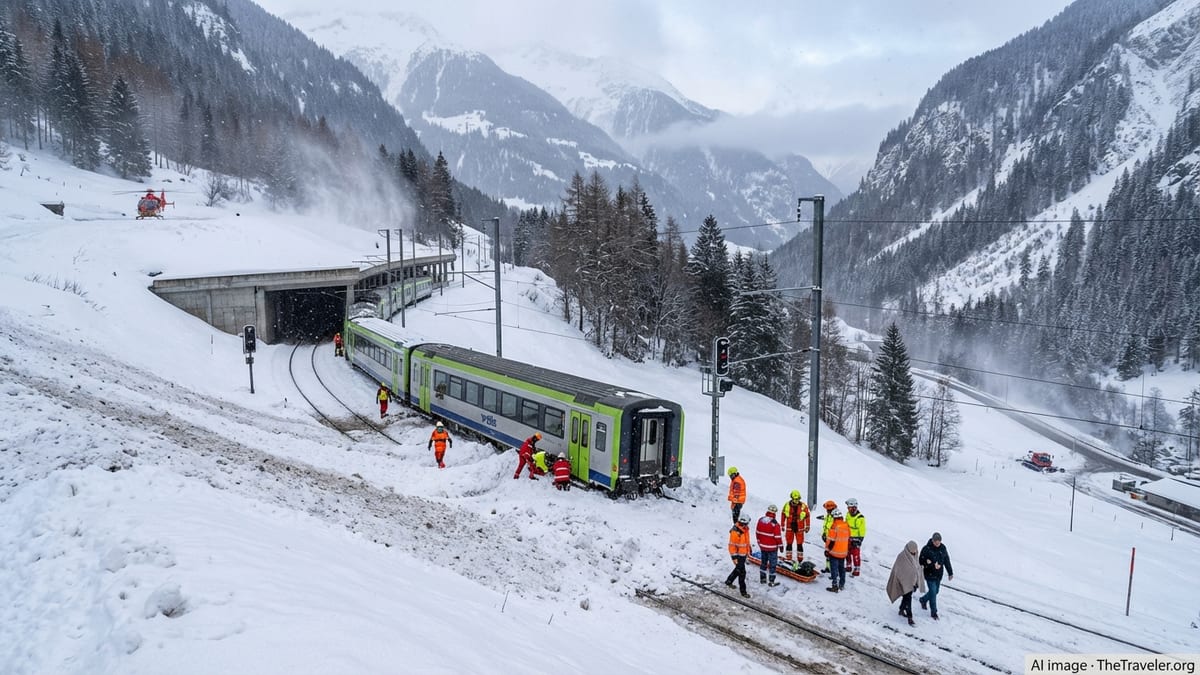
Derailment and power failure bring corridor to a standstill
According to early reports, a freight train derailed along a key stretch of track used by the South Shore Line, triggering a cascading power issue that forced the commuter operator to shut down service. Coverage from regional outlets indicates that the incident occurred late Wednesday, prompting the line to halt trains in both directions while crews assessed damage and attempted to stabilize the electrical system.
Publicly available information shows that the derailment affected overhead power and signal infrastructure in the area, leaving trains unable to safely proceed. As conditions became clearer, the South Shore Line announced that no additional trains would operate for the rest of the night, effectively ending the evening commute and leaving passengers to seek alternative routes by highway or connecting transit.
Initial accounts suggest that the freight consist left the rails at relatively low speed near a junction shared with commuter operations. There were no immediate indications of hazardous material releases or serious injuries, but the combination of track damage and loss of power was significant enough to make continued passenger service impossible until repairs could be made.
The incident adds to a growing list of freight-related disruptions affecting passenger rail corridors across North America this year, highlighting the operational risks that arise when commuter trains share infrastructure with heavy freight movements.
Impact on commuters from Chicago to northwest Indiana
The suspension hit riders along the busy corridor between Chicago’s Millennium Station and communities across northwest Indiana at the height of the evening rush. Published coverage notes that trains already en route were delayed, turned back, or terminated short of their destinations as dispatchers worked to clear the line and avoid bottlenecks near the derailment site.
Passengers reported crowded platforms, limited information, and long waits for alternative transportation. With no full rail replacement in place for the evening, many riders turned to ride-hailing services, intercity buses, or personal vehicles, contributing to heavier than usual traffic on parallel highways.
Communities that rely heavily on the South Shore Line for work trips into downtown Chicago were particularly affected. Riders from Hammond, East Chicago, Gary, Michigan City, and newly served extension communities faced longer and less predictable journeys home. The disruption underscored the line’s role as a critical commuting lifeline and its importance to cross-border economic activity between Indiana and Illinois.
Some travelers turned to social media to share photos and anecdotes of full parking lots, stalled itineraries, and live updates on the evolving situation. Those accounts, together with local news coverage, provided a picture of a network suddenly brought to a halt by a single infrastructure failure.
Restoration efforts and short-term alternatives
Public advisories from the South Shore Line and local media indicate that crews were dispatched quickly to inspect track conditions, re-energize affected power systems, and remove derailed freight cars from the right-of-way. The complexity of that work, especially around overhead wires and signal equipment, made immediate resumption of normal service unlikely.
In similar recent disruptions on other regional railroads, repairs and inspections have taken anywhere from several hours to multiple days, depending on the extent of the damage. Industry practice typically requires close coordination among freight operators, commuter agencies, and power utilities before trains can safely return to normal speeds through a derailment zone.
In the short term, riders were advised through public postings to monitor schedule updates, consider busing or alternate rail routes where available, and build extra time into their trips. Experiences from previous South Shore Line interruptions suggest that limited train or bus-bridge operations may return first, followed by gradual restoration of full service once inspections conclude.
Transit watchers noted that the timing of the incident, coming during ongoing construction and expansion projects around the corridor, may complicate logistics for both repair crews and passengers. Detours and track work already in place could limit options for rerouting trains around the damaged segment.
Safety, infrastructure, and shared freight corridors under scrutiny
The derailment and power loss are renewing attention on the vulnerabilities of shared freight and commuter corridors in the Midwest. Transportation analysts point out that while freight railroads own and maintain much of the infrastructure, disruptions can reverberate through passenger systems that depend on the same tracks, signals, and electrical equipment.
Recent incidents on other North American commuter lines, where freight derailments or power failures led to widespread cancellations and delays, have prompted calls for more resilient infrastructure, upgraded signaling, and targeted investments in catenary systems. The South Shore Line has already been the focus of substantial modernization efforts, but the latest shutdown demonstrates how a single derailment can still sideline an entire service for hours.
Publicly available data show that derailments remain relatively rare compared with the total volume of freight moved across the rail network each day. However, when they do occur in dense commuter corridors, the consequences for riders can be immediate and disruptive, raising questions about contingency planning, redundancy, and communication practices.
Advocates for passenger rail are likely to point to this event as further justification for continued investment in dedicated tracks, additional passing sidings, and hardened power supplies that can better withstand incidents on adjacent freight lines. Such upgrades, they argue, would help protect daily commuters from the ripple effects of freight operations beyond their control.
Economic stakes for the South Shore corridor
The sudden suspension of South Shore Line service also carries economic implications for the wider region. The line links key employment centers in Chicago with growing residential and commercial districts in northwest Indiana, and recent expansions have been marketed as catalysts for new development along the route.
Regional planners and business groups have long framed reliable rail service as a competitive advantage for communities seeking to attract employers and residents who value transit access. Disruptions of this scale test that proposition, especially if repeat incidents erode confidence among daily riders and prospective investors.
At the same time, the line’s strong ridership base and ongoing capital projects suggest that stakeholders view these challenges as part of a longer-term modernization process. The response to this derailment, including the speed and transparency of recovery efforts, may influence public perception of how well the system can adapt and improve.
As investigators and maintenance teams continue their work, attention across the Chicago and northwest Indiana region is likely to remain focused on when full South Shore Line service can safely resume, and on what lessons will be drawn to reduce the risk of similar large-scale disruptions in the future.