


More news on this day
Hundreds of travelers were left stranded across Texas and beyond after a day of severe disruptions at Dallas Fort Worth International Airport and Dallas Love Field, where publicly available tracking data showed at least 1,018 flight delays and 237 cancellations affecting American Airlines, Air Canada, PSA Airlines, SkyWest, Frontier, Envoy Air and other carriers, with knock-on impacts rippling through networks serving the United States, Canada, Mexico, the United Kingdom and France.
Get the latest news straight to your inbox!
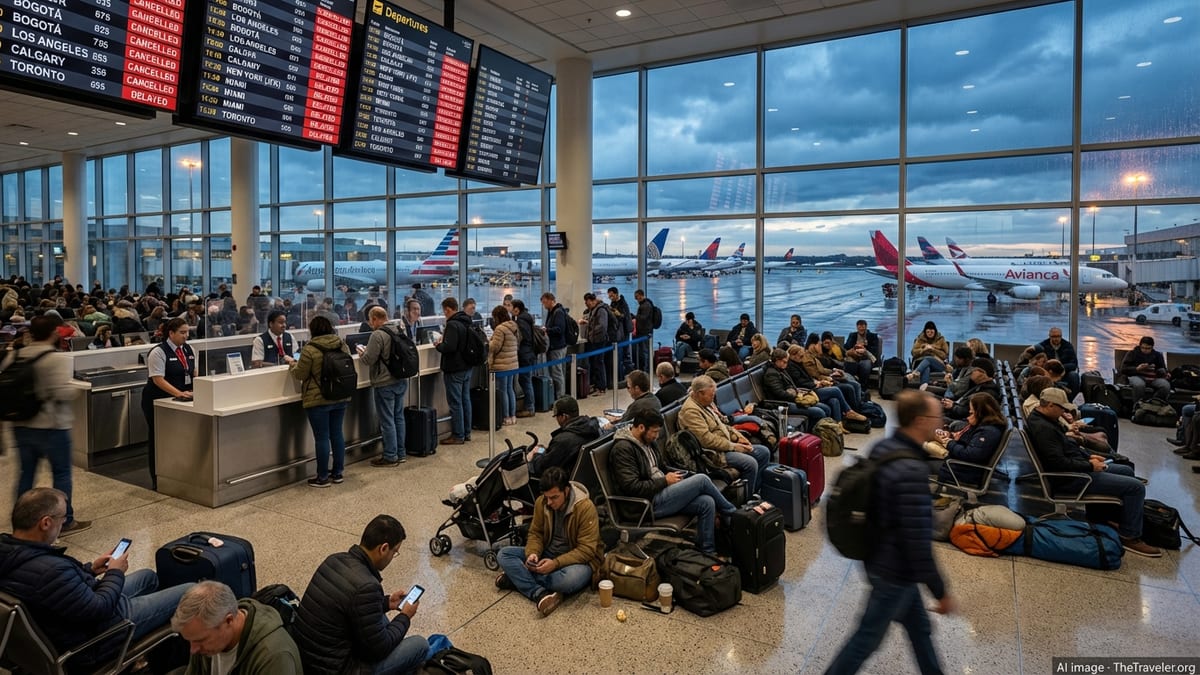
Storms and Congestion Converge on North Texas Hubs
Weather systems moving across North Texas combined with existing congestion to create a difficult operating environment at Dallas Fort Worth and Dallas Love Field. Data from flight tracking dashboards indicated that arrivals into the region were repeatedly slowed or rerouted, forcing airlines to delay departures while crews and aircraft waited for clearance or repositioning.
Dallas Fort Worth, a key hub for American Airlines and several regional partners, saw the largest share of disruption. As operations backed up, aircraft arriving late into the hub could not turn around on schedule, and outbound flights to major U.S. and Canadian cities struggled to depart on time. Similar patterns have been observed in recent nationwide disruption days, where storms at one or two hubs quickly cascade across entire networks.
At Dallas Love Field, traffic levels are lower but still significant for intra-Texas and select interstate routes. When air traffic control programs slow arrivals into the broader Dallas airspace, both airports can experience ground holds, compounding delays for flights already facing weather-related reroutes along their paths.
Reports from aviation data providers suggest that the disruption window stretched across much of the day, with peak delays clustering around afternoon and evening departure banks that normally connect passengers to onward destinations across North America and transatlantic gateways.
Major Carriers and Regional Affiliates Bear the Brunt
American Airlines, which relies on Dallas Fort Worth as its largest hub, accounted for a significant portion of the delays and cancellations. Partner regional carriers such as PSA Airlines, Envoy Air and SkyWest also faced substantial schedule disruption, particularly on shorter routes feeding into Dallas from smaller cities across Texas, the South and Midwest.
These regional flights, often operated with smaller jets or turboprops, tend to be among the first services trimmed when airlines manage limited runway capacity or crew availability. Public itineraries showed multiple cancellations on routes linking nearby communities to Dallas, forcing passengers to attempt lengthy re-bookings or, in some cases, ground transport alternatives.
Low cost and foreign carriers serving Dallas were not spared. Frontier Airlines experienced knock-on delays as aircraft scheduled for quick turnarounds remained on the ground longer than planned. Air Canada services connecting Dallas with Canadian hubs also reported irregular operations as departure and arrival times slipped, complicating onward connections to domestic Canadian and transatlantic flights.
Because many of these airlines interline passengers through Dallas onto other carriers or alliance partners, delays at the Texas hub also disrupted itineraries extending well beyond the United States, including trips connecting to Mexico, the United Kingdom and France via larger gateway airports.
Ripple Effects Across the United States, Canada and Europe
The scale of the disruption in Dallas had visible knock-on effects throughout airline networks. Flights departing from cities such as Chicago, Denver, Phoenix and Miami with Dallas-bound aircraft faced rolling delays as they waited for cleared arrival slots or for inbound planes to complete earlier segments. Once these flights arrived late into Dallas, many onward services to secondary U.S. and Canadian destinations were pushed back or canceled.
Connections beyond North America also felt the strain. Travelers scheduled to connect in Dallas from regional U.S. or Mexican cities onto transatlantic flights to the United Kingdom and France encountered missed connections when inbound legs arrived outside their planned windows. In some cases, passengers were rebooked via alternate hubs such as New York, Chicago or Toronto, while others were offered overnight accommodation and next-day departures.
Published coverage of similar operational days this season has underscored how even a few hours of constrained arrivals and departures at a large hub can translate into widespread disruption for long haul services. Aircraft scheduled to operate overnight transatlantic routes often depend on punctual completion of earlier domestic segments. When those earlier flights run late or are canceled, crews may exceed duty time limits, forcing airlines to swap aircraft or reschedule departures into the following day.
These ripple effects mean that disruption initially centered in Texas can quickly affect travelers from Vancouver and Montreal to London and Paris, even if local weather at their departure airports remains calm and clear.
Why One Bad Day in Dallas Disrupts Entire Networks
Analysts reviewing operational data point to the structural role that Dallas Fort Worth plays in airline scheduling. As a primary connecting hub with tightly banked arrivals and departures, the airport relies on precision timing to move large volumes of passengers between flights within short connection windows. When storms or traffic control initiatives force even modest delays, the banked model leaves little slack to absorb irregular operations.
Airlines must then make rapid decisions about which flights to delay, which to cancel entirely and where to reposition aircraft to preserve as much of the schedule as possible. Short-haul regional services into the hub are frequently sacrificed first, as canceling them frees up runway slots and resources for longer haul flights that carry more passengers or connect to international networks.
Publicly available performance statistics from recent years show that hubs with heavy connecting traffic experience some of the highest concentrations of delays during severe weather events. Dallas, alongside other major nodes such as Chicago O Hare and Atlanta, regularly features in federal and industry reports that track days with elevated cancellation and delay rates.
Because crews are limited by strict duty time rules, extended ground holds can also trigger crew misalignments. A flight that waits on the tarmac for a long period may depart too late for the same crew to legally operate its next segment, forcing the airline to find reserve crews or cancel further downline legs. This dynamic was visible in the pattern of cancellations affecting regional affiliates during the latest Dallas disruption.
What Travelers Can Do on High Risk Weather Days
The episode in Dallas offers a fresh reminder for travelers navigating peak season that schedules are particularly vulnerable when weather targets large hubs. Consumer advocates and travel specialists recommend booking earlier flights where feasible, as morning departures are statistically less affected by rolling delays that accumulate throughout the day.
Passengers are also encouraged to monitor airline apps and airport departure boards closely once forecasts point to storms near major hubs such as Dallas. Same day rebooking options and automatic updates often appear first in digital channels, giving affected travelers a better chance of securing remaining seats on alternative flights before they sell out.
Building extra connection time into itineraries that pass through weather prone hubs can provide additional protection. While tighter connections may appear more convenient, they leave little margin if inbound flights run late due to air traffic control programs or temporary ground stops.
Finally, travelers with critical same day commitments at their destinations may benefit from considering nonstop routes that bypass vulnerable hubs when options and budgets allow. On days like the recent disruption in Dallas, the most challenging itineraries were those that depended on multiple regional segments feeding into a single, heavily impacted airport.