


More news on this day
The June 30 freight train derailment near Trevose in Bucks County brought rail safety into sharp focus for residents and travelers, yet federal records and statewide analyses indicate that incidents of this kind remain relatively rare in the suburban county north of Philadelphia.
Get the latest news straight to your inbox!
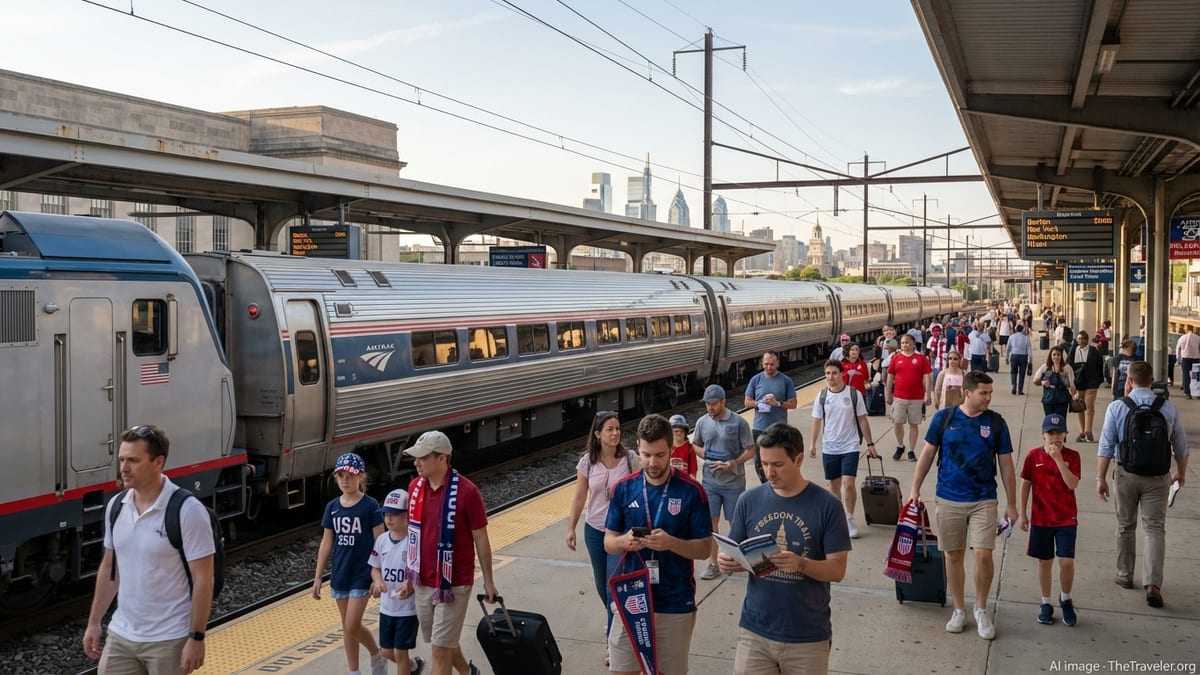
Recent Bucks County Derailment Heightens Public Concern
The latest derailment involved a CSX freight train that left several cars off the tracks near East Bristol Road in the Bensalem and Trevose area on June 30, 2026, according to regional news coverage and statements released by the railroad. The incident prompted temporary evacuations, a shelter in place alert and a shutdown of nearby commuter rail service, briefly transforming a busy suburban corridor into an active emergency zone.
Reports indicate that none of the derailed cars released hazardous materials, and crews moved quickly to stabilize the train, remove damaged cars and reopen key roadways. Within hours, local travel began to normalize, though residual service disruptions continued into the following day as inspections and repairs progressed along the affected stretch of track.
Travel oriented outlets and local newspapers describe the derailment as disruptive but limited in long term impact, particularly for visitors using the greater Philadelphia region as a base. Passenger trains resumed service after inspections, and freight operations were gradually restored as CSX rerouted some traffic and completed track work in the Trevose area.
Federal Data: Few Train Accidents Logged in Bucks County
While images of freight cars leaning at sharp angles near homes and businesses can fuel perceptions that derailments are frequent, federal statistics tell a more restrained story for Bucks County. Data compiled by the Federal Railroad Administration, which tracks reportable train accidents nationwide, shows only a small number of derailments in the county over the past several years compared with more heavily industrial parts of Pennsylvania.
Publicly accessible FRA tools allow users to filter by state and county, revealing that the bulk of Pennsylvania’s freight related derailments tend to cluster around major rail hubs and dense industrial corridors. Bucks County, by contrast, records only occasional freight incidents, generally involving limited property damage and few, if any, injuries. State level research prepared for policymakers in Harrisburg likewise characterizes derailments in suburban counties such as Bucks as infrequent events set against thousands of train movements annually.
National data from the Department of Transportation and the Bureau of Transportation Statistics provides additional context. Over the past decade, the rate of train accidents involving derailments has declined across the United States, even as freight volumes on key corridors remain high. Industry fact sheets drawing on FRA reports note that the derailment rate for large freight railroads has fallen significantly from levels seen a generation ago, reflecting investments in track upkeep, inspection technology and operating practices.
How Bucks County Fits Into the Statewide Rail Network
Bucks County sits along important freight and passenger routes linking the Philadelphia metropolitan area to New York, New Jersey and points farther north and west. Longstanding rights of way carry a mix of commuter trains, Amtrak service in nearby corridors and freight traffic operated by major railroads such as CSX. Yet much of the heaviest freight activity in Pennsylvania is concentrated elsewhere, particularly around steel, energy and intermodal hubs farther west.
State level mapping of rail lines and population centers suggests that Bucks combines busy transportation infrastructure with a relatively high proportion of residential and commercial uses near the tracks. Even so, analysts who examine Pennsylvania derailment patterns for legislative agencies describe the county as a place where train traffic is steady but not dominated by the long, heavy unit trains that characterize more industrial regions. As a result, when accidents occur in Bucks, they tend to involve shorter consists and lower overall damage totals than some of the headline making events seen in other states.
That positioning helps explain why rail safety in Bucks County often surfaces less in conversation than roadway congestion or airport capacity. Many residents encounter trains mostly as a backdrop to daily commuting or regional trips, until a high visibility event like the recent Trevose derailment interrupts routines and raises new questions about how often such incidents truly occur.
Travel Disruptions Are Noticeable, But Typically Short Lived
For travelers, even a single derailment can feel significant when it shuts down a key crossing or suspends regional rail service for part of a day. In the recent Bucks County case, shelter in place alerts and road closures near the tracks temporarily complicated trips to and from Northeast Philadelphia, nearby malls and hotels, and residential neighborhoods that rely on surface streets crossing the rail corridor.
Reports from local outlets and travel focused publications describe similar patterns in past Pennsylvania derailments that did not involve large hazardous material spills. Crews focus first on stabilizing equipment and ensuring no active threat to surrounding communities, then shift to rerailing cars, repairing track and inspecting signaling equipment. Passenger lines that share tracks or adjacent right of way are often subject to temporary suspensions or reduced schedules until inspectors clear them to resume normal operations.
In most documented cases around the state, those disruptions last hours rather than days. When damage is more extensive, rail operators may divert freight along alternate routes while repairs continue, while passenger agencies offer bus bridges or modified timetables. For visitors relying on rail to access Bucks County or connect through the region, checking operator alerts on the day of travel remains the most effective way to avoid surprises when a rare incident does occur.
Why Derailments Remain Uncommon Despite Public Anxiety
The visible drama of a freight train leaving the rails often contrasts sharply with the underlying statistics. National safety data compiled by the Federal Railroad Administration indicates that train accidents, including derailments, make up a small fraction of overall transportation incidents relative to the scale of rail operations. Each year, tens of thousands of trains move through Pennsylvania without incident, while only a limited number generate the kind of damage that triggers federal reporting thresholds.
Industry organizations point to a combination of continuous rail inspections, advanced defect detection equipment, upgraded railcars and stricter operating rules as factors that have pushed accident rates lower over time. These measures apply across the network, including the corridors crossing Bucks County, helping reduce the likelihood that track flaws, equipment issues or human error will result in a significant derailment.
At the same time, high profile national events, such as the hazardous materials derailment in East Palestine, Ohio, have heightened public sensitivity to any mention of trains leaving the tracks. When even a non hazardous incident occurs near homes, schools or shopping areas, it can understandably generate anxiety well beyond the measured risk documented in safety databases.
For Bucks County, the emerging picture from federal records, state research and local reporting is that derailments do happen, but not often and usually with limited community impact. The recent Trevose incident highlights both the disruptive potential of a single accident and the broader reality that, by the numbers, train derailments remain rare in this corner of suburban Pennsylvania.