


More news on this day
British holidaymakers heading to Europe this summer are being urged to brace for passport queues of up to six hours at seven major airports, as new biometric border checks collide with peak-season crowds and exposed weaknesses in local infrastructure.
Get the latest news straight to your inbox!
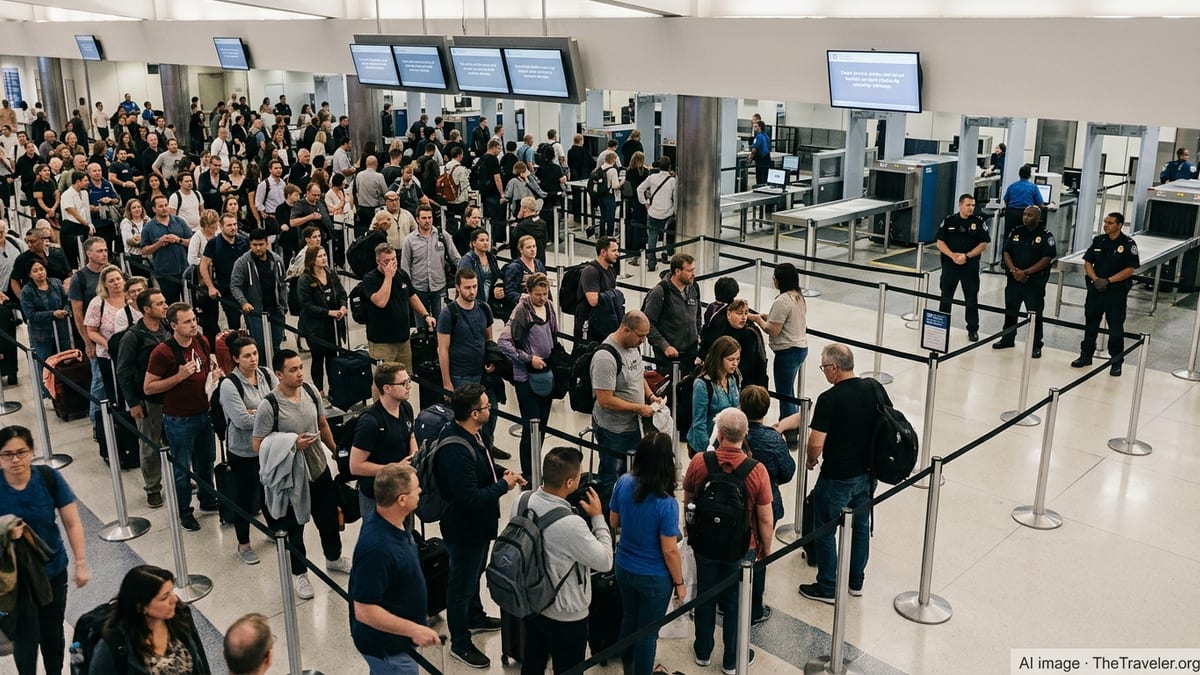
New EU border system behind growing queues
Reports across European and UK travel media link the latest warnings to the European Union’s new Entry/Exit System, which became fully operational at Schengen external borders in April 2026. The system requires most non EU visitors, including British passport holders, to undergo fingerprinting and facial scans on arrival, replacing the old passport stamping process.
Industry briefings indicate that while the technology was tested in quieter periods, high summer traffic has pushed many airports close to capacity at border control. At the busiest gateways, travellers have already reported waits of several hours, particularly at peak weekend and school holiday periods.
Airline and airport trade bodies have cautioned that, without further adjustments, queues of four hours could become common at some EU airports, with worst case scenarios stretching to around six hours when systems slow or when travellers must re register biometric data.
Publicly available information from aviation groups suggests that the combination of new checks, staff shortages and uneven investment in infrastructure has created a patchwork of experiences, with some airports coping relatively well and others struggling to manage the extra processing time per passenger.
Seven airports singled out as summer pressure points
Recent carrier updates and media coverage highlight seven European airports where British travellers are considered most at risk of lengthy border queues this summer. The list, which focuses on popular leisure gateways and low cost hubs, includes Malaga, Alicante, Palma de Mallorca and Tenerife South in Spain, Milan Bergamo in Italy, Krakow in Poland and Paris Beauvais in France.
These airports handle large volumes of UK leisure traffic, particularly on short haul, high frequency routes operated by low cost airlines. Many also rely on a mix of traditional manned booths and a limited number of self service kiosks, which can quickly become overwhelmed when several flights land in close succession.
Travel reports describe early summer scenes of snaking queues at passport control, late night arrivals processing passengers well past scheduled times and some outbound flights leaving with empty seats because travellers were still stuck in border lines. At several of the named airports, local media have documented passengers missing connections or having to rebook at their own expense.
According to published coverage, airlines have now started flagging these seven locations in passenger communications, advising customers to allow significantly more time than usual and warning that queues could grow even longer as July and August traffic builds.
Airlines and airports push for changes
The mounting disruption has prompted a coordinated response from airline and airport associations, which argue that the current rollout of the Entry/Exit System is not sustainable at peak times. Open letters from groups representing carriers and airport operators urge EU institutions to offer more flexibility, including the option to pause or scale back certain checks during the busiest summer weeks.
These organisations report that border queues linked to the new system have already reached what they describe as a critical point at some locations, with passengers queueing outside terminal buildings and on airport aprons because interior facilities cannot safely accommodate the crowds.
Aviation analysts note that the situation is especially acute at holiday focused airports where terminal layouts were designed around rapid turnarounds and relatively simple passport checks. Retrofitting additional space for biometric kiosks and holding areas is complex and, in some cases, constrained by surrounding infrastructure.
Despite the pressure, there is no indication so far of a bloc wide suspension of the system. Instead, some countries are experimenting with targeted measures, such as temporary staffing boosts, mobile enrolment teams and limited exemptions, to avoid the longest bottlenecks during school holidays.
What this means for British travellers this summer
For UK passengers, the most immediate impact is the need to allow more time at both ends of a European trip. Airlines serving the seven named airports are advising travellers to arrive at departure airports earlier than usual, particularly for flights scheduled to land in Spain, Italy, Poland or France during busy afternoon and evening peaks.
Travel guidance circulating in consumer media suggests that British visitors should treat biometric enrolment as a significant extra step in the journey, especially if they have not used the Entry/Exit System before. Families with children, older travellers and those with tight onward connections are being encouraged to build in a wider margin of safety.
Reports also highlight the importance of checking airline and airport updates up to the day of travel, as local conditions can change quickly with weather disruptions, strikes or technical issues on top of the new border regime. Some carriers have indicated that they may close boarding earlier than in previous summers to account for potential security or passport delays on the outbound leg.
Passenger accounts from early adopters of the system point to a wide range of experiences, from moving through checks in under half an hour at quieter times to waiting several hours in hot, crowded halls when multiple flights arrive together. This variability makes it difficult for travellers to predict their own wait time, reinforcing the message to err on the side of caution.
Calls for longer term fixes beyond 2026
Beyond this summer, industry observers see the current disruption as a stress test for how Europe manages growing volumes of non EU visitors while maintaining security standards. Official forecasts show steady growth in UK outbound travel through the rest of the decade, raising questions about how the system will cope once demand surpasses pre pandemic levels at major hubs.
Commentary in business and aviation media suggests that long term improvements are likely to depend on a combination of additional staffing, expanded border hall capacity and more sophisticated automation, including wider use of advance data collection and pre travel registration tools.
Some analysts argue that closer coordination between EU border authorities, national governments and airlines will be essential to avoid repeats of this year’s bottlenecks. They point to the risk that persistent multi hour queues could damage Europe’s reputation with international visitors and push some travellers to look at alternative destinations.
For now, however, British holidaymakers planning trips to the seven highlighted airports are being advised to assume that queues could be far longer than in previous years, to follow carrier guidance closely and to build enough slack into their itineraries to absorb unexpected delays at passport control.