


More news on this day
A luxury expedition cruise that set out in March as a once-in-a-lifetime journey to Antarctica is now at the center of a deadly hantavirus outbreak, with three passengers dead, several others seriously ill and nearly 150 people watching the days tick by from their cabins as they plead to be allowed off the stranded ship before the virus reaches them.
Get the latest news straight to your inbox!
From Antarctic Dream Voyage to Medical Emergency
The outbreak is unfolding aboard the Dutch-flagged expedition vessel MV Hondius, which departed southern Argentina in March for a polar odyssey to Antarctica and a string of remote South Atlantic islands. Publicly available itineraries and tracking data indicate that the ship then crossed the Atlantic toward West Africa, carrying tourists from more than 20 countries on what was marketed as an immersive, small-ship experience in some of the world’s most isolated environments.
According to information compiled from the cruise operator, the World Health Organization and national health agencies, the first passenger linked to the outbreak, a Dutch traveler in his seventies, fell ill during the South Atlantic leg and died on April 11 while the ship was at sea. His body was removed almost two weeks later at the remote British territory of Saint Helena, where his wife also disembarked and later tested positive for hantavirus.
By the time the Hondius reached waters off Cape Verde at the end of April, more passengers and at least one crew member had developed symptoms consistent with hantavirus infection. Reports indicate that a third passenger, a German national, died on May 2 after being taken off the ship for treatment, bringing the death toll associated with the voyage to three as health teams scrambled to reconstruct when and how the virus had spread on board.
The World Health Organization has identified the pathogen involved as the Andes strain of hantavirus, a rodent-borne virus that is rare globally but known for its high fatality rate and, unusually, its capacity for possible person-to-person transmission. Investigators suspect that at least one traveler may have been infected before boarding in Argentina, with a combination of pre-cruise exposure and subsequent onboard spread now under review.
Stranded Off West Africa as Ports Refuse to Open
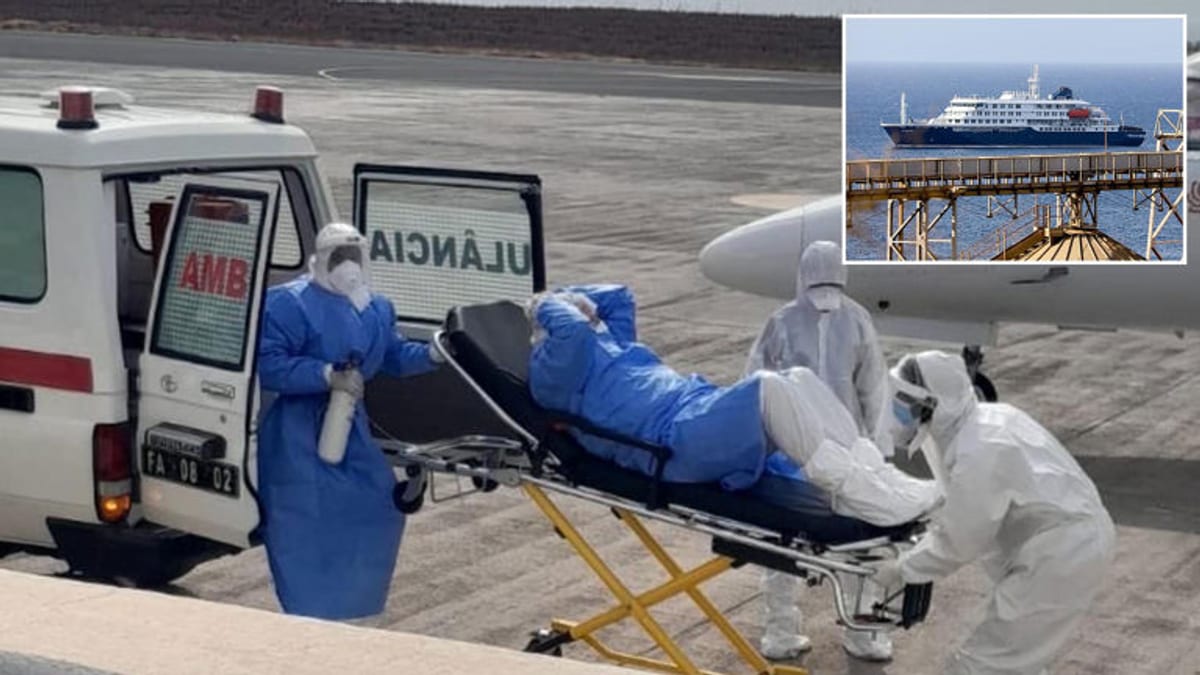
Once the scale of the outbreak became clear, the Hondius was ordered to remain at anchor off Cape Verde, an island nation off Africa’s west coast. Coverage by international outlets describes a ship in limbo, confined to a holding pattern just out of sight of land while local authorities weighed the risks of allowing people to disembark.
Health officials in Cape Verde have so far declined to accept the passengers en masse, citing limited intensive care capacity and concerns about managing a virus that can cause severe respiratory failure. As a result, most of those on board have been barred from setting foot ashore, even as video obtained by news agencies shows medical teams in protective suits shuttling a small number of critically ill patients to waiting ambulances.
Publicly available statements from the ship’s operator indicate that about 150 passengers and crew remained on board as of early May, many of them confined to their cabins or moving only under strict controls. The company has described a “tense calm” at sea as it coordinates with multiple governments to secure a safe port and medical screening for everyone on the vessel.
For days, speculation centered on whether the ship might be turned away from one port after another, echoing early-pandemic scenes when cruise liners with coronavirus cases struggled to dock. This time the fear is a different virus, but the dilemma is familiar: how to protect onshore populations while honoring the rights and health needs of those stuck at sea.
Passengers Plead to Get Off Before the Virus Reaches Them
Accounts compiled from passengers and relatives, shared with broadcasters and newspapers in several countries, paint a picture of a community caught between anxiety and exhaustion. Many describe spending long stretches inside their cabins, watching for updates and counting down the days until they can be medically screened and allowed to travel home.
Some travelers have described using balconies and brief, supervised periods on deck to get fresh air, while avoiding common areas that once hosted lectures, wildlife briefings and social gatherings. Publicly available footage shows deserted lounges, stacked chairs and taped-off corridors, a visual reminder of how rapidly a leisure cruise can shift into an improvised quarantine facility when a dangerous pathogen is detected.
Family members on shore have used social media and interviews with outlets such as the Associated Press, the Daily Beast and European broadcasters to amplify calls for a rapid yet safe disembarkation plan. Their central concern is time: hantavirus can incubate for weeks, meaning some people who feel well today could still develop symptoms later, and those already infected need access to hospital-level care long before breathing difficulties set in.
Cruise specialists note that passengers in such situations face a double burden, confronting both the direct health risk and the psychological strain of isolation. The uncertainty over when and where they will be allowed to disembark magnifies that stress, particularly for older travelers and those with existing medical conditions who had expected a carefully managed expedition rather than an open-ended wait at sea.
How a Rare Virus Spread in a Confined Floating World
Hantaviruses are typically linked to exposure to infected rodents, their droppings or contaminated dust. Most documented cases globally involve people who encounter the virus on land while camping, cleaning rural structures or working in fields. The outbreak aboard the Hondius is drawing intense scrutiny because it appears to involve the Andes strain, which has been associated with possible human-to-human spread in South America.
Epidemiologists reviewing the case sequence have pointed to several factors that may have allowed the virus to circulate before it was recognized. The ship spent weeks in cold, remote regions where flu-like symptoms and fatigue are not uncommon among travelers adjusting to long days at sea, making early warning signs harder to distinguish from routine ailments. At the same time, the incubation period for hantavirus, often up to several weeks, means that infections acquired on shore before embarkation may not declare themselves until well into a voyage.
Like other modern cruise ships, the Hondius is designed to be comfortable and sociable, with shared dining, lectures and shore excursions that bring passengers and crew into frequent close contact. While hantavirus is not thought to spread as easily as viruses such as influenza or COVID-19, any pathogen with even limited person-to-person transmission potential can take advantage of this kind of enclosed, high-contact environment.
Public health experts have long warned that ships, with their dense populations and shared ventilation and sanitation systems, can amplify outbreaks of everything from norovirus to respiratory infections. What is unusual in this case is that the suspected virus is both rare and highly lethal, raising questions about how screening protocols and on-board medical facilities can adapt when the threat is something other than the more routine gastrointestinal or flu-like illnesses cruise operators typically plan for.
Race to a Safe Harbor in the Canary Islands
After days at anchor off Cape Verde, reports indicate that Spain has now agreed to receive the Hondius in the Canary Islands, under strict health controls. Publicly available information from the World Health Organization and Spanish authorities suggests that Las Palmas or Tenerife is being prepared as a controlled disembarkation point where passengers can undergo testing and triage before being allowed to travel onward.
According to recent updates, the ship has left Cape Verdean waters and is heading north toward the archipelago, a journey of several days across the Atlantic. On arrival, passengers are expected to be screened for symptoms and recent contacts, with those requiring hospital care transferred to specialized facilities and others likely placed under some form of monitored quarantine or self-isolation.
Health agencies are treating the voyage as an international public health event, both because of the immediate need to protect those on board and because the case offers a rare real-world test of protocols for managing a deadly but uncommon virus in a maritime setting. Investigators will be looking for answers about where the initial exposure took place, how many infections may have occurred on the ship itself and whether changes in shipboard operations could have limited the spread.
For the passengers and crew, the focus remains far more basic: reaching land alive and in stable health. As the Hondius steams toward its next port, many are watching the calendar as closely as the horizon, hoping the virus does not catch up with them before they can finally step onto a dock and begin the long process of putting their disrupted journey behind them.