


More news on this day
A collision between two southbound passenger trains near Bedford, north of London, has left at least one person dead and multiple others injured, prompting a major emergency response and severe disruption to rail links into the capital.
Get the latest news straight to your inbox!
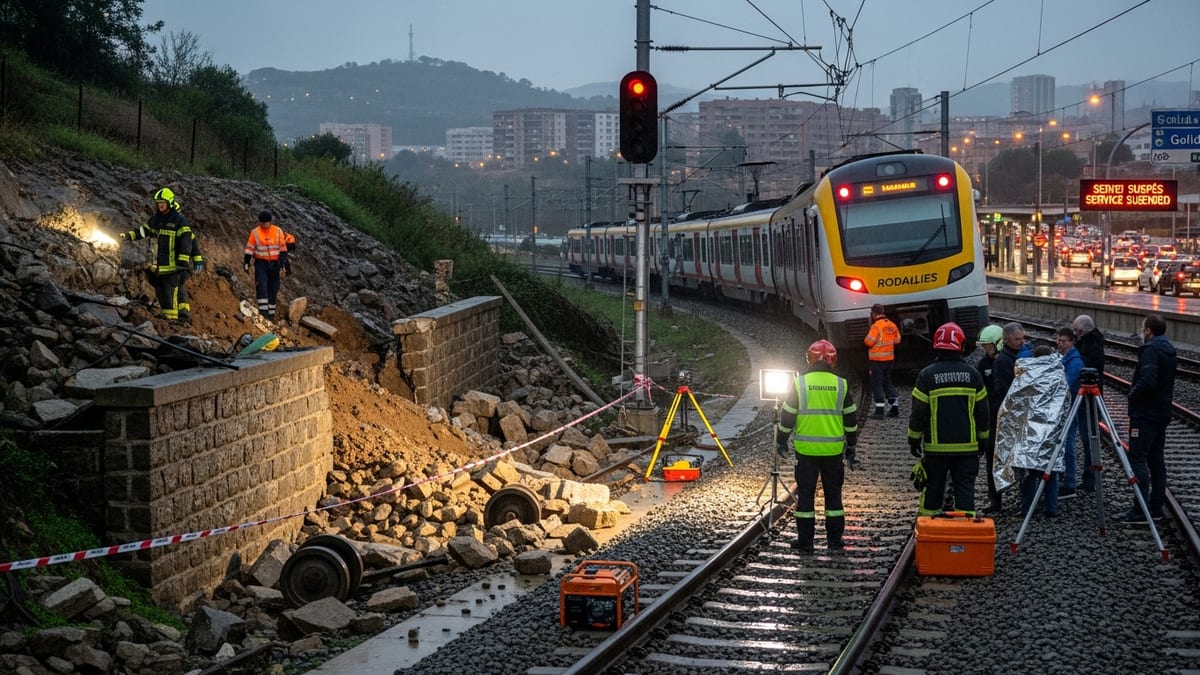
Crash north of London involves two London-bound services
According to published coverage, the collision occurred on Friday afternoon, June 19, on the busy Midland Main Line just south of Bedford, a major commuter hub around 50 miles north of central London. Both trains were reported to be traveling toward London St Pancras station when they came into contact near a stretch of track bordered by a local road and open land.
Information from rail tracking platforms cited in news reports indicates that one of the trains was the 3:50 p.m. service from Nottingham to London St Pancras, while the other was the 4:40 p.m. service from Corby to the same destination. Early accounts suggest that one train struck the rear of the other on the approach to Bedford, though the precise circumstances remain under investigation.
Images and video circulating on social media show at least one train with its leading cab heavily damaged, tilted against the rear of another unit on adjacent track. The location of the wreckage, beside a minor road running parallel to the line, allowed emergency vehicles to reach the scene quickly but also drew onlookers and stranded passengers into a relatively confined area.
Publicly available information indicates that rail traffic through Bedford was immediately halted in both directions, effectively cutting one of the principal intercity and commuter arteries between the East Midlands, the north of England and London during the late afternoon peak.
One confirmed fatality and reports of serious injuries
Initial updates from regional rail and emergency services, cited in national and international coverage, indicate that at least one person has died in the collision. Early Friday evening, reports described a major incident in which multiple passengers and staff had sustained injuries of varying severity.
Accounts shared by passengers describe a sudden impact that threw people forward in their seats, followed by scenes of confusion in smoke-filled carriages. Some travelers reported visible fractures and head wounds among fellow passengers as they attempted to evacuate. Others described helping people climb down to track level or move along the train to less damaged coaches.
Air ambulance crews, hazardous area response teams and a large number of land ambulances were deployed, according to publicly available statements. Social media footage showed several helicopters operating in fields near the line, while triage areas were set up beside the road to assess those leaving the trains.
As of Friday evening, the full number and condition of those injured had not been confirmed. However, images from the scene and the scale of the medical response suggest a significant casualty toll, with local hospitals placed on heightened readiness to receive patients from the crash.
Travel disruption for London and East Midlands passengers
The collision has caused extensive disruption to rail services operating into and out of London St Pancras, a critical terminal for both long distance and commuter traffic. East Midlands Railway publicly announced that trains on its main intercity route were canceled for the remainder of Friday, with the operator unable to provide firm guidance on when services would fully resume.
Thameslink and other regional operators using the affected section of line have warned passengers of delays, short-notice cancellations and diversions, as control teams attempt to reroute a limited number of services onto alternative tracks. For many travelers, particularly those returning from London to the East Midlands and Bedfordshire, journeys are expected to take several hours longer than usual.
Passengers traveling to and from London are being advised via operator channels to check live journey planners and to consider alternative routes where possible, including services from other London terminals. With the incident occurring late on a Friday afternoon, the disruption is affecting both daily commuters and leisure travelers at the start of a summer weekend.
Clean-up operations and incident investigation work on site are likely to continue into the night and potentially into Saturday, meaning rail users may face knock-on delays and service alterations into the next day. The extent of track and signaling damage, together with the complexity of removing the damaged rolling stock, will determine how quickly the line can reopen.
Questions raised over signalling and rail safety
Although it is too early for any definitive explanation of what led to the collision, the fact that two modern passenger trains ended up in the same place on a heavily monitored main line is already prompting renewed scrutiny of rail safety systems. According to industry commentary reported in specialist outlets, the section south of Bedford is equipped with contemporary signalling designed to maintain safe separation between trains.
Analysts note that the apparent rear-end nature of the crash suggests a possible failure somewhere in the chain that keeps trains apart, whether related to signalling, on-board protection systems, train handling or a combination of factors. Investigators will be examining data recorders from both trains, signal box logs and communications records to reconstruct the sequence of events leading up to the impact.
The incident comes against a backdrop of generally strong safety performance on the United Kingdom’s railways, where fatal collisions between passenger trains are rare. Nonetheless, several recent high profile accidents both in the UK and elsewhere in Europe have led to calls for faster deployment of advanced train control technology and more rigorous risk management on busy corridors.
Public discussion following the Bedford crash is likely to focus on whether all feasible safeguards were in place on the route and whether any known vulnerabilities had been highlighted in earlier audits or near miss reports. Comparisons may also be drawn with previous accidents where lessons were identified but not fully implemented before another incident occurred.
Impact on the Bedford corridor and traveler confidence
The stretch of line between Bedford and London is one of the principal rail gateways into the capital from the north, carrying a mix of intercity services, airport trains and dense commuter traffic. For local communities, the railway is both an economic lifeline and a physical presence that runs close to homes, roads and footpaths, as seen in the proximity of today’s crash site to a public road.
In the short term, regular travelers are likely to experience extended journey times, crowded replacement services and uncertainty around weekend plans as operators work to restore normal timetables. Hotels, event venues and airports connected by the Bedford corridor may also feel the effects as delayed or redirected passengers adjust their arrangements.
In the longer term, incidents of this kind can influence public perceptions of rail travel, particularly among occasional travelers who may already be wary of crowded trains or unfamiliar routes. Travel industry observers note that clear communication about the causes of the crash, the steps being taken to address them and the overall safety record of rail transport will be crucial in sustaining traveler confidence.
For visitors to the United Kingdom who rely on rail to move between London and regional cities, the Bedford crash underscores the importance of flexible itineraries, real time journey checks and awareness of alternative routes. While serious accidents remain rare, the disruption that follows can extend far beyond the immediate area of an incident, affecting travel across a wide swath of the network.