


More news on this day
One person has died and dozens more have been injured after two southbound passenger trains collided near Bedford in central England on Friday, severely disrupting a major rail corridor linking towns in the East Midlands with central London.
Get the latest news straight to your inbox!
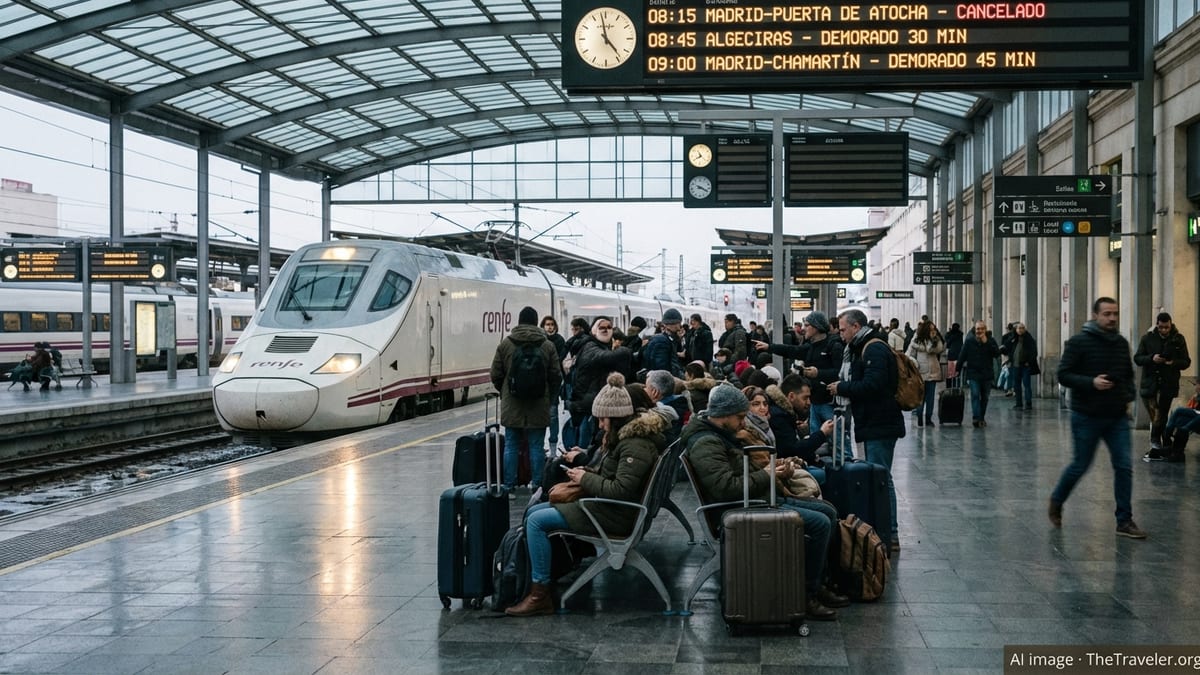
Collision on busy route between Bedford and Luton
Reports indicate that the crash occurred in the late afternoon of 19 June on the main line between Bedford and Luton, a heavily used stretch of track north of London St Pancras station. Two high speed passenger services operated by East Midlands Railway, both running towards the capital, were involved in what appears to have been a rear-end collision rather than a head-on impact.
According to published coverage, one train had slowed or stopped on the approach to Bedford when it was struck from behind by a following service. Early accounts shared by passengers describe a sudden, violent jolt that threw people from their seats, shattering interior fittings and leaving some carriages in darkness as the train came to an abrupt halt.
Regional rail tracking data cited in media reports places the incident shortly after 5:15 p.m. local time, at a location several miles south of Bedford. The line is a principal artery for commuters and long distance travellers from cities such as Nottingham and Corby into London, and both trains were reported to have been operating these intercity-style services at the time of the collision.
Images and video circulated on social media in the immediate aftermath showed passengers tending to injured fellow travellers inside crowded carriages, with visible blood and debris, while others were being evacuated along the track by emergency personnel.
Casualties and emergency response
Publicly available information from news outlets on Friday evening indicates that at least one person has died as a result of the crash, with the fatality widely reported to be among the train crew. Dozens of other passengers are understood to have suffered injuries ranging from minor cuts and bruises to more serious trauma.
Ambulance services from across the East of England region, along with an air ambulance and specialist hazardous incident teams, were dispatched to the scene. Photographs from the area show a significant emergency presence along the railway embankment, with responders working between the two trains and erecting treatment areas beside the tracks.
Local hospitals in Bedfordshire and neighbouring counties have reportedly been placed on heightened alert to receive casualties. Passengers posting online have described long waits for assessment as medical teams prioritised those with suspected fractures, head injuries and other serious conditions.
Rail operators and national rail bodies have acknowledged that a major incident has taken place, with control centres focusing on supporting the emergency response, accounting for those on board and arranging onward travel or welfare facilities for uninjured passengers.
Severe disruption for rail passengers and local travel
The collision has led to the closure of all lines in the immediate area, halting traffic along one of the key north–south corridors into London. East Midlands Railway services to and from London St Pancras were reported to be suspended or heavily curtailed for the remainder of Friday, affecting both intercity and regional routes.
Information circulated by train operators and rail passenger groups advises travellers that long distance services from cities such as Nottingham, Derby, Leicester and Corby are subject to cancellation, severe delays or diversion. Trains that are able to operate are expected to be extremely busy, and journey times may be significantly extended as services are rerouted via alternative lines where capacity permits.
Local rail users around Bedford and Luton have been urged to seek other modes of transport, including coach services and limited replacement buses, although road congestion on the parallel M1 motorway and local routes has been described as heavy. Evening commuters attempting to return home have reported crowding at stations and substantial uncertainty about onward connections.
Given the extent of the damage and the ongoing investigation, railway observers suggest that full line reopening could take some time. Recovery of the trains, detailed inspection of the track and signalling equipment, and safety checks of overhead power infrastructure are likely to be required before regular services resume.
Early focus on signalling and safety systems
As with previous rear-end collisions on modern rail networks, early attention is likely to centre on signalling systems and train protection technology designed to prevent one train from striking another on the same section of track. Rail commentators following the incident have noted suggestions that one of the trains may have passed a signal at danger, although this has not been formally confirmed and remains a matter for specialist investigators.
Britain’s main line railway is equipped with multiple layers of protection, including automatic warning and braking systems intended to reduce the risk of human error leading to a collision. Initial assessments from rail industry experts commenting publicly point out that, despite the severity of the injuries, the casualty numbers could have been far higher had modern rolling stock design and safety systems not performed as intended.
Investigators will be expected to examine data from on-board recorders, signal logs and communications between signallers and train crews to determine precisely how the two services came to occupy the same stretch of track. They will also look at train speeds in the moments before impact, braking performance and the condition of the track and signalling infrastructure at the site.
Any official findings are likely to take months to emerge, with an initial preliminary summary typically followed by a more detailed report and, where necessary, recommendations aimed at preventing a repeat of such an incident elsewhere on the network.
Impact on travellers and tourism in the region
The stretch of line affected by the collision serves not only daily commuters but also visitors heading to and from London and destinations in the East Midlands. Services on this corridor connect the capital with regional cities, airports and tourist areas, making the disruption particularly significant for leisure travel at the start of a summer weekend.
Travellers arriving at London St Pancras or planning to depart from it on Friday evening and into the weekend have been advised through public information channels to check the latest service updates before setting out. Those with onward Eurostar, domestic rail or flight connections may need to allow additional time or consider alternative departure points, such as other London termini or regional airports reachable by unaffected lines.
Local tourism bodies and hospitality businesses in towns along the route, including Bedford and Luton, are likely to feel short term effects as visitors face journey uncertainty. Hotels near major interchange stations may see an uptick in last minute bookings from passengers stranded by cancellations, while day trips and events dependent on rail access could experience lower attendance.
While rail travel in the United Kingdom remains statistically one of the safest modes of transport, the Bedford collision is a stark reminder for residents and visitors alike of the importance of robust safety systems and clear contingency plans. For now, attention is focused on the welfare of those caught up in the crash, as investigators and rail managers work to restore confidence and connectivity on this vital route.