


Your flight arrived hours late, you finally reach your hotel in the middle of the night, and only later do you hear about “EU261 compensation” and services like DelayFix that promise to fight the airline for you. At that point, most travelers have the same question: should you file a claim yourself directly with the airline, or hand it to a specialist like DelayFix and let them take a cut if they win? This guide walks through the real trade-offs so you can choose the option that fits your time, risk tolerance, and travel style.
Get the latest updates straight to your inbox!
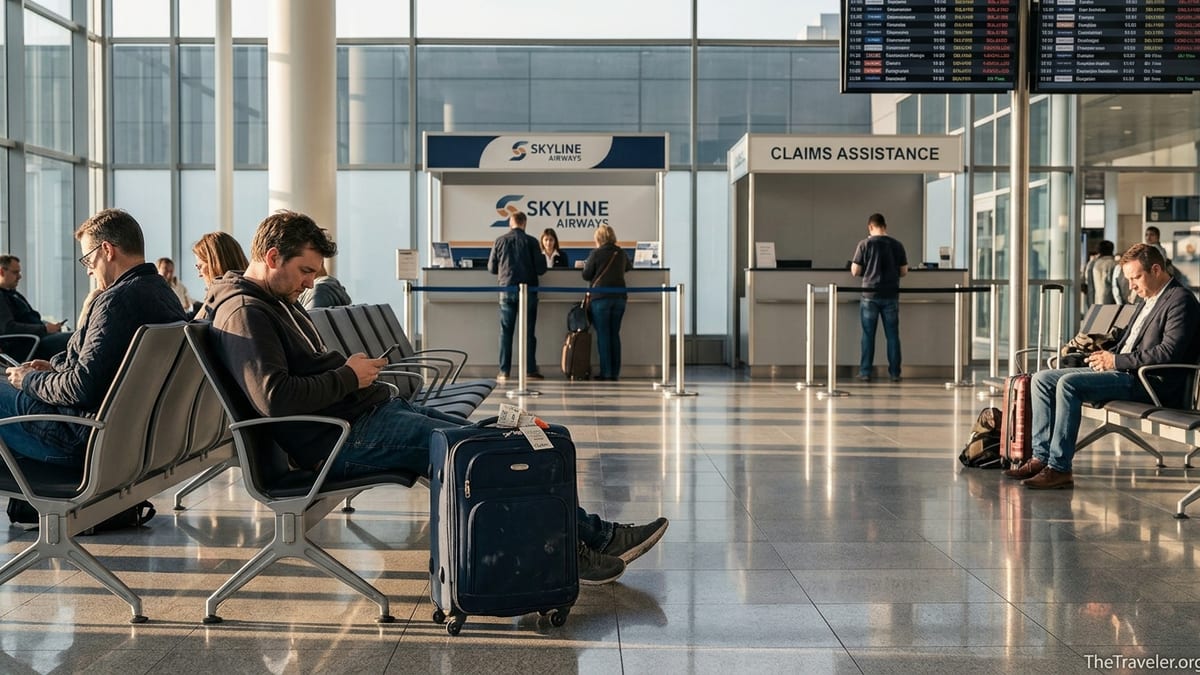
Understanding Your Right to Compensation
In Europe, the starting point for this decision is EU Regulation 261/2004, usually shortened to EU261 or EC261. It gives eligible passengers fixed cash compensation when flights are significantly delayed, canceled, or overbooked, as long as the disruption is not caused by extraordinary circumstances such as severe weather, major air traffic control restrictions, or certain security issues. Similar rules exist in the United Kingdom under UK261 and in Canada under the Air Passenger Protection Regulations, but EU261 remains the most widely used framework for long-haul travelers.
Under EU261, compensation typically ranges up to about 250 to 600 euros per person depending on the flight distance and length of delay, separate from any refund, hotel, or meal vouchers you may already have received. For a family of four on a long-haul holiday flight from Lisbon to Toronto delayed more than three hours on arrival, that can mean roughly 2,400 euros in potential compensation. Knowing that this money is on the table is the first step before you choose between a direct claim and a service like DelayFix.
In practice, what matters most is whether your flight route and airline fall under EU261 or equivalent rules. For example, a New York to Paris flight on Air France is covered because it lands in the EU with an EU carrier, while a New York to Paris flight on a US carrier is generally covered only if it departs from the EU rather than arriving there. Many travelers only discover these nuances after searching online for companies like DelayFix or AirHelp that specialize in sorting eligibility out for them.
Once you are reasonably sure your flight is covered, you are always allowed to claim directly with the airline at no cost. That is the baseline option. The rise of claim-management companies such as DelayFix, AirHelp, SkyRefund, Skycop, and others adds another layer of choice: they work on a success-based fee, taking a commission if they manage to get money from the airline, and charging nothing if they fail.
How DelayFix Works in the Real World
DelayFix is a European-based flight compensation service that focuses on EU261-style claims. On its public information, DelayFix highlights that it operates on a “no win, no fee” model, meaning passengers do not pay anything upfront and do not owe costs if the dispute is ultimately lost. The company emphasizes that it takes over paperwork, legal analysis, and, where necessary, court action, which is particularly appealing for travelers who do not want to argue with an airline or regulatory authority themselves.
In practice, a traveler with a disrupted flight usually starts by entering their flight number, date, and basic details into DelayFix’s online form. The service then estimates potential compensation and asks for supporting documents such as boarding passes, booking confirmations, and identification. Once a contract is signed, DelayFix deals directly with the airline and, if required, with courts or enforcement bodies. Public marketing material for DelayFix notes a high success rate in past court cases and promotions like assistance with some of the most complex cases involving preliminary rulings before the Court of Justice of the European Union, which underlines that they are prepared to pursue difficult disputes.
Trustpilot and similar review platforms show a mix of experiences, but many recent reviews describe outcomes such as compensation being paid out after months of airline silence, with travelers praising DelayFix’s persistence where their own emails had gone unanswered. A typical example involves a three-hour-plus delay on a Warsaw to London flight operated by an EU carrier: the passenger’s initial direct claim was rejected on the grounds of “operational reasons,” but after signing with DelayFix, the airline later paid compensation following additional legal argument and, in some cases, escalation toward court proceedings. For that passenger, handing over a share of roughly 400 euros may feel worthwhile simply because they would otherwise likely have given up.
However, travelers should be aware that companies working on contingency usually charge a commission on the successful amount. Across the industry, many services charge in the ballpark of 25 to 35 percent plus applicable VAT, though each provider sets its own fee schedule. That means that from a 600-euro compensation award, you might receive around 390 to 450 euros after fees. The trade-off is clear: you are buying expertise and persistence at the cost of a portion of your payout.
What It Looks Like to Claim Directly with an Airline
Filing a claim directly with an airline is typically free and can be surprisingly straightforward in simpler cases. Many major European and global carriers now provide online forms dedicated to EU261 or “Customer Relations” on their websites. You usually need your booking reference, flight number, date, and a short explanation of what happened, along with evidence such as boarding passes and receipts for any out-of-pocket expenses. Some airlines, particularly in northern Europe, have a reputation for relatively quick and fair handling of clear-cut cases.
For instance, travelers on a delayed Copenhagen to Frankfurt flight operated by a European network carrier have reported compensation being approved within a few weeks when the delay clearly exceeded three hours on arrival and the cause was a technical fault. One passenger described submitting a claim directly through the airline’s website, receiving a confirmation email within minutes and a decision roughly three weeks later plus a bank transfer shortly thereafter. In this type of scenario, using a third party like DelayFix would have reduced the final payout without adding much value.
Other airlines are less cooperative. Travelers frequently describe months of back-and-forth with some low-cost carriers or large network airlines that initially deny claims, often citing “extraordinary circumstances” such as air traffic control problems or security issues. In many of these cases, passengers believe the real reason is an airline-controlled factor such as crew scheduling or routine technical issues. Without legal training, it can be difficult for passengers to rebut these arguments or gather supporting evidence from flight-tracking websites and official notices.
There are also situations where direct claims stall because travelers simply do not have the time or patience to chase the airline. A family returning from a summer holiday in the Canary Islands may prioritize work and school schedules over spending evenings drafting follow-up emails, sending registered letters, or learning how to complain to a national enforcement body. For them, the possibility of accepting a smaller net payment via a service like DelayFix can become attractive, especially if the claim looks borderline or the airline is known for slow or resistant handling.
Cost, Time, and Effort: The Core Trade-offs
The biggest advantage of an airline direct claim is financial. If a passenger successfully secures compensation on their own, they keep 100 percent of the amount, whether that is 250, 400, or 600 euros per person. For a group of six on a delayed 3,500-kilometer flight within Europe, that can mean a total of 3,600 euros. Compared with using a typical claims service that might take around a third, the difference can easily surpass 1,000 euros for a large group.
However, this financial upside comes at the cost of time and energy. A straightforward direct claim might take under an hour of paperwork and a few weeks of waiting, but complex or disputed cases can stretch into months of correspondence. In some jurisdictions, passengers may need to escalate to an alternative dispute resolution body or small-claims court if the airline refuses to pay. That step can involve filling out formal complaint forms, understanding deadlines, and, in a few cases, attending a hearing in person or online. Many passengers are understandably reluctant to go that far for a few hundred euros.
DelayFix and similar intermediaries invert that calculation. They remove most of the work: once you provide documents and sign their agreement, they manage deadlines, legal arguments, and escalation. If a case goes to court, they coordinate with local lawyers and, by their own descriptions, may even dispatch legal representatives when necessary. The passenger’s role becomes largely passive, apart from responding to occasional requests for additional information. The price for this simplification is the commission taken from any successful compensation.
Another factor is risk tolerance. While a successful court decision might theoretically allow full compensation plus interest, it can take many months and is never guaranteed. Some travelers prefer the certainty of “if it succeeds, I get something, even if it is less,” and are happy to delegate. Others are more comfortable pursuing the maximum possible payout and are willing to accept the possibility of a loss or a long delay in exchange for keeping every euro.
When DelayFix Makes More Sense
DelayFix is likely to be most attractive in situations where the claim is complex, the airline is known for being unresponsive, or the traveler has limited time or legal confidence. For example, imagine a multi-leg itinerary from Kraków to New York via Paris, operated under a codeshare between two carriers from different countries. The first leg is delayed due to a technical issue, causing a missed connection and an overnight stay. The travelers receive hotel and meal vouchers, but compensation for the long delay is unclear, especially since the operating carrier and the marketing carrier are different.
In such a case, a traveler might struggle to determine which airline is responsible under EU261 and how to calculate the relevant distance for compensation. If the airline initially denies liability or blames “extraordinary circumstances,” a company like DelayFix can untangle the contractual relationships, identify the correct responsible carrier, and press the claim accordingly. DelayFix’s willingness to review previously rejected airline decisions can also make it a useful second step when a DIY attempt has already failed.
DelayFix and similar services may also add value when a claim requires litigation in a foreign jurisdiction. Consider a traveler based in the United States pursuing compensation for a delayed domestic flight within the EU operated by a regional airline with no presence in their home country. While EU261 might still apply, the practicalities of suing a small carrier in another country would deter many individuals. By contrast, a specialist claims service already has relationships with local counsel and understands the procedural requirements in those courts.
Finally, for large groups who are not especially price-sensitive, convenience can outweigh the commission. A corporate travel manager responsible for a group of twenty employees stranded in Madrid after a cancellation might prefer to sign a single contract with a service like DelayFix, forward boarding passes and passports, and let the service handle the rest. Even if the total commission runs into the thousands of euros, the saving in internal administrative time could justify it from a business perspective.
When You Should Push a Direct Airline Claim
There are also many scenarios where starting and finishing with a direct airline claim is likely to be the smarter choice. Clear-cut, uncontested delays on well-regulated carriers often fall into this category. For example, a three-hour-plus delay from Munich to Barcelona caused by a documented technical fault and handled by a major European network airline is a classic case where airlines sometimes proactively accept liability once they verify their records.
Travelers with good documentation and a willingness to follow up periodically can often achieve a full payout without outside help. Keeping screenshots of departure boards, photos of gate delay notices, and written communication from airline staff can strengthen a direct claim considerably. In some cases, airlines will offer vouchers or flight credits instead of cash; passengers who know their rights and politely insist on cash compensation under EU261 may find the process still manageable without a third party.
Another situation favoring direct claims is when the legal framework is already clear and supported by consumer-friendly regulators. Certain European countries encourage passengers to contact airlines first and then escalate to national enforcement bodies if required. Experiences shared by regular travelers indicate that when an airline operates under the scrutiny of an active regulator, even initially resistant carriers often settle once a formal complaint is filed. In those cases, travelers can still avoid paying a commission, as enforcement authorities do not usually charge passengers.
Travelers who frequently fly on EU or UK routes and are comfortable reading official guidance may benefit from learning the basics of EU261 and running their own claims as a matter of habit. Over a few years of regular business or leisure travel, even sporadic disruptions can add up to several thousand euros in compensation, all of which stays in the traveler’s pocket if they consistently claim directly.
Key Questions to Ask Before You Decide
Choosing between DelayFix and an airline direct claim is rarely a purely legal question. It is more about your personal constraints and goals as a traveler. Before deciding, it helps to ask yourself a few practical questions about your situation and mindset. These same questions can be discussed with family members or travel companions, since everyone affected will share the outcome.
First, consider the value of the claim and how much time you are prepared to invest. If the potential compensation for a solo traveler on a short intra-EU flight is around 250 euros, you might decide that spending several evenings on detailed correspondence and learning procedural rules is not worth it. Conversely, for a long-haul family trip worth roughly 2,400 euros in possible compensation, investing a few hours into a direct claim can pay off substantially.
Second, look at the airline’s reputation for handling claims. While official statistics vary, anecdotal evidence from regular travelers and online communities paints a nuanced picture: some airlines have relatively efficient claim processes, while others are notorious for citing “extraordinary circumstances” or never replying unless pushed by regulators or courts. If you already know that your carrier falls into the second category, using DelayFix may prevent a great deal of stress.
Third, assess your tolerance for uncertainty. Direct claims are not always predictable, especially when airlines dispute facts like the length of the delay or the reason behind it. If you prefer a more hands-off approach and are comfortable accepting a lower net payout in return for a higher likelihood of success and minimal effort, partnering with DelayFix or a similar service may be the more realistic choice.
The Takeaway
Both options, DelayFix and direct airline claims, exist because EU261-style passenger rights can be both powerful and complex. Direct claims preserve your entire compensation and work well for clear, well-documented disruptions, particularly on airlines with solid reputations for handling complaints. In straightforward cases where you are confident about your eligibility and willing to send a few follow-up messages, going directly to the airline is often the best route.
DelayFix comes into its own when the situation is less clear, the airline is unresponsive, or you simply lack the time or energy to engage in a prolonged dispute. By taking a percentage of any successful payout, the service effectively converts your claim into a managed process where legal specialists shoulder the burden of evidence gathering, negotiation, and, when necessary, litigation. That trade-off can be especially appealing for travelers dealing with complex itineraries, codeshares, or carriers based in other jurisdictions.
In the end, the choice is about more than money. It is about how you value your time, your appetite for administrative hassle, and your comfort level with legal arguments and bureaucracy. Before your next trip, consider familiarizing yourself with the basics of EU261 and keeping thorough records of any disruption. If trouble does arise, you will then be in the strongest position to decide calmly whether to write to the airline yourself or to forward everything to DelayFix and let them take it from there.
FAQ
Q1. Is DelayFix cheaper than claiming directly with the airline?
Claiming directly with the airline is almost always cheaper in pure financial terms because you keep 100 percent of any compensation, while DelayFix typically takes a commission from successful payouts. The trade-off is that DelayFix saves you time and effort, which some travelers feel is worth the cost.
Q2. How long does an airline direct claim usually take?
Time frames vary widely. Simple cases on cooperative airlines can be resolved in a few weeks, while more complex or disputed claims may take several months and potentially require escalation to a regulator or small-claims court.
Q3. Can I try a direct claim first and use DelayFix later if I fail?
In many situations you can, provided you have not already signed an exclusive agreement with another claims company. If the airline rejects or ignores your direct claim, DelayFix may be able to review your documents and take over, but you should be honest about any prior correspondence.
Q4. Will using DelayFix reduce my chances of getting compensation?
Using DelayFix does not generally reduce your legal entitlement under EU261. In fact, in difficult cases, having specialists argue your claim and, if necessary, escalate to court can increase your chances of ultimately receiving some compensation.
Q5. Are all delayed flights eligible for EU261 compensation?
No. Eligibility depends on factors such as where your flight departs from, the airline’s country of registration, the length of the delay on arrival, and whether the cause counts as an extraordinary circumstance like severe weather or major airspace closures.
Q6. What documents do I need for either option?
At a minimum, you should keep your booking confirmation, boarding passes, any written notices from the airline about the delay or cancellation, and receipts for out-of-pocket expenses. These will support your case whether you claim directly with the airline or through DelayFix.
Q7. Can I claim on behalf of my family or group?
Yes. One person can usually submit a claim for everyone on the same booking, whether directly with the airline or via DelayFix, as long as they provide the necessary personal details, consent, and documentation for each traveler.
Q8. What if the airline says the delay was due to “extraordinary circumstances”?
Airlines often use this wording to deny compensation. You can push back by asking for a detailed explanation and, if needed, seeking help from a regulator or a service like DelayFix, which may have experience challenging dubious “extraordinary” claims.
Q9. Does it matter if I accepted meal vouchers or a hotel from the airline?
Usually not. Under EU261, fixed cash compensation is separate from care such as meals and hotels. Accepting vouchers or overnight accommodation normally does not waive your right to pursue compensation later.
Q10. I live outside Europe. Can I still use DelayFix or claim under EU261?
Yes, if your disrupted flight falls within EU261’s scope, you can generally claim regardless of your country of residence. Many services like DelayFix are set up to work with international clients and pay compensation to foreign bank accounts or other payment methods.