


More news on this day
Royal Caribbean has delayed the return of one of its cruise ships after rerouting around a powerful super typhoon in the western Pacific, extending the current sailing and forcing schedule changes for guests booked on the next departure.
Get the latest news straight to your inbox!
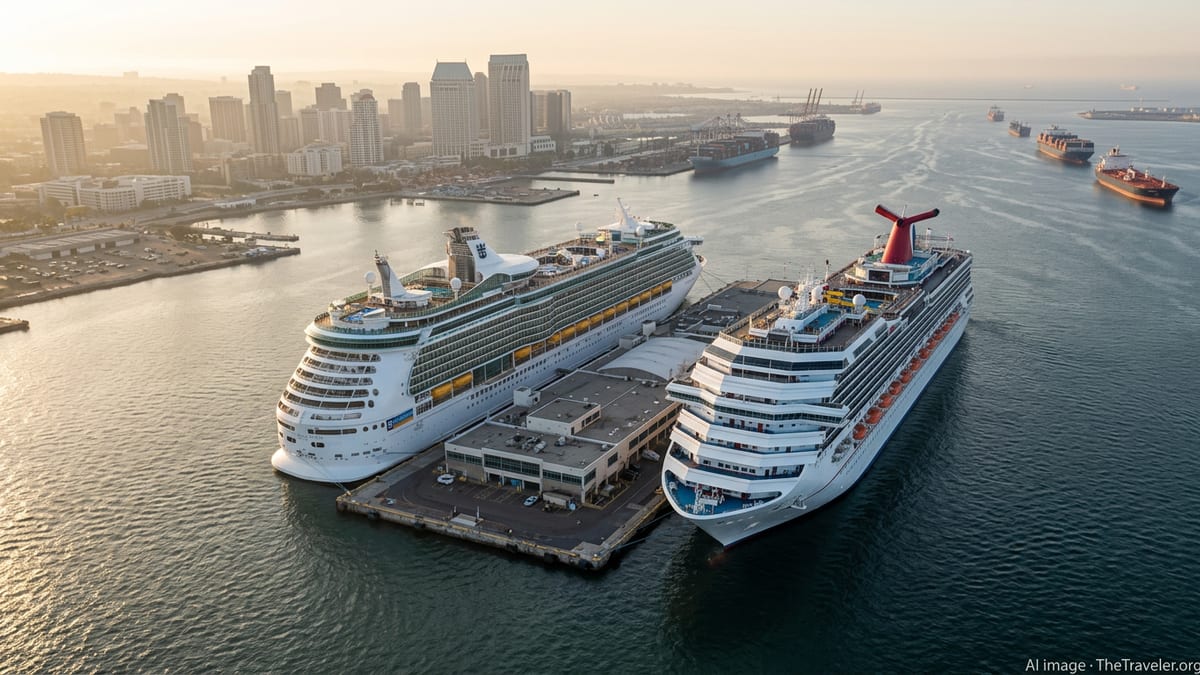
Rerouting around a super typhoon extends voyage
According to publicly available tracking data and cruise industry coverage, the Royal Caribbean vessel altered course to keep a wide berth from the super typhoon’s projected path, adding extra sea time and slowing its approach to its homeport. The decision has resulted in a later than scheduled arrival and an extended voyage for passengers currently on board.
Reports indicate that while the ship has remained fully operational, the captain and cruise line opted for a more conservative route to avoid the most severe winds and swells associated with the intense tropical system. Super typhoons, a classification used in the western Pacific for the strongest typhoon-strength storms, can generate sustained winds equivalent to a high category 4 or category 5 hurricane.
Publicly available information from maritime tracking platforms shows the ship sailing farther from the storm center than its original itinerary would have required. The wider detour, combined with reduced speeds in heavy seas, has lengthened the transit time back to port and pushed the scheduled turnaround window later into the day.
Passenger accounts shared on social media and cruise discussion boards describe rougher than usual sea conditions and adjusted onboard programming as the vessel moved into a safer quadrant of the storm. However, there have been no indications of damage to the ship or any compromise to core services on board.
Embarkation for next cruise pushed back
The delayed return has immediate implications for guests booked on the ship’s next itinerary. Cruise industry outlets report that embarkation will start several hours later than originally planned so the vessel can complete arrival formalities, disembark disembarking guests and carry out required turnaround procedures.
Publicly available communications shared by booked travelers indicate that guests with early arrival times have been asked to delay coming to the terminal and to monitor email and app notifications for updated boarding windows. In some cases, check in times have been shifted to mid or late afternoon to avoid congestion at the port.
The later arrival may also affect passengers’ pre arranged ground transportation and same day flights. Travel advisories circulated within the cruise community encourage guests to adjust plans where possible, keep documentation for any extra costs and stay in contact with airlines or transfer providers in case of further changes.
Despite the compressed schedule between sailings, reports suggest that the ship is still expected to depart on its next cruise on the same calendar day, albeit after a shortened embarkation window. Port calls on the new itinerary may be adjusted if the delayed turnaround leaves less time for the ship to reach its first destination.
Safety first as severe storms disrupt cruise schedules
The episode highlights how severe tropical systems can disrupt modern cruise operations, even for large ships built to handle heavy weather. Industry publications frequently note that weather is among the most common reasons for cruise schedule changes, with lines prioritizing the ability to maneuver around storms over maintaining original timetables.
Royal Caribbean’s guest terms and general booking conditions, which are publicly accessible, state that itineraries may be adjusted, delayed or shortened in response to adverse weather or other conditions beyond the company’s control. Such provisions are standard across the cruise sector and are designed to give operators flexibility to alter routes when safety considerations arise.
Super typhoons, which typically develop in the western Pacific, can intensify rapidly and shift tracks over short periods. That unpredictability often prompts cruise lines to make conservative choices, such as rerouting hundreds of nautical miles from a forecast path or skipping exposed ports entirely. These changes can preserve vessel safety but almost inevitably lead to late arrivals, extended voyages or altered port schedules.
Travel specialists and cruise commentators regularly advise passengers sailing during typhoon and hurricane seasons to build flexibility into their plans, including booking flights with changeable conditions and considering travel insurance that covers delays and disruptions caused by severe weather.
Guest impact ranges from missed plans to extra sea time
For guests on the affected Royal Caribbean sailing, the delayed return and extended routing mean an unexpected extra stretch at sea. Some passengers have reported rearranging work obligations, childcare arrangements or onward travel because of the later disembarkation time.
Others have framed the extension as an additional sea day, taking advantage of open onboard venues, entertainment and amenities while the ship navigates away from the strongest impact zone of the storm. Cruise discussion threads note that, in similar past situations, onboard programming has sometimes been adjusted to include extra activities or extended opening hours in bars, restaurants and lounges.
For those waiting to embark, the delay can be more frustrating, particularly for travelers who arrived early at the port or who face the risk of missing same day flight connections after the cruise. Travel forums are filled with advice recommending that future passengers plan at least one overnight on land before and after a cruise during peak storm seasons to provide a buffer against schedule changes.
Publicly available examples from prior seasons show that when storms cause longer delays or significant itinerary changes, cruise lines may offer onboard credits, partial fare refunds or rebooking options. The specific arrangements for the current super typhoon related disruption have not been uniformly detailed in open reporting and may vary by booking and length of delay.
Storm season outlook raises prospects for further disruptions
The super typhoon affecting the Royal Caribbean ship comes amid forecasts for an active tropical cyclone season in parts of the Pacific and adjacent basins. Meteorological agencies and climate centers have flagged warmer sea surface temperatures as a contributing factor to both the number and intensity of storms.
As cruise demand in Asia and the wider Pacific region continues to grow, more ships are operating on routes that intersect with typhoon prone waters. Industry analysts suggest that lines will increasingly have to balance ambitious itineraries with the need for flexible routing and contingency planning during peak storm months.
For passengers, the latest disruption serves as a reminder that itineraries advertised many months in advance are subject to change when severe weather emerges. Travel experts often recommend that guests monitor both cruise line updates and independent storm tracking resources in the days before sailing, particularly in late summer and early autumn when powerful systems such as super typhoons are most likely to form.
With the ship now proceeding at a safe distance from the storm and working its way back toward its homeport, attention has turned to how quickly operations can return to the published schedule. The experience is likely to inform future planning both for Royal Caribbean and for travelers booking cruises in regions where super typhoons and other intense storms are an ever present seasonal reality.