


More news on this day
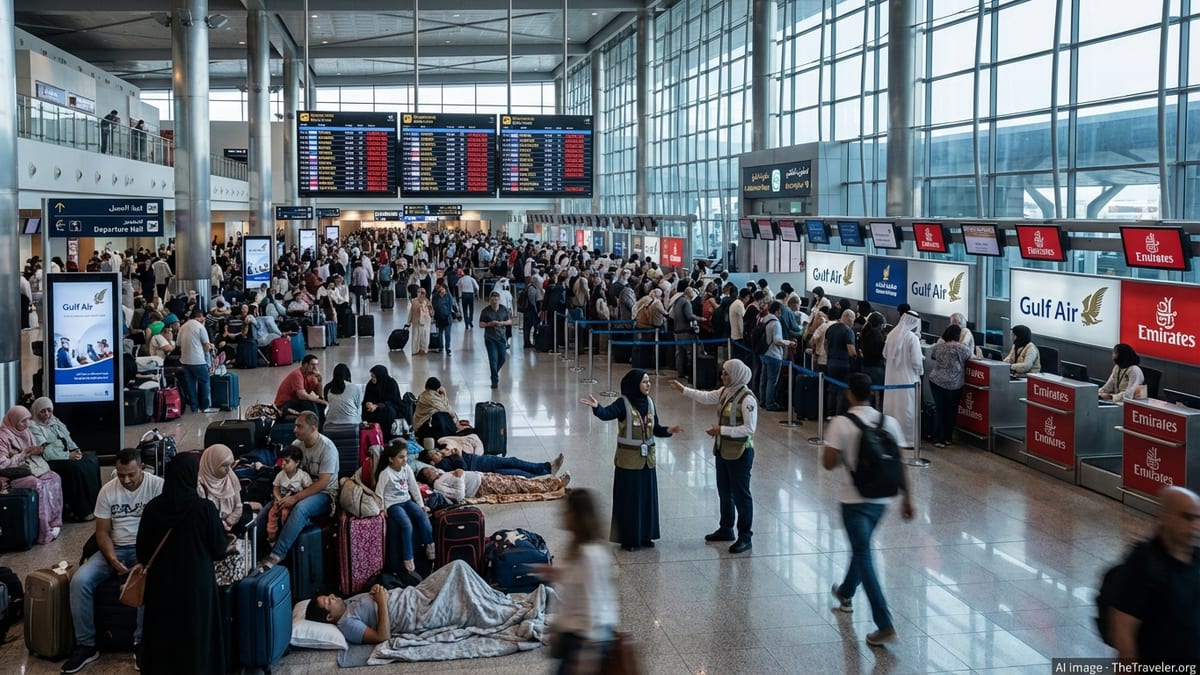
Travelers using Querétaro Intercontinental Airport on June 9 experienced a ripple of disruption as publicly available tracking data showed two delayed flights and four cancellations affecting services operated by Volaris, American Airlines, Endeavor Air and Cargojet on key domestic and international routes.
Get the latest news straight to your inbox!
Targeted Disruptions on a Busy Regional Hub
Querétaro Intercontinental Airport serves as a growing secondary hub for central Mexico, linking business and leisure travelers to Mexico City, Monterrey, Guadalajara and several U.S. gateways. On June 9, operational data from airline and flight-tracking platforms pointed to a compact but notable cluster of irregular operations involving six flights in total.
The affected services included a mix of passenger and cargo operations. Low-cost carrier Volaris was linked to schedule changes on domestic routes, while American Airlines and its regional partner Endeavor Air were associated with interruptions on U.S.–Mexico connections. Cargojet’s participation reflected how even a small wave of disruption can extend beyond passengers and impact freight flows through Querétaro.
While the scale of the interruption was limited compared with major hubs, the pattern was significant for an airport of Querétaro’s size, where each long-haul or connecting flight often feeds multiple onward itineraries. Travelers using the airport typically rely on smooth links to larger airports such as Mexico City, Monterrey and Guadalajara to complete multi-leg journeys.
Initial indicators suggest the delays and cancellations were scattered across the day rather than concentrated in a single time window, pointing to a combination of airline-level and network-level issues rather than a single incident at Querétaro itself.
Impact on Routes to Mexico City, Monterrey and Guadalajara
The disruptions were felt most clearly on routes connecting Querétaro with Mexico’s major air transport hubs. Public timetables and route maps show that carriers such as Volaris use these corridors to funnel passengers into larger networks at Mexico City, Monterrey and Guadalajara, where travelers can connect onward to dozens of domestic and international destinations.
A delay on a short domestic leg from Querétaro to Mexico City or Monterrey can quickly cascade into missed onward flights, particularly for travelers hoping to connect to transborder services to the United States or Canada. Even a single cancellation requires rebooking passengers onto later departures, often forcing overnight stays or lengthy ground transfers to alternative airports.
Guadalajara’s position as an important base for Volaris further amplifies the consequences of schedule changes. The carrier operates a dense network from Guadalajara to cities across Mexico and North America, and disruptions on feeder routes from secondary airports like Querétaro can alter passenger loads and aircraft rotations for the rest of the day.
For Querétaro-based travelers, the practical effect on June 9 ranged from modest delays at the departure gate to complete changes in routing, especially for those connecting to long-haul or cross-border services via the country’s main hubs.
Airlines Involved: From Low-Cost to Legacy and Cargo
The group of airlines associated with the June 9 irregular operations illustrates the diversity of carriers now using Querétaro. Volaris, one of Mexico’s leading low-cost airlines with strong presences in Mexico City, Monterrey and Guadalajara, has expanded connectivity from mid-sized cities and relies on quick turns and tight schedules that are particularly vulnerable to knock-on delays.
American Airlines, which serves Mexican markets from key hubs such as Dallas–Fort Worth and Miami, frequently uses regional partners like Endeavor Air to operate feeder flights on smaller jets. When a regional segment encounters a delay or cancellation, re-accommodating passengers can be complex, because available seats on subsequent flights are often limited.
Cargojet’s inclusion highlights the importance of Querétaro as a logistics node. Overnight and early-morning cargo flights link central Mexico to wider supply chains, and a single canceled sector can force shippers to reroute time-sensitive goods by truck or via alternative airports. For manufacturing and automotive companies clustered around Querétaro, such changes can translate into production adjustments and rescheduled deliveries.
Although each airline publishes its own contingency policies, publicly available guidance generally points passengers and shippers to real-time status tools on websites and apps, as well as airport information displays, to track evolving conditions and plan alternatives.
Weather, Congestion and Network Complexity
On days like June 9, the causes of delays and cancellations are often distributed across the wider network rather than originating solely at one airport. Seasonal storms over central Mexico can affect approach and departure windows at multiple airfields simultaneously, while congestion at major hubs such as Mexico City can lead to ground holds and airborne holding patterns that ripple outward.
Regional operations operated by carriers such as Endeavor Air are particularly sensitive to upstream delays. A late inbound aircraft, crew scheduling limits or air traffic control restrictions elsewhere in the network can force the cancellation of a subsequent leg into or out of Querétaro, even when local conditions appear normal to travelers on the ground.
Cargo flights, including those flown by Cargojet and other logistics operators, frequently run on overnight schedules that leave little room for recovery if an aircraft goes out of position or encounters maintenance issues. When such flights are canceled, the backlog may not be absorbed until the next operating day, which can influence trucking companies, freight forwarders and warehouse operations in the region.
For passengers and businesses, the fragmented nature of these causes means that disruptions may appear sudden and inconsistent across airlines, even when they arise from the same broad weather pattern or airspace constraint affecting multiple airports.
What Travelers Through Querétaro Should Watch Next
With Querétaro Intercontinental Airport continuing to grow as a regional connector, travel analysts note that even small sequences of irregular operations deserve attention from passengers planning tight itineraries. Publicly available flight-status tools and airport departure boards are essential resources for monitoring potential knock-on effects after a day that sees multiple delays and cancellations.
Travelers connecting through Mexico City, Monterrey or Guadalajara from Querétaro may wish to allow extra buffer time between flights, especially during periods of unsettled weather or peak seasonal demand. Reports from recent travel seasons in Mexico indicate that low-cost carriers and regional partners can experience higher variability in departure times when network pressure mounts.
For corporate travelers and logistics planners in Querétaro’s industrial corridor, keeping close watch on cargo operations is equally important. Adjustments in night-time cargo schedules can alter just-in-time delivery plans, and companies may need to coordinate contingency trucking or alternative routing when early signs of disruption appear in tracking systems.
While the June 9 episode involved only a handful of flights, it underlined how a few delays and cancellations at a growing regional airport can reverberate across some of Mexico’s busiest air corridors, touching both leisure travelers heading to major cities and the freight networks that underpin the region’s economy.