


More news on this day
Travelers across Canada and the United States faced fresh disruption today as Montreal-Trudeau International Airport reported dozens of delayed and cancelled flights, creating knock-on effects for connections through Toronto, Halifax, Chicago and other key hubs.
Get the latest news straight to your inbox!
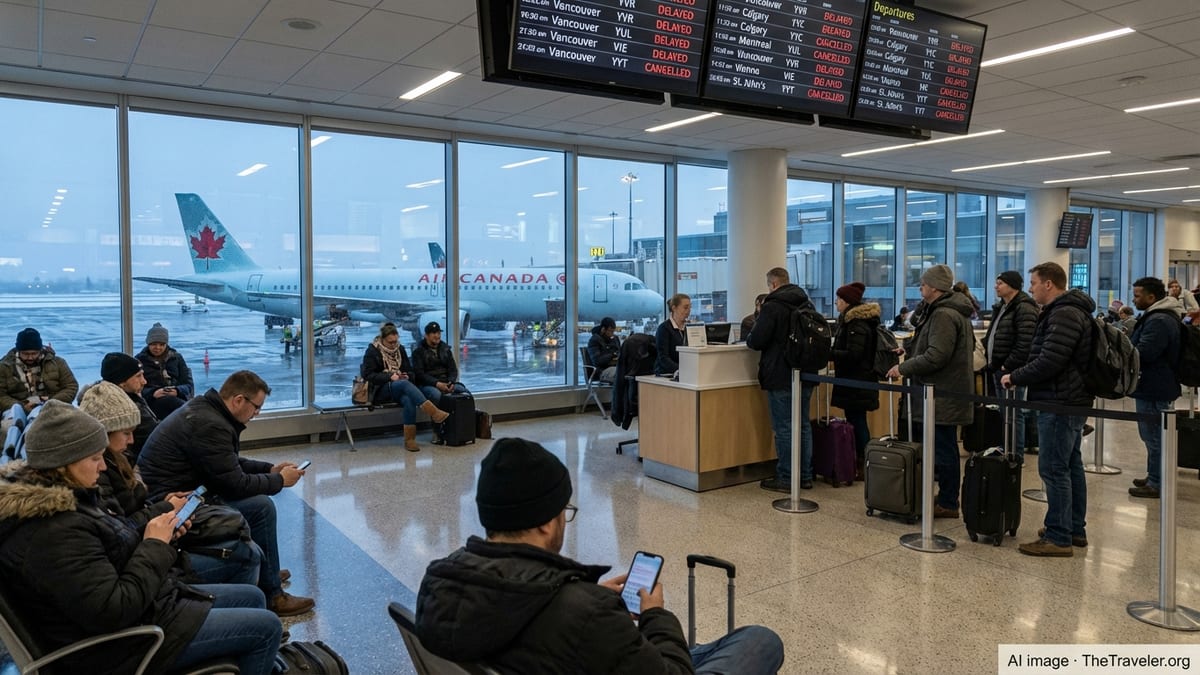
Montreal-Trudeau Records Wave of Schedule Disruptions
Publicly available tracking data for May 11 indicates that Montreal-Pierre Elliott Trudeau International Airport registered at least 35 delayed departures and arrivals and 10 outright cancellations over the course of the day. The disruption affected a mix of domestic and transborder services, complicating itineraries for business and leisure travelers at the start of the workweek.
The pattern of delays developed through the morning and afternoon as turnaround times lengthened and aircraft arriving late from other cities were forced into compressed schedules. Once a critical number of flights slipped behind schedule, the airport appeared to experience what analysts often describe as cascading delays, where each disruption places further pressure on gate availability and crew duty limits.
While operational details vary by airline and route, the scale of the delays at Montreal-Trudeau on May 11 is notable when compared with typical daily performance at major Canadian airports. Government transportation statistics for recent years show that only a small share of flights at Canada’s eight busiest airports are usually cancelled on any given day, underscoring how an incident involving double-digit cancellations stands out for travelers.
Major Airlines and Regional Carriers Caught in the Ripple
Among the airlines impacted were large network carriers such as Air Canada, as well as regional and niche operators including Jazz, Porter and PAL Airlines. These carriers collectively handle a significant volume of domestic Canadian traffic, linking Montreal with cities like Toronto and Halifax, and also feeding passengers into transborder and transatlantic routes.
Schedule data for individual flights on May 11 show delayed or disrupted movements on several key Air Canada services operating through Montreal-Trudeau, including flights to and from Toronto and European hubs. Regional partners, which often operate under capacity agreements with larger airlines, experienced their own schedule adjustments as aircraft and crews were repositioned or held on the ground.
Porter Airlines, which has recently restructured parts of its Quebec and Ontario network, also faced operational challenges. With some routes already thinned or shifted to other airports in the Montreal area, additional same-day delays and cancellations further constrained options for travelers relying on point-to-point regional links.
PAL Airlines and Jazz, important for connectivity to Atlantic Canada and smaller communities, were similarly affected. When even a few of these regional flights are delayed or cancelled, travelers may lose same-day onward connections, forcing overnight stays or complete itinerary changes.
Domestic and U.S. Routes Disrupted, From Toronto to Chicago
The impact of Montreal’s delays extended along some of the country’s most heavily used corridors. Services between Montreal and Toronto, one of Canada’s busiest air routes, experienced schedule slippage that reverberated across afternoon and evening bank times. Passengers connecting through Toronto Pearson faced tighter transfer windows and, in some cases, missed onward flights.
Flights linking Montreal with Halifax, a key gateway for Atlantic Canada, were also affected. Even modest delays on these eastbound services can force travelers to rebook limited daily departures onward to Newfoundland and Labrador or smaller Maritime airports, straining capacity on later flights.
Transborder routes linking Montreal with major U.S. hubs, including Chicago, saw ripple effects as aircraft arrived late or were cancelled out of sequence. These links are important not only for point-to-point traffic but also for travelers using American hubs to reach destinations across the United States and internationally. The loss or delay of a single Montreal–Chicago rotation can break multiple long-haul connections on the far side.
As delays mounted through the day, rebooking options became more constrained. With spring travel demand elevated and some routes already operating close to capacity, later flights often had limited seats available for disrupted passengers, particularly those traveling in larger family groups.
Weather, Congestion and Structural Strains on the System
Weather conditions in the Montreal area on May 11 were cool but relatively stable, suggesting that factors beyond severe storms or visibility issues may have contributed to the operational strain. Industry analysis in recent seasons has pointed to a combination of congested peak-hour schedules, tight crew availability and constrained airport infrastructure as recurring sources of delays at major Canadian hubs.
Montreal-Trudeau’s operator has already embarked on a multiyear capital program intended to expand capacity and modernize facilities through the early 2030s. Planning documents describe a rising volume of passenger traffic and the need to reduce bottlenecks on the airside and in terminal areas. Until those projects are fully delivered, however, even moderate disruptions can have an outsized effect on daily operations.
Across the broader North American network, airlines have also been managing higher fuel costs, evolving route structures and occasional air traffic control constraints. These pressures can reduce the resilience of daily schedules, leaving carriers with less spare aircraft and crew capacity to recover quickly when delays occur at a hub like Montreal.
Regulatory and industry data from recent years show that while on-time performance has improved from some of the lows seen during the early post-pandemic recovery, cancellations and late arrivals remain a persistent concern for passengers, particularly during peak travel periods and at complex hub airports.
What Travelers Can Expect in the Days Ahead
For those with upcoming flights through Montreal-Trudeau, industry guidance suggests monitoring airline apps and airport departure boards frequently in the 24 hours before travel. When a hub records a day with multiple cancellations, it can take several subsequent rotations for aircraft and crew schedules to fully return to normal.
Passengers connecting through Toronto, Halifax, Chicago and other affected cities may see minor timing adjustments as airlines attempt to realign their networks. In some instances, carriers may opt to consolidate lightly booked flights or substitute different aircraft types to restore balance between demand and available capacity.
Travelers whose flights are significantly delayed or cancelled are encouraged by consumer advocates to review airline policies and federal transportation rules regarding rebooking and compensation. While eligibility varies depending on the cause of disruption and the operating carrier, knowing the applicable conditions can help passengers make faster decisions at the airport or via customer service channels.
With Montreal-Trudeau in the midst of long-term expansion plans and airlines continuing to fine-tune their schedules, observers note that occasional periods of concentrated disruption are likely to persist. For now, the latest wave of delays and cancellations serves as a reminder that even routine trips through major Canadian hubs can still be vulnerable to sudden operational shocks.