


More news on this day
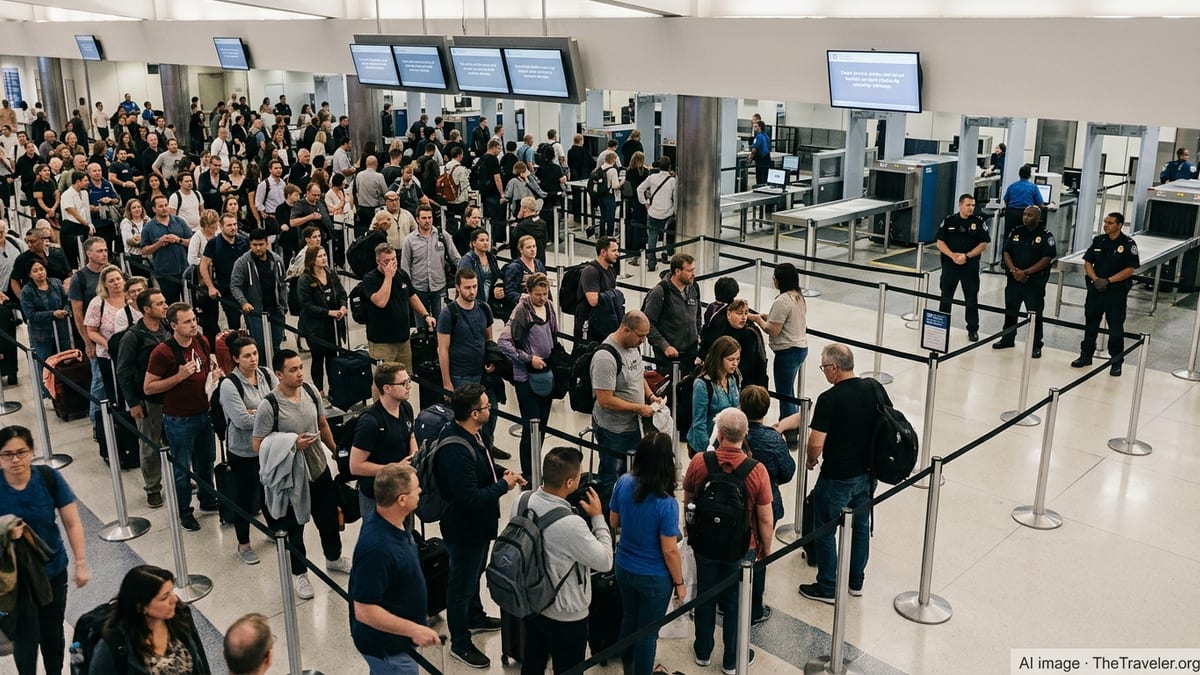
Travelers at Jacksonville International Airport faced mounting frustration on Saturday as a cluster of delays and cancellations involving PSA Airlines, American Airlines, Southwest, Republic Airways and United rippled through major hubs including Miami, Atlanta, Orlando, Dallas and Charlotte, leaving passengers stranded and struggling to rebook.
Get the latest news straight to your inbox!
Disruptions Concentrated Around Key U.S. Hubs
Publicly available flight-tracking and schedule data for Saturday indicate that operations at Jacksonville International Airport were affected by at least 18 delays and 6 cancellations tied to connections through some of the country’s busiest hubs. Miami, Atlanta, Orlando, Dallas and Charlotte all showed signs of operational strain, which in turn disrupted regional and mainline services into and out of northeast Florida.
Carriers including PSA Airlines, which operates regional services under the American Eagle brand, along with American Airlines, Southwest, Republic Airways and United, were among those experiencing interruptions. Delayed departures from hub airports translated into late-arriving aircraft at Jacksonville, compressing turnaround times and prompting rolling delays that extended into the afternoon and early evening.
While overall schedules at Jacksonville still showed dozens of flights operating, the combination of late departures and a handful of outright cancellations was enough to strand connecting passengers who missed onward legs at larger hub airports. Travelers heading for tight connections in cities such as Dallas and Charlotte were among the most affected, with some facing overnight stays or multi-stop rebookings.
The pattern mirrored a familiar scenario in the U.S. aviation system, where disruptions at a handful of high-traffic hubs can quickly cascade across regional airports. Even when local weather in Jacksonville is favorable, congestion, storms or traffic-management initiatives in other parts of the network can lead to significant knock-on effects for travelers.
Regional Carriers Under Pressure
The day’s disruptions highlighted the prominent role of regional operators such as PSA Airlines and Republic Airways in feeding passengers into larger networks. These airlines operate many of the shorter routes into hub cities, meaning that any schedule compression or ground delay at a hub can disproportionately affect their rotations.
Operational data and industry discussion show that PSA Airlines, whose main hubs include Charlotte and Dallas, has been particularly sensitive to weather and traffic conditions at those airports. When storms, air-traffic flow programs or runway constraints reduce capacity at a hub, regional flights are often the first to be delayed or consolidated so that longer-haul services can be prioritized.
Republic Airways, which flies under multiple major-brand banners, faces similar challenges. Tight turnarounds, crew duty-time limits and aircraft positioning requirements can all contribute to a situation where a relatively small initial delay at one hub turns into a cancellation on a later leg, leaving passengers at downline airports such as Jacksonville with limited immediate options.
For travelers, the distinction between a mainline carrier and its regional partners is often invisible, but the operational dynamics can be different. Smaller regional jets can be more affected by weight restrictions in stormy or high-temperature conditions, and their schedules may leave less slack to recover from an early-morning disruption.
Major Airlines Manage Knock-on Delays
American Airlines, Southwest and United also contended with the ripple effects of hub congestion and shifting traffic flows. According to publicly accessible delay maps and airline operations dashboards, major airports including Dallas, Miami, Atlanta and Orlando experienced periods of heavier-than-normal traffic, which translated into longer taxi times, ground holds and arrival metering for inbound flights.
In practice, this meant that Jacksonville-bound flights from these hubs often departed later than scheduled, pushing arrival times back and compressing connection windows for onward passengers. In some cases, flights operated but with delays long enough to cause travelers to miss domestic or international connections, effectively stranding them even though their original segment eventually took off.
United in particular has been the subject of heightened traveler scrutiny in recent months over the resilience of its hub operations during busy or weather-impacted days. Independent tracking dashboards and consumer-rights sites have documented elevated rates of delays at some of the airline’s major bases, especially when thunderstorms or traffic restrictions are in effect across the northeastern and central United States.
Southwest, whose network relies heavily on point-to-point flying rather than a pure hub-and-spoke model, can also feel the impact when multiple stations experience congestion at the same time. When a single aircraft is scheduled to complete several legs in succession throughout the day, an early delay in one city can propagate across the rest of its schedule, affecting passengers at airports that may be hundreds of miles away from the original problem.
Stranded Passengers Navigate Limited Options
For passengers caught up in Saturday’s disruptions at Jacksonville, the immediate challenge was often finding an alternative way to reach their destination. With many affected flights tied to busy hubs, rebooking options were constrained by limited remaining seat availability on later departures and by the risk that follow-on flights might themselves be delayed.
Travelers reported spending extended periods in terminal areas as they monitored mobile apps and departure boards for updates, with some discovering only gradually that a long delay had tipped into cancellation. Others were offered rebookings that required overnight layovers in hub cities or multiple connections on itineraries that had originally been non-stop or single-stop journeys.
Consumer-advocacy resources note that when delays and cancellations are driven by weather or air-traffic control constraints, U.S. regulations provide fewer mandatory compensation protections compared with some international regimes. Passengers may be offered meal vouchers or hotel accommodations depending on the airline’s policies and the specific circumstances, but much of the support remains discretionary.
As a result, stranded travelers increasingly turn to digital tools, from airline apps to independent flight-tracking platforms, to identify open seats, monitor gate changes and weigh the merits of waiting for a delayed flight versus asking to be rerouted. On heavily disrupted days, even these tools can lag behind real-time operational decisions, adding another layer of uncertainty for those trying to make urgent connections.
Ongoing Vulnerability of the U.S. Air Travel Network
The situation at Jacksonville underscored the broader vulnerability of the U.S. air travel network to clusters of delays and cancellations concentrated around a small number of key airports. Even when the national system avoids high-profile ground stops or mass shutdowns, localized congestion and thunderstorms at major hubs can be enough to disrupt itineraries for travelers all along the network.
Airport and airline planning documents emphasize contingency measures intended to minimize long tarmac holds and to coordinate responses among carriers, airport operators and air-traffic control when severe delays occur. These plans, while designed to prevent the most extreme scenarios, do not eliminate the possibility of prolonged waits in terminals or the need for passengers to rebook at their own expense in some circumstances.
Analysts note that continued growth in passenger volumes at regional airports such as Jacksonville is likely to further stress the system during peak travel periods, particularly as airlines seek to optimize aircraft utilization with tighter schedules. Without additional buffer capacity or infrastructure at some hubs, relatively small operational shocks can continue to produce outsized impacts for travelers.
For now, those planning trips through busy connecting airports are frequently advised by travel experts to build in additional time, monitor evolving conditions across their route and be prepared with backup options. Saturday’s wave of delays and cancellations affecting Jacksonville and cities from Miami to Dallas served as another reminder that even routine journeys can quickly become complicated when the tightly linked U.S. air network falters.