


More news on this day
Passengers traveling through Miami International Airport are confronting mounting delays, cancellations and crowded terminals after an Amazon cargo jet overran a runway and crashed nearby, killing five people and triggering a prolonged disruption to operations.
Get the latest news straight to your inbox!
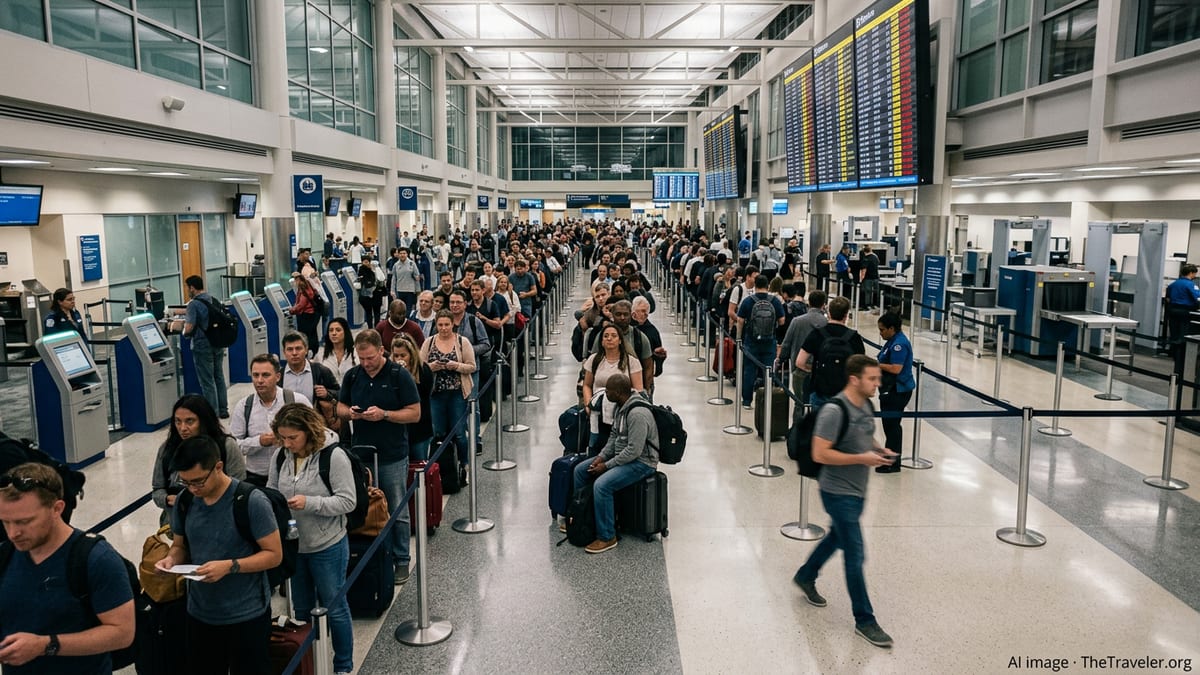
Runway closures strain Miami International operations
Miami International Airport experienced a full ground stop on Sunday, September 6, 2026, after a Boeing 767 cargo aircraft operated for Amazon overran a runway during landing and struck vehicles beyond the airfield perimeter. Publicly available information indicates that the aircraft became disabled near the northwest end of the airport, forcing an immediate suspension of arrivals and departures while emergency crews responded to the scene.
The ground stop, which lasted several hours, halted all flight movements and quickly created a backlog of aircraft and passengers. According to published coverage, the average delay for flights arriving into Miami on Sunday evening extended to more than six hours as airlines tried to reposition aircraft and reschedule crews following the shutdown.
By Monday morning, airport updates and local media reports showed that two of Miami International’s four runways had reopened, allowing operations to resume at reduced capacity. Two remaining runways stayed closed as investigators and recovery teams continued work around the damaged aircraft and debris field, limiting the airport’s ability to absorb normal traffic levels.
Industry-focused reporting notes that the closed runways are among the airport’s primary surfaces for handling both domestic and international traffic as well as heavy cargo operations. With only half of the airfield fully available, airlines have been adjusting schedules and rerouting flights, decisions that are contributing to ongoing delays and cancellations.
Flights canceled and travelers stranded across the terminal
Disruptions carried into Monday, September 7, as passengers reported extensive wait times and repeated schedule changes on flights into and out of Miami. Local television coverage citing airport data indicated that, by early morning, at least several dozen flights had been canceled and more than a dozen delayed, with numbers fluctuating throughout the day as airlines updated their operations.
Travelers described sleeping on terminal floors, benches and gate seating overnight after hotels near the airport quickly filled. News segments from Miami-based outlets showed long lines at airline counters as passengers attempted to rebook itineraries that had been delayed multiple times before ultimately being canceled.
Some passengers interviewed by broadcasters reported that alternative seats out of Miami were not available until at least Tuesday, leaving many travelers effectively stranded for up to two days. Airport staff were seen distributing bottled water as lines extended through concourses, while flight information boards displayed clusters of delayed and canceled departures.
Reports from regional airports and social media posts from affected travelers also pointed to a wider ripple effect, with flights bound for Miami diverted to other hubs or returned to their origins during the initial ground stop. Those diversions left some travelers waiting for new connections and contributed to tight seat availability on subsequent days.
What is known about the Amazon cargo jet crash
The cargo aircraft involved in the crash was a Boeing 767 operating under the Amazon Air network and flown by contract carrier 21 Air. According to information from the Federal Aviation Administration and news organizations, the aircraft was arriving from San Juan, Puerto Rico, when it overran the runway at around 2 p.m. local time on Sunday.
Published accounts describe the jet leaving the paved surface, breaching the airport perimeter and coming to rest near a roadway and parking areas, where it struck multiple vehicles. Images and video reviewed by national and local outlets show the aircraft surrounded by heavy smoke and flames shortly after the impact as fire crews worked to contain the blaze.
Multiple reports state that five people were killed and five others injured in the crash, including individuals in vehicles that were struck beyond the airfield. A combination of local authorities and federal agencies has opened an investigation into the circumstances surrounding the landing, including factors such as landing distance, wind conditions and the aircraft’s touchdown point on the runway.
Early aviation analysis cited in trade and general news coverage has focused on the timing of the aircraft’s landing and whether it may have touched down too far along the runway to stop safely, particularly in the presence of gusty winds. Investigators are expected to review flight data and cockpit voice recordings in detail, a process that typically takes weeks or months before preliminary findings are released.
Continuing travel disruptions and advice for passengers
With two runways still closed and airlines working through a substantial backlog, disruptions are expected to persist at Miami International Airport through at least the early part of the week. Airport statements shared via news outlets encourage travelers to check directly with their airlines for the latest flight status before heading to the terminal.
Transportation updates carried by national and local media warn that delays and cancellations may affect both originating and connecting itineraries touching Miami. This includes flights on carriers that are using other Florida or Southeast U.S. airports to reroute passengers while Miami operates at limited capacity.
Travel analysts note that large hub airports typically need many hours, and sometimes several days, to recover from a complete shutdown combined with ongoing runway restrictions. With aircraft and crews out of position following Sunday’s ground stop, airlines may continue to adjust schedules, consolidate lightly booked flights and place passengers on later services.
Given the evolving situation, publicly available guidance recommends that travelers monitor airline apps and websites closely, allow extra time at the airport and remain flexible with travel plans if possible. Those who have not yet started their trips and are scheduled to connect through Miami may wish to explore rebooking options that avoid the hub until operations stabilize.
Impact on cargo flows and regional air travel
Beyond passenger disruptions, the crash is affecting cargo operations at one of the United States’ busiest international freight gateways. Industry reporting highlights that Miami International Airport serves as a crucial hub for cargo flows between the U.S., Latin America and the Caribbean, including express and e-commerce shipments.
With runway capacity reduced, some freighter flights are being delayed or rerouted to alternative airports in the region, according to logistics-focused news outlets. These operational changes may lead to short-term slowdowns in shipments moving through Miami, particularly time-sensitive goods and packages routed through Amazon’s network.
The incident also comes at a time when Miami has been managing ongoing infrastructure projects and strong demand in both passenger and cargo segments. Analysts suggest that the combination of existing congestion and unexpected runway closures may underscore the challenges major hubs face when a single event disrupts tightly scheduled operations.
While investigators work to determine the causes of the crash, air carriers, logistics companies and the airport operator are concentrating on restoring as much capacity as possible without compromising safety. Observers expect that Miami’s role as a critical gateway will remain unchanged, but that the crash is likely to prompt renewed attention to runway safety, approach procedures and land use planning around heavily trafficked airports.
CBS News Miami coverage of delays and cancellations at MIA
Local 10 News report on ongoing disruptions at Miami International Airport
NBC 6 South Florida coverage of Amazon cargo plane crash and travel impact
Associated Press report on the Amazon cargo jet crash investigation