


More news on this day
Two major long haul cancellations by Delta Air Lines and Lufthansa Airlines at Seoul Incheon International Airport have sparked travel disruption on key transpacific and Europe bound routes, stranding passengers and complicating global connections at the height of a busy spring travel period.
Get the latest news straight to your inbox!
Key Seattle and Frankfurt Departures Scrubbed at Short Notice
Publicly available flight tracking data on Monday, April 20, indicates that a scheduled Delta Air Lines service from Seoul Incheon to Seattle and a Lufthansa service from Seoul to Frankfurt were both cancelled close to their planned departure windows, interrupting two of South Korea’s most heavily used long haul corridors. The Delta flight normally links Incheon with Seattle Tacoma International Airport, a major U.S. West Coast gateway and hub for onward domestic and Canada connections. The Lufthansa departure is part of the German carrier’s core intercontinental network, funnelling traffic from South Korea into Frankfurt’s extensive European and transatlantic bank of flights.
These cancellations follow a period of elevated operational risk in Europe tied to labor action at Lufthansa, where cabin crew and pilots have staged a series of strikes across March and April 2026. Published coverage shows that recent walkouts in Germany have led to hundreds of flight cancellations at Frankfurt and Munich, cutting into long haul schedules to Asia and North America and forcing the airline to repeatedly reshape its timetable. Against that backdrop, the loss of the Seoul Frankfurt leg on a day when demand remains strong has added further strain to an already stretched network.
On the transpacific side, Delta’s decision to cancel its Incheon Seattle service removes a direct link not only to the U.S. Pacific Northwest but also to an important SkyTeam hub. Seattle Tacoma functions as a connecting point for passengers heading to major U.S. cities such as Los Angeles, San Francisco, Chicago, New York and smaller regional destinations across the Pacific Northwest and Alaska. When the nonstop link is removed at short notice, alternatives typically involve a mix of rerouting over other U.S. gateways, such as Detroit or Minneapolis, or waiting for the next available departure on the same route.
For South Korean travelers and international visitors alike, the combined effect is a simultaneous pinch on two strategic corridors: one to the U.S. West Coast and the other to Europe’s largest intercontinental hub. With both routes acting as feeders into dense global networks, the cancellations are reverberating far beyond the Incheon terminal departure boards.
Stranded Passengers Confront Long Queues and Limited Options
Accounts shared on social media and travel forums over the past week describe passengers facing last minute cancellations and scrambling to secure alternatives, particularly on Lufthansa’s Europe bound itineraries. Several travelers connecting beyond Frankfurt report that European feeder legs have been cancelled or removed from reservations, leaving long haul segments intact but onward routes disrupted. In some cases, passengers heading to secondary European cities have had to request rerouting via other alliance partners or accept overnight stays in hub airports while waiting for replacement services.
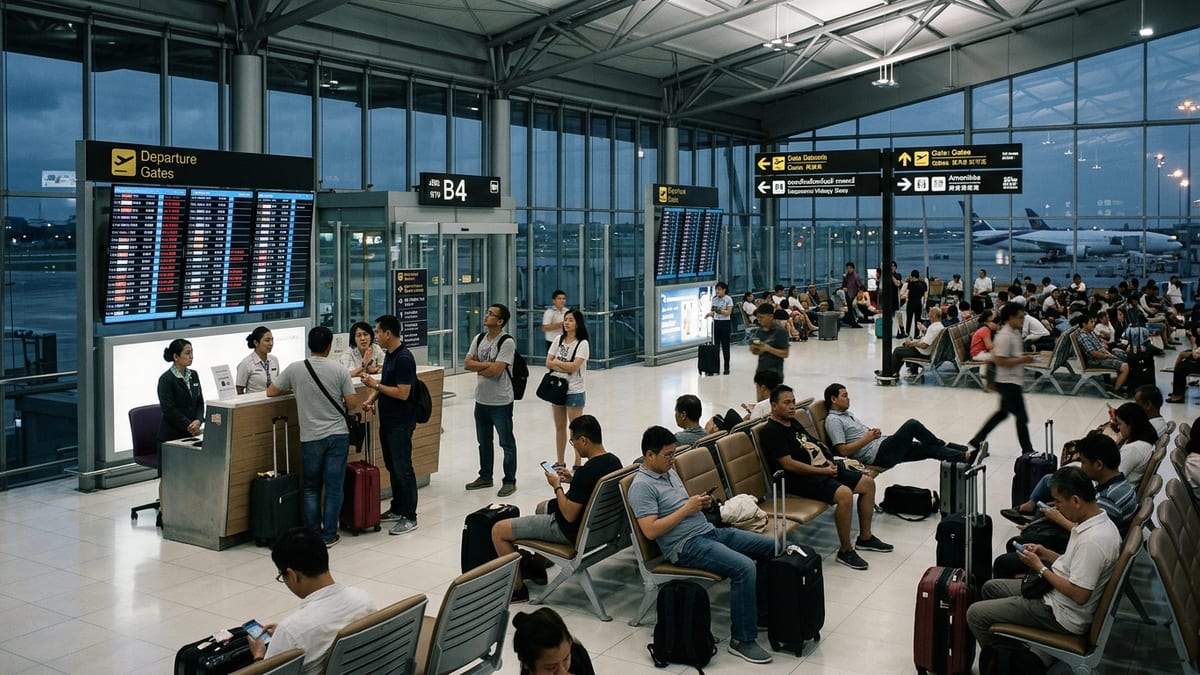
At Seoul Incheon, the trend is similar when long haul departures are pulled on short notice. Passengers typically converge on transfer desks and airline service counters seeking assistance with rebooking, meal vouchers and, where applicable, overnight accommodation. During peak periods, this has led to extended queues and uncertainty about when new travel arrangements can be confirmed. Publicly available guidance from consumer agencies notes that travelers often experience difficulty reaching call centers or airline chat services at times of mass disruption, pushing more people to seek help in person at the airport.
For those with complex itineraries, such as multi stop trips that combine Asia, Europe and North America on a single ticket, the cancellation of a single long haul leg can cascade into missed connections across several continents. Travelers heading to destinations as varied as Dublin, Amsterdam or Scandinavian cities via Frankfurt have described itinerary changes that remove or cancel connecting segments without clearly presented alternatives. Similar complaints have emerged from passengers using Seattle as a gateway for onward flights to U.S. domestic destinations, who have had to rebook onto different routings or accept delays of twenty four hours or more.
Families and business travelers are among the most affected, particularly where meetings, special events or fixed tour departures are scheduled within tight time windows. In these cases, even a one day delay can mean forfeited hotel nights, missed appointments or nonrefundable ground services, adding financial stress to an already challenging travel experience.
Strikes and Spring Demand Put Pressure on Airline Networks
The Lufthansa cancellation from Seoul to Frankfurt is unfolding against a backdrop of ongoing labor disputes at the German carrier. Published reports detail a series of strike actions by pilots and cabin crew beginning in March 2026 and intensifying around the Easter and early spring travel periods. The result has been large scale schedule reductions, with some days seeing well over half of planned departures at Frankfurt and Munich removed from the timetable.
These strikes come at a time when European airlines are attempting to rebuild and expand their long haul networks for the Northern Hemisphere summer. Industry scheduling data shows that Lufthansa has been adjusting frequency on key Asian routes, including services to Seoul Incheon, in response to both demand patterns and operational constraints. Each round of industrial action forces further revisions, leaving passengers with little certainty about whether flights will operate as booked until close to departure.
On the transpacific side, Delta Air Lines continues to balance its capacity between major hubs like Seattle, Detroit, Atlanta and Minneapolis amid strong demand on routes linking Asia with the United States. While no large scale strike action has been reported at Delta comparable to the situation in Germany, the carrier, like its peers, operates within tight fleet and crew scheduling parameters. Any localized operational issue, from aircraft rotation challenges to weather or maintenance requirements, can trigger cancellations that ripple through its network, particularly on long haul sectors such as Incheon to Seattle.
Higher spring travel volumes magnify the impact of each disruption. With many flights already operating near capacity, rebooking affected passengers can be difficult, and open seats on alternative services may be limited to less convenient routings or off peak departure times. The combination of demand recovery, labor unrest and tight capacity leaves airlines with less flexibility to absorb shocks without visible effects on passengers.
Global Connections Disrupted Across Alliances
The cancelled Seoul Incheon services to Seattle and Frankfurt highlight how a disruption in one city can reverberate through multiple airline alliances. Delta’s route to Seattle is part of its integrated transpacific offering in coordination with Korean Air, while Lufthansa’s connection to Frankfurt feeds into the Star Alliance network and codeshares with carriers such as Asiana Airlines on the Korea side. When a key long haul leg is removed, the built in connectivity that underpins these partnerships is temporarily weakened.
Travelers booked on itineraries that cross alliance boundaries, for example combining a Delta or Korean Air transpacific flight with a non aligned European carrier beyond Seattle or Frankfurt, may face even more complex rebooking scenarios. In these cases, ticketing responsibilities, fare rules and inventory availability across different reservation systems can limit the options that frontline agents are able to offer. Publicly available consumer guidance suggests that passengers with disrupted multi airline itineraries often have to work sequentially with each carrier involved to restore their full journey.
The cancellations also underscore the importance of hub airports like Seattle Tacoma and Frankfurt in the global travel ecosystem. Frankfurt serves as a primary European entry point for passengers from South Korea and the wider Northeast Asia region, offering connections to dozens of cities across the continent as well as onward flights to Africa and the Americas. Seattle, for its part, links Asia with a growing network of U.S. interior destinations and has become an important departure point for both leisure and technology sector travel.
When long haul departures from Seoul into these hubs are cut, even for a single day, the downstream effects can include overcrowded rebooked flights, higher last minute fares on competing carriers and a temporary reduction in choice for travelers who depend on these corridors for business and personal trips.
What Travelers Can Do When Long Haul Flights Are Cancelled
In the wake of the latest cancellations at Seoul Incheon, passenger advocates and travel experts continue to emphasize several practical steps for travelers facing similar disruptions. Publicly available advice from consumer organizations recommends that affected passengers first verify their flight status through official airline channels and airport departure boards, rather than relying solely on third party booking sites or email notifications, which can lag behind real time operational changes.
Once a cancellation is confirmed, travelers are generally advised to seek rebooking at the earliest opportunity, either through airline apps and chat functions or by speaking with staff at designated service desks in the terminal. During periods of mass disruption, digital tools may provide faster access to alternative itineraries than in person queues. Many carriers also publish dedicated travel waivers that loosen change fees and fare rules when large numbers of flights are cancelled for reasons such as strikes or severe weather.
Passengers are also encouraged to keep detailed records of booking confirmations, boarding passes and any written notifications of cancellation or delay, as these documents may be necessary later when pursuing refunds or compensation under applicable regulations. For itineraries touching the European Union or operated by European carriers, long haul cancellations and lengthy delays can, in some circumstances, trigger rights to financial compensation, although eligibility depends on the specific cause and timing of the disruption.
For now, travelers passing through Seoul Incheon on long haul services to Seattle, Frankfurt and other major hubs are being reminded by travel advisories and airport information channels to monitor their bookings closely, allow additional buffer time for connections and remain flexible where possible. With labor negotiations continuing in Europe and global airline networks still operating near capacity, further short notice changes cannot be ruled out in the coming weeks.