


More news on this day
More than 200 flights at Phoenix Sky Harbor International Airport were reported delayed on Thursday, disrupting travel across the country as passengers encountered longer waits, missed connections and shifting departure times.
Get the latest news straight to your inbox!
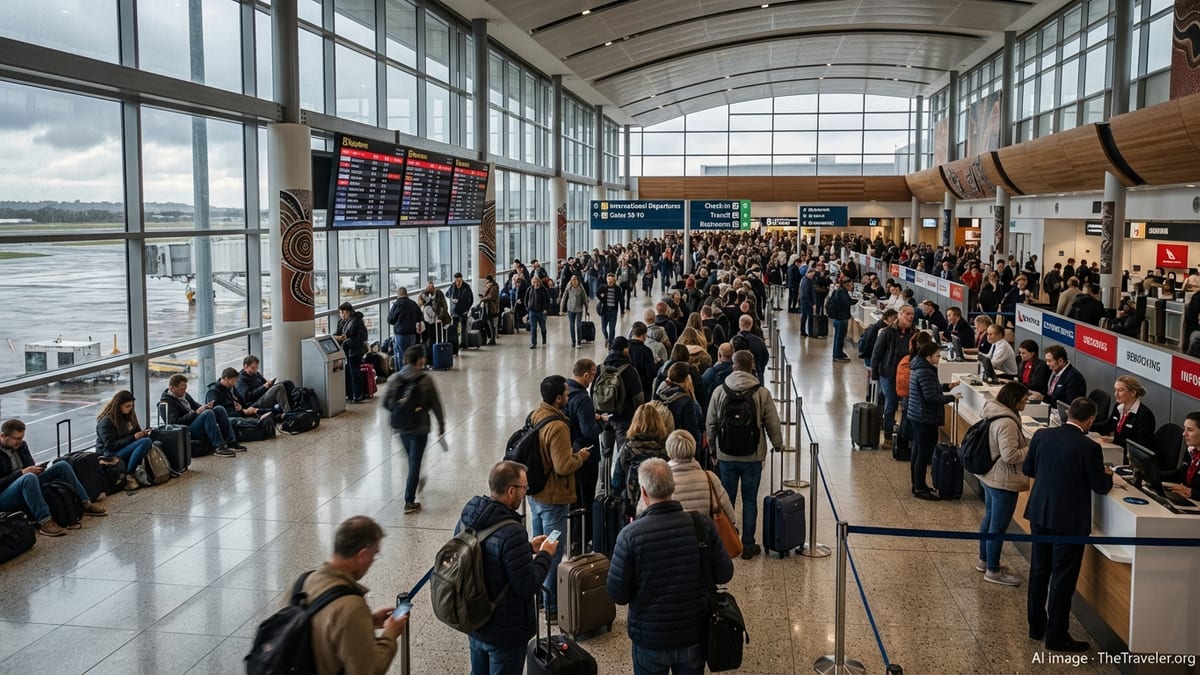
Delays Mount Across Phoenix Hub
Tracking data for Phoenix Sky Harbor showed a sharp increase in flight disruptions, with over 200 departures and arrivals marked as delayed over the course of the day. The pattern placed the airport among the more heavily impacted U.S. hubs, with knock-on effects spreading to major destinations throughout the West and Midwest.
Publicly available boards and airline status tools reflected a mix of short, 30 minute schedule slips and longer delays extending beyond two hours. While cancellations remained limited compared with the number of delayed flights, the volume of schedule changes proved significant for travelers who had planned tight connections or evening arrivals.
The slowdown emerged during what is already a busy spring and early summer travel period for Phoenix. Airport statistics indicate that Sky Harbor has been handling steadily rising passenger volumes in 2026, building on its role as a key domestic and international hub for the Southwest region.
By late afternoon, delays were still being recorded across both departures and arrivals, although some flights returned to near on time operations as conditions improved and airlines worked through the backlog.
Weather, Congestion and Network Ripple Effects
Reports indicate that a combination of weather and regional air traffic congestion played a central role in the disruptions. Even when skies appear relatively clear over Phoenix, storms and low ceilings in other parts of the country can trigger ground delay programs and flow restrictions that cascade into Sky Harbor’s schedule.
Airline operations in Phoenix are closely tied to large connecting hubs such as Dallas Fort Worth, Denver, Chicago and Southern California airports. When those locations experience routing changes, spacing requirements or temporary halts, flights headed into or out of Phoenix can be held on the ground, slowed in the air or re sequenced on arrival.
Federal aviation planning documents have also noted periods of minor capacity constraints at Phoenix in 2026 as airfield work and taxiway projects proceed, potentially contributing to longer taxi times during heavy traffic periods. While such projects are designed to improve long term efficiency, they can tighten margins during days when weather or upstream congestion already strain the system.
The result for travelers is a familiar pattern in modern air travel: a localized weather system hundreds of miles away, combined with infrastructure work and strong seasonal demand, can translate into crowded gate areas and restless queues at an otherwise sunny desert airport.
Impact on Passengers and Airlines
For passengers, Thursday’s wave of delays meant missed connections, rescheduled hotel stays and, in some cases, unexpected overnight stops. Travelers at Phoenix Sky Harbor reported waiting in longer lines at customer service counters as they sought new itineraries, meal vouchers or updated boarding passes.
Airlines operating at Phoenix, including major network and low cost carriers, faced the challenge of repositioning aircraft and crews to keep schedules moving. When arrivals fall behind, aircraft often depart late from their next city, producing a rolling effect that can persist into the evening.
Delays also add pressure on airport facilities. Crowded gate areas, tighter competition for available charging outlets and heavier use of restrooms and concessions are common when dozens of flights remain on the ground longer than scheduled. Concessionaires frequently see a spike in demand as travelers linger in terminals rather than boarding on time.
While many passengers eventually reached their destinations the same day, the cumulative effect of more than 200 delayed flights represented thousands of individuals coping with altered plans, tighter connections or newly uncertain arrival times.
What Travelers Can Do When Delays Spike
Travel experts recommend that passengers flying through Phoenix during periods of widespread delays take several practical steps to reduce stress. Monitoring flight status early and often through airline apps or text alerts can provide earlier notice of schedule changes, even before they appear on terminal display boards.
Building extra time into itineraries, particularly when connecting through other busy hubs, can create more flexibility if a departure from Phoenix is held. Many airlines also allow same day confirmed or standby changes within a certain time window, which can help travelers move to earlier or later flights that may be less affected.
Passengers already at the airport are often encouraged to stay close to their departure gate during active weather or congestion events, as boarding times can shift quickly when air traffic control releases a narrow window for departure. At the same time, it can be helpful to identify nearby food and rest options to make longer waits more comfortable.
Those with critical appointments at their destination sometimes look into alternative routings, including nearby airports or overnight options, especially when patterns of delay begin to stretch across much of a day’s schedule.
Outlook for the Coming Days
Forecasts and scheduling data suggest that operations at Phoenix Sky Harbor may gradually stabilize as weather systems move out of key regions and air traffic flows normalize. However, with the busy summer travel period ramping up, the potential for renewed disruption remains present whenever storms or high winds intersect with peak travel waves.
Sky Harbor’s role as a major connecting point means that conditions at distant airports will continue to influence performance in Phoenix, even on days when local skies are clear. As airlines seek to keep tight timetables and full planes on track, relatively small interruptions in one part of the network can quickly ripple through to others.
For travelers planning flights over the next several days, the current episode serves as a reminder that flexibility, real time information and contingency plans are increasingly important parts of air travel. Arriving early, keeping digital boarding passes handy and understanding rebooking options can help minimize the impact of sudden schedule changes.
While Thursday’s total of more than 200 delayed flights stands out as a challenging day for Phoenix Sky Harbor, it also reflects the complex, interconnected system that keeps millions of passengers moving through one of the nation’s busiest airports each month.