


More news on this day
Passengers on Delta Air Lines flight DL54 from Atlanta to Lagos faced an extraordinary ordeal when their overnight transatlantic service turned back mid-ocean, returning to Atlanta nearly eight hours after departure and leaving travelers frustrated, confused and back where they started.
Get the latest news straight to your inbox!
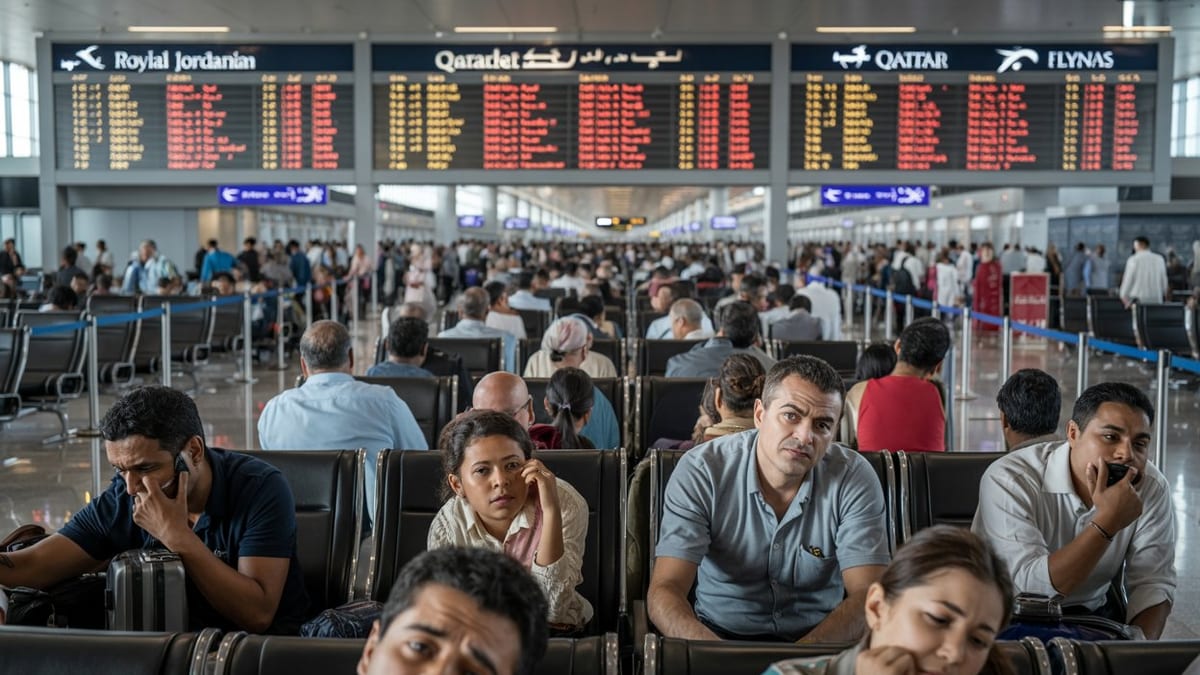
What Happened on Delta Flight DL54
According to publicly available flight-tracking data and multiple media reports, DL54 departed Hartsfield-Jackson Atlanta International Airport on the evening of May 9, 2026, operating an Airbus A330-200 on the roughly 10 to 11 hour route to Lagos, Nigeria. The aircraft followed a standard eastbound path over the Atlantic for several hours before reversing course about halfway across the ocean.
Reports indicate the widebody jet remained airborne for around seven hours and 45 minutes before landing back in Atlanta early on May 10. By the time passengers disembarked, they had effectively completed a long-haul flight to nowhere, with the original service to Lagos cancelled and the scheduled return leg also scrubbed.
Delta described the situation in public statements as the result of an "operational issue." Coverage in outlets in Nigeria and the United States notes that the airline did not give further detail about the exact nature of the problem, but the decision to return to Atlanta rather than divert to a closer European or island airport attracted intense attention from travelers and aviation watchers.
Online discussion among affected passengers suggests many onboard were initially expecting a routine flight, only to realize several hours in that the aircraft had turned around. The realization that they were heading back toward the United States sparked anger and disbelief as the total time spent in the air approached that of a normal transatlantic crossing.
Why a Long-Haul Flight Might Turn Back So Late
Although the episode feels highly unusual for those on board, aviation specialists note that mid-ocean turnbacks, while rare, do occur when operational or technical issues emerge after departure. Reports referencing internal assessments suggest that the crew and airline operations center determined the problem was best handled at Delta’s main hub in Atlanta, where maintenance, parts and staff resources are concentrated.
On a long-range flight such as Atlanta to Lagos, the crew must balance multiple safety and planning factors, including fuel reserves, available alternate airports, maintenance capabilities at potential diversion points and duty-time limits for pilots and cabin crew. Industry commentary on this incident highlights that these complex calculations can occasionally lead to a counterintuitive decision to return to the origin airport, even after many hours of flying.
Aviation reports also point out that diversion choices can be affected by the nature of the issue. For example, if a technical concern is not an immediate safety emergency but requires specific inspections, equipment or company-certified engineers, an airline may prefer its primary base to ensure the aircraft can be properly evaluated and quickly returned to service.
In the DL54 case, publicly available tracking trails show the jet continuing at cruising altitude for an extended period before the U-turn, suggesting that the situation was managed as a controlled operational problem rather than an acute emergency. The aircraft landed safely back in Atlanta and there have been no indications of injuries to passengers or crew.
Passenger Frustration and Social Media Backlash
The unusual nature of spending nearly eight hours on a flight only to end up at the departure airport fueled strong reactions on social media, especially among Nigerian travelers who rely heavily on limited nonstop options between the United States and West Africa. Posts on platforms such as X described the event as a "flight to nowhere" and questioned why a closer diversion airport was not used.
Local Nigerian and pan-African outlets report that some travelers expressed dissatisfaction with what they saw as limited real-time communication about the evolving situation, as well as confusion over rebooking and accommodation once back in Atlanta. For many, the episode meant missed connections, disrupted onward travel within Nigeria and financial losses tied to hotels, events and business plans.
The incident also fed into a broader online debate about perceptions of foreign versus local carriers on key African routes. Commentators in Nigeria noted that the uproar over the Delta U-turn contrasted with criticism often directed at homegrown airlines during disruptions, illustrating how emotions around flight reliability can become a flashpoint for larger conversations about trust, infrastructure and consumer rights.
At the same time, some aviation-focused commentators urged travelers to remember that diversions, turnbacks and cancellations are an industry-wide reality and that long-haul operators of all nationalities sometimes make uncomfortable decisions in the name of operational safety.
What Rights and Options Passengers Typically Have
For affected DL54 travelers, the immediate concerns after landing back in Atlanta centered on getting to Lagos as soon as possible, securing lodging and meals if stuck overnight and understanding their eligibility for refunds or compensation. Publicly accessible Delta policy information states that when a flight is cancelled or significantly changed for reasons within the airline’s control, passengers are generally entitled to rebooking on the next available Delta service or to a refund of the unused portion of their ticket.
Because this incident occurred entirely on a US-originating flight and did not involve the European Union’s jurisdiction, European-style fixed cash compensation rules do not automatically apply. Instead, the remedies are shaped by the airline’s contract of carriage and general consumer protection frameworks in the United States and Nigeria.
Travel experts advise that passengers caught in similar situations document all expenses related to the disruption, including meals, hotels and ground transport, keep boarding passes and booking confirmations, and file formal claims directly with the airline. Those who purchased travel insurance may also be able to pursue separate claims based on trip interruption or delay benefits, subject to the specific policy wording.
Credit card protections can provide an additional layer of recourse. Many premium cards offer built-in trip delay or cancellation coverage if the ticket was purchased with that card, potentially reimbursing reasonable costs when an airline-related problem leads to an extended delay or overnight stay.
How Travelers Can Prepare for Long-Haul Disruptions
While an eight-hour U-turn is an extreme example, the DL54 episode underscores how important it is for long-haul travelers to plan for contingencies. Travel planners commonly recommend avoiding tight same-day connections to cruises or major events whenever possible and instead building in at least one buffer day before time-sensitive plans.
Experts also suggest that passengers on overnight intercontinental flights pack essential medication, a change of clothes, chargers and basic toiletries in a carry-on bag rather than checked luggage. In the event of an unplanned return or diversion, having these items on hand can make an otherwise stressful experience more manageable.
Enrolling in airline apps and enabling notifications can help travelers receive quicker updates about delays, gate changes and rebooking options. In many disruptions, mobile tools may allow passengers to adjust itineraries themselves rather than waiting in long airport lines to speak with staff during peak irregular operations.
Finally, for routes with limited nonstop service like Atlanta to Lagos, considering backup plans such as alternate one-stop itineraries on partner airlines or alliance carriers can offer additional flexibility. While no traveler can completely eliminate the risk of a flight to nowhere, understanding the operational realities and knowing one’s rights and options can make a difficult situation easier to navigate the next time plans go awry at 35,000 feet.