

More news on this day
Italy’s long search for a stable national carrier reached a pivotal moment this week as Lufthansa moved to take majority control of ITA Airways, sealing a multi‑year courtship that is set to recast Rome as a strategic hub in global aviation.
Get the latest news straight to your inbox!
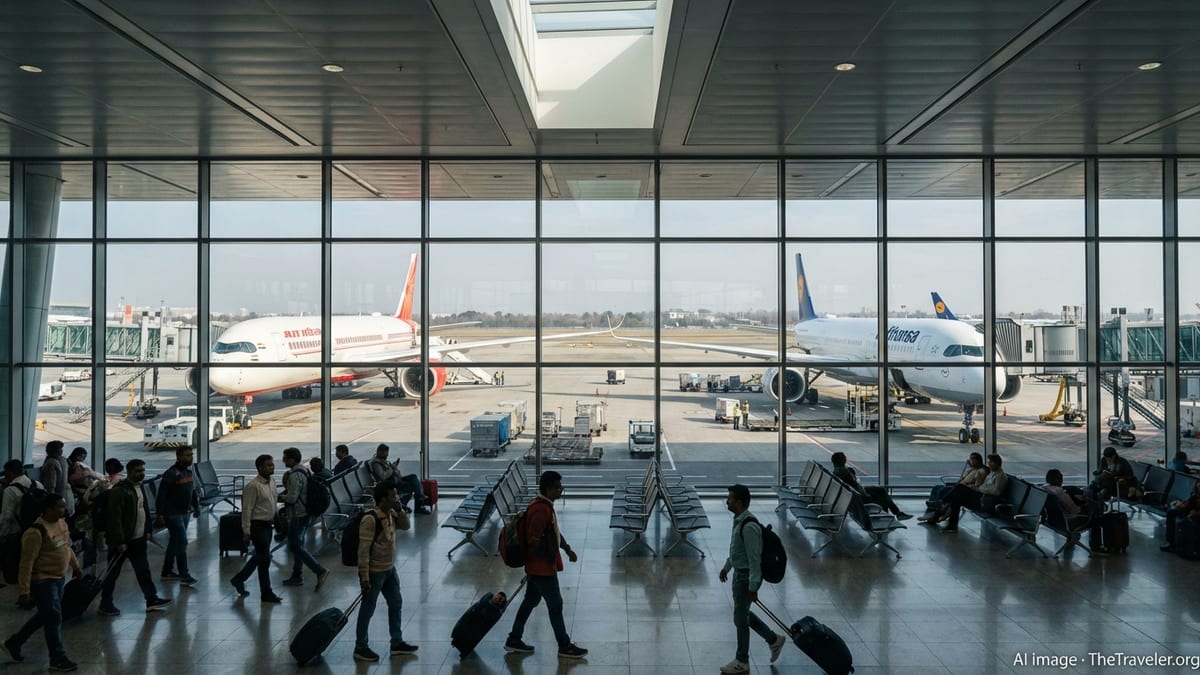
From Minority Stake to Majority Control
The partnership between ITA Airways and Lufthansa has evolved rapidly from a tentative investment into a defining structural change for European aviation. After agreeing in 2023 to acquire a 41 percent stake through a capital increase of 325 million euros, Lufthansa formally became a minority shareholder in January 2025. Publicly available company information indicates that the deal included options to increase that holding over time, subject to regulatory approvals and performance milestones.
According to recent financial communications and Italian business press reports, Lufthansa is now exercising its option to lift its participation to 90 percent for an additional 325 million euros, leaving Italy’s Ministry of Economy and Finance with a 10 percent stake and the possibility to exit fully later in the decade. The transaction is expected to close in 2027, subject to remaining approvals, and will give the German group clear managerial control over ITA’s strategy, fleet and network.
Industry analysis frames the deal as the culmination of a long effort to find a sustainable successor to Alitalia. ITA, launched in late 2020, has gradually rebuilt capacity and restored confidence in Italy’s flag carrier concept, and investors now see the Lufthansa tie‑up as a way to embed that recovery within a broader, multi‑hub European system rather than leaving the airline to compete in isolation.
For Lufthansa, the acquisition strengthens access to one of Europe’s largest outbound tourism and business travel markets. Italy is already a key destination for the group’s existing carriers, but majority control of ITA provides deeper local presence, greater influence over slots and schedules, and the ability to coordinate pricing and capacity across multiple brands.
Rome Fiumicino’s Rise as a Southern European Super‑Hub
A central pillar of the strategy is the elevation of Rome Fiumicino as a full member of the Lufthansa Group hub portfolio. Group publications describe Rome as the sixth and southernmost network hub alongside Frankfurt, Munich, Zurich, Vienna and Brussels, giving the alliance a powerful foothold in the Mediterranean.
Operationally, this is expected to mean more coordinated banked waves of arrivals and departures in Rome, designed to maximize connections between domestic Italian cities, secondary European markets and long haul destinations in the Americas, Africa and parts of Asia. Travel data providers already report that ITA has been building transatlantic capacity from Rome, and analysts anticipate that Lufthansa’s deeper involvement will accelerate the addition of joint routes, code shares and optimized schedules.
For travelers, the change could translate into more one‑stop options via Rome that compete directly with connections through Paris, Amsterdam, Frankfurt or London. Italy gains a stronger role as a gateway rather than primarily a destination, potentially capturing more transfer traffic and associated airport and tourism spending.
For regional airports across Italy, from Milan Linate to Naples and Catania, the strategy points toward tighter feed into Rome rather than competing long haul offerings. Observers note that this mirrors the pattern seen in other Lufthansa Group markets, where secondary airports specialize in short and medium haul services while intercontinental flying is concentrated at a small number of powerful hubs.
Alliance Shift and Network Integration
The ownership transformation is accompanied by a realignment in the global alliance landscape. Publicly available information shows that ITA left the SkyTeam alliance in 2025 and joined Star Alliance on 1 April 2026, aligning its loyalty program and schedules with Lufthansa, Swiss, Austrian Airlines, Brussels Airlines and other partners.
This shift brings Italy firmly into the orbit of Lufthansa’s transatlantic and intra‑European joint ventures. Frequent flyer program integration is under way, with reports from traveler forums indicating that ITA flights are gradually being recognized across Star Alliance schemes for mileage accrual and redemption. Over time, passengers can expect more seamless through‑ticketing, shared airport lounges and coordinated disruption handling on multi‑carrier itineraries.
On the network side, analysts foresee deeper harmonization of schedules between ITA and Lufthansa Group airlines on core European trunk routes such as Rome to Frankfurt, Munich, Zurich and Vienna. That coordination can reduce duplication while maintaining or even increasing overall seat capacity, as aircraft sizes and timings are adjusted to meet demand.
Long haul expansion is another central theme. ITA’s 2026–2030 business plan, endorsed by its board, highlights additional wide‑body aircraft, new intercontinental routes and a stronger focus on high‑yield corporate traffic. Integration with Lufthansa’s sales channels and corporate contracts is expected to play a critical role in capturing that segment.
Regulatory Balancing Act and Competition Concerns
The European Commission’s scrutiny has been a constant backdrop to the deal. When Brussels approved Lufthansa’s initial 41 percent stake in 2024 under the EU Merger Regulation, it did so with conditions intended to safeguard competition on key short haul and long haul routes. Public documentation on the case highlights commitments related to slot releases and interline access for rival carriers on certain city pairs.
As Lufthansa now moves toward 90 percent control, competition specialists are watching closely to see how those remedies evolve. The Italian market is characterized by strong presence from low‑cost carriers on domestic and intra‑European routes, but there is less competition on some long haul sectors. Analysts suggest that authorities will continue to monitor pricing, capacity and slot allocation at Rome and Milan to prevent excessive market concentration.
Critics in consumer groups and some rival airlines argue that consolidation within the European network carrier segment could reduce choice in the long term. Proponents counter that a financially robust, well‑connected Italian flag carrier backed by a major group is more likely to sustain year‑round long haul connectivity and invest in newer, more efficient aircraft than a chronically loss‑making standalone operator.
The balance between those perspectives will shape how regulators and policymakers respond to any future move by Lufthansa to acquire the remaining 10 percent of ITA and how they assess the broader impact of consolidation across Europe’s aviation landscape.
What Changes for Travelers and for Italy’s Global Role
For passengers, many of the immediate changes are practical. More synchronized schedules with Lufthansa Group airlines, expanded code sharing and deeper alliance integration should make it easier to connect through Rome and earn or redeem miles across a wider network. Travel industry reports also point to incremental improvements in on‑board product and digital services as ITA taps into group‑wide procurement and technology platforms.
In the medium term, Italy’s tourism and export sectors may feel the impact of a stronger hub strategy. Additional nonstop connections from Rome to North America, the Middle East and parts of Asia would support inbound tourism, conference traffic and high‑value cargo flows associated with Italian fashion, automotive and food exports. Regional business communities stand to benefit from more reliable one‑stop options to major global financial centers.
There are, however, open questions about how the integration will affect employment, regional air service and ticket prices. Trade unions have historically been vocal in Italy’s aviation sector, and any restructuring of fleets or bases within the group could become a point of contention. At the same time, competitive pressure from low‑cost carriers and other network airlines is likely to limit the scope for significant fare increases on many routes.
For Italy, the deal represents a shift from fragmented national control toward integration within a larger European corporate framework, while still retaining a public minority stake for now. Reports from Italian media and corporate filings emphasize that the ITA brand will remain Italian in identity and positioning, even as strategic decisions and network planning become more closely aligned with Lufthansa’s broader ambitions.