


More news on this day
Air travel across the Gulf has been hit by a fresh bout of disruption as 35 flights are cancelled and 19 services delayed on the Saudia, Air Arabia, FlyDubai, and EgyptAir networks, snarling traffic through key hubs in Saudi Arabia, the United Arab Emirates, Egypt, Bahrain, Kuwait, and Qatar and leaving thousands of passengers scrambling for alternatives.
Get the latest news straight to your inbox!
Network Disruptions Ripple Across Gulf and Egyptian Hubs
Published flight-status data and regional aviation advisories indicate that a cluster of cancellations and delays has built up across major and secondary airports in recent days, adding new strain to a region already grappling with months of airspace restrictions and periodic closures. The latest figures point to at least 35 flights axed and 19 delayed across Saudia, Air Arabia, FlyDubai, and EgyptAir routes touching Saudi Arabia, the United Arab Emirates, Egypt, Bahrain, Kuwait, and Qatar.
The pattern of disruption is uneven but widespread. Saudia operations have been affected on routes linking Jeddah and Riyadh with Cairo, Alexandria, Bahrain, and Kuwait City, with additional knock-on delays on long haul connections. Air Arabia’s network from Sharjah and its Egyptian arm have seen cancellations and late-running services into Alexandria Borg El Arab, Jeddah, Riyadh, and Gulf capitals, while FlyDubai has reported fresh schedule changes on short haul regional links that feed its Dubai hub. EgyptAir, which relies heavily on Cairo and Alexandria as gateway airports, has also logged cancellations and extended delays on services into the Gulf.
Operational updates from airport monitors and airline notices show that the impact is not confined to headline hubs such as Dubai International and Jeddah. Secondary airports, including Alexandria Borg El Arab, Kuwait International, Bahrain International, and Sharjah, have all recorded affected movements, underscoring how tightly interlinked the regional network has become and how quickly disruption at one node reverberates across several countries.
While the total number of cancelled and delayed flights remains a fraction of overall daily movements, the disruptions are concentrated on popular departure banks and peak travel days, magnifying their impact on passengers and contributing to congestion at check in, transfer, and rebooking desks.
Airports and Cities Bearing the Brunt
In Saudi Arabia, Jeddah’s King Abdulaziz International and Riyadh’s King Khalid International have absorbed a significant share of the disruption, with Saudia and partner carriers trimming frequencies and rescheduling departures on key regional routes. Flights connecting these gateways to Cairo, Alexandria, Dubai, Sharjah, Manama, Kuwait City, and Doha have seen a mix of outright cancellations and multi hour delays, fracturing carefully planned connections for onward long haul services.
Across the United Arab Emirates, Dubai International continues to experience intermittent strain as FlyDubai adjusts short haul rotations to Gulf capitals and Egyptian cities. Sharjah International, the home base for Air Arabia, has also reported late arrivals and departures on services to Saudi Arabia and Egypt, with knock-on effects for outbound sectors as aircraft and crews arrive off schedule. Abu Dhabi, while less central to the low cost and regional routes in question, has nonetheless felt indirect pressure as displaced passengers attempt to reroute via alternative hubs.
Egypt’s Cairo International and Alexandria Borg El Arab have emerged as both victims and pressure valves in this latest wave of disruption. EgyptAir and Air Arabia Egypt services into the Gulf have faced cancellations and rolling delays, yet the same airports are being used by some travelers to stitch together improvised routings when direct flights from Gulf hubs are no longer viable. Real time departure boards from Alexandria show delayed inbound services from Jeddah and Sharjah, illustrating the two way nature of the disruption.
Smaller but strategically significant airports in Bahrain, Kuwait, and Qatar are also featuring on the list of affected cities. Manama’s Bahrain International and Kuwait International have each reported cancelled and delayed regional links operated or fed by Saudia, FlyDubai, Air Arabia, and EgyptAir, while Doha’s Hamad International is dealing with changes in arrival and departure timings on services tied into the same regional network, complicating connections for long haul passengers.
Why the Cancellations Keep Coming
Current disruption is unfolding against a backdrop of months of instability in Gulf and Levant airspace, with previous closures and reroutings forcing airlines to build additional buffers into schedules. According to recent industry analyses, carriers in the region have been juggling longer flight times on some routes, crew duty time constraints, and tight aircraft utilization, all of which reduce margin for error when fresh operational challenges emerge.
Weather related constraints, congestion at key hubs, and lingering operational bottlenecks have all contributed to the latest set of cancellations and delays. Aviation advisories highlight continuing caution around certain overflight corridors and note that airlines are still periodically adjusting routings and frequencies, leaving schedules more fragile than they might appear from published timetables.
For Saudia, Air Arabia, FlyDubai, and EgyptAir, these pressures interact with the complexity of multi hub operations spanning Saudi, Emirati, Egyptian, and Gulf Cooperation Council airports. When an early morning departure is delayed leaving Jeddah, Riyadh, Dubai, Sharjah, or Cairo, the same aircraft may miss its next rotation to Bahrain, Kuwait, or Doha, forcing operators to choose between short turnarounds that risk exceeding crew limits or preemptive cancellations to reset the schedule later in the day.
The result is a pattern in which clusters of flights are cancelled in groups, often centered on specific aircraft and crew pairings. That helps airlines regain control of wider operations over a 24 to 48 hour period but can be highly disruptive for travelers booked on those particular services.
Passenger Experience and Rights Amid the Chaos
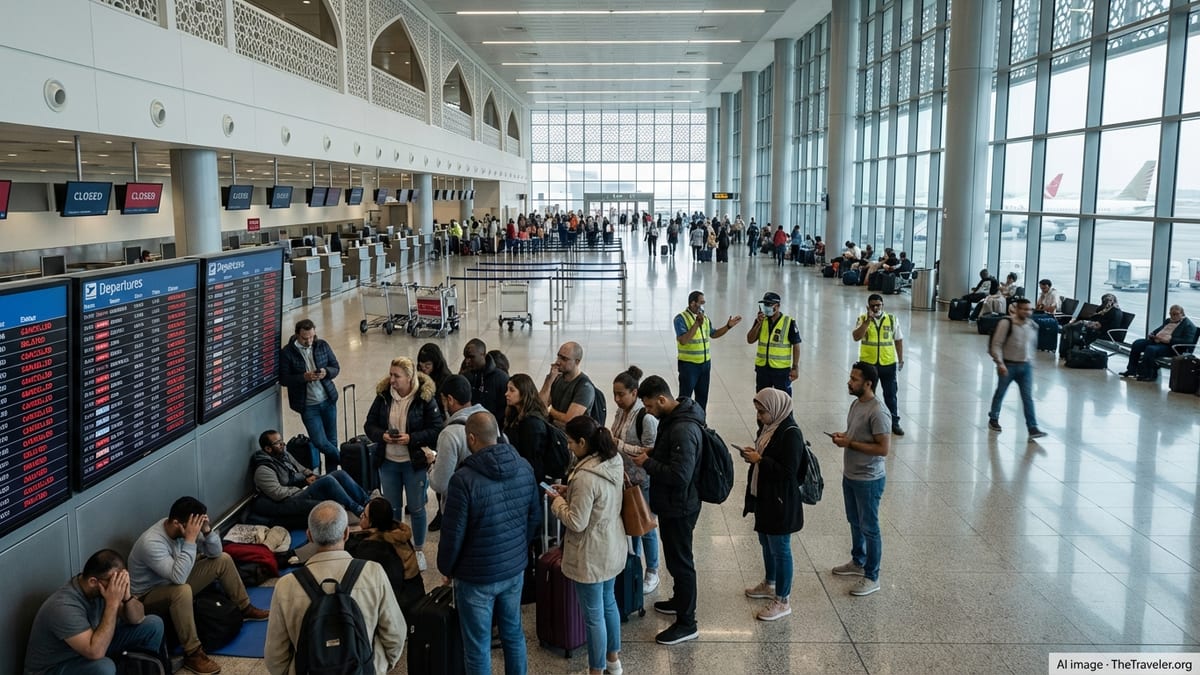
As cancellations and delays stack up, the immediate impact for passengers is most visible at check in and transfer areas. Reports from affected airports describe long queues at Saudia, Air Arabia, FlyDubai, and EgyptAir counters as travelers seek rebooking options, hotel vouchers, or refunds. With multiple routes intersecting at hubs like Dubai, Jeddah, Cairo, and Doha, disruption on a single regional leg can cascade into missed long haul connections, overnight layovers, and unexpected detours via intermediate cities.
Publicly available guidance from consumer groups and travel rights organizations emphasizes that travelers should keep boarding passes and booking confirmations, monitor airline apps or airport displays for status changes, and document out of pocket expenses. While many Middle Eastern jurisdictions do not mirror European Union compensation rules, airlines in the region generally provide rebooking on the next available service and basic care such as meals and accommodation when delays or cancellations are significant and attributable to operational factors.
Competition for alternative seats can be intense when several carriers face simultaneous schedule disruption. Passengers traveling between Saudi Arabia, the UAE, Egypt, Bahrain, Kuwait, and Qatar are increasingly turning to indirect routings through less affected hubs or shifting temporarily to rail or road where cross border links allow. Travel agencies and booking platforms report heightened demand for flexible tickets and changeable itineraries, as frequent travelers anticipate further volatility.
Extended delays also raise issues around visas, transit rules, and time sensitive trips such as religious travel, business meetings, and medical appointments. In some cases, travelers with short stay visas risk overstaying if departures are repeatedly pushed back, prompting recommendations to review entry conditions and, where possible, build additional buffer time into itineraries through the region.
What Travelers Should Watch in the Coming Days
With the regional air network still operating under strain, aviation analysts expect schedules to remain fluid in the near term. Airlines are likely to continue making late adjustments, consolidating lightly booked flights, and resequencing rotations through congested hubs to maintain overall reliability metrics, even if that results in further localized cancellations and delays.
Travelers planning to fly on Saudia, Air Arabia, FlyDubai, or EgyptAir routes that touch Saudi Arabia, the UAE, Egypt, Bahrain, Kuwait, or Qatar in the coming days are being urged by consumer advocates to monitor their bookings closely, check in online as early as possible, and verify departure times directly with airlines before heading to the airport. Where practical, booking longer connection windows and avoiding tight same day transfers through multiple Gulf hubs can reduce the risk of misconnection if schedules shift at short notice.
Industry observers note that demand across the Gulf and Egypt remains robust and that airports and airlines are working to protect core trunk routes even as they trim or delay peripheral services. That dynamic suggests that passengers traveling between major city pairs are more likely to find same day alternatives when flights are cancelled, while those relying on thinner regional links may face longer waits.
For now, the cluster of 35 cancellations and 19 delays across Saudia, Air Arabia, FlyDubai, and EgyptAir highlights how fragile the regional air travel ecosystem remains. Even modest operational shocks can cascade through a tightly woven network of hubs and spokes, turning individual schedule changes into a broader test of resilience for airlines and airports across Saudi Arabia, the United Arab Emirates, Egypt, Bahrain, Kuwait, and Qatar.