


More news on this day
Atlanta’s Hartsfield-Jackson International Airport, the world’s busiest air hub, is once again in the spotlight as new disclosures lay bare how a single IT failure at Delta Air Lines cascaded into severe travel disruption across global aviation networks.
Get the latest news straight to your inbox!
Fresh Findings Revive Focus on 2024 Delta Meltdown
Recent regulatory and industry reports are refocusing attention on the massive operational breakdown that struck Delta Air Lines in July 2024, when a faulty CrowdStrike software update crippled Microsoft Windows systems worldwide. Publicly available information shows that the outage forced airlines to halt flights across continents and pushed airport operations under extreme strain, with Atlanta at the epicenter of the disruption.
Data compiled after the incident indicates that Delta, headquartered in Atlanta, was hit harder and for longer than many competitors. Published summaries of the disruption describe thousands of Delta cancellations and delays over several days, with some analyses highlighting an especially acute impact on flights touching the carrier’s main hub. While early counts focused on daily tallies such as more than one hundred disrupted departures out of Atlanta on the first full day, subsequent reviews place the total number of affected Delta flights worldwide in the thousands.
Industry coverage notes that the initial wave of disruptions involved hundreds of cancellations and delays on the first day alone, including scores of flights into and out of Atlanta. That early phase of the crisis rippled through crew scheduling, aircraft rotations, and baggage handling, setting off a chain reaction that continued to paralyze parts of Delta’s network even as other airlines began to stabilize operations.
As new assessments emerge, they confirm that the 2024 breakdown was not an isolated technical glitch but a systemwide failure that exposed vulnerabilities in airline IT resilience, contingency planning, and customer recovery efforts.
Atlanta Hub Gridlock and Global Knock-On Effects
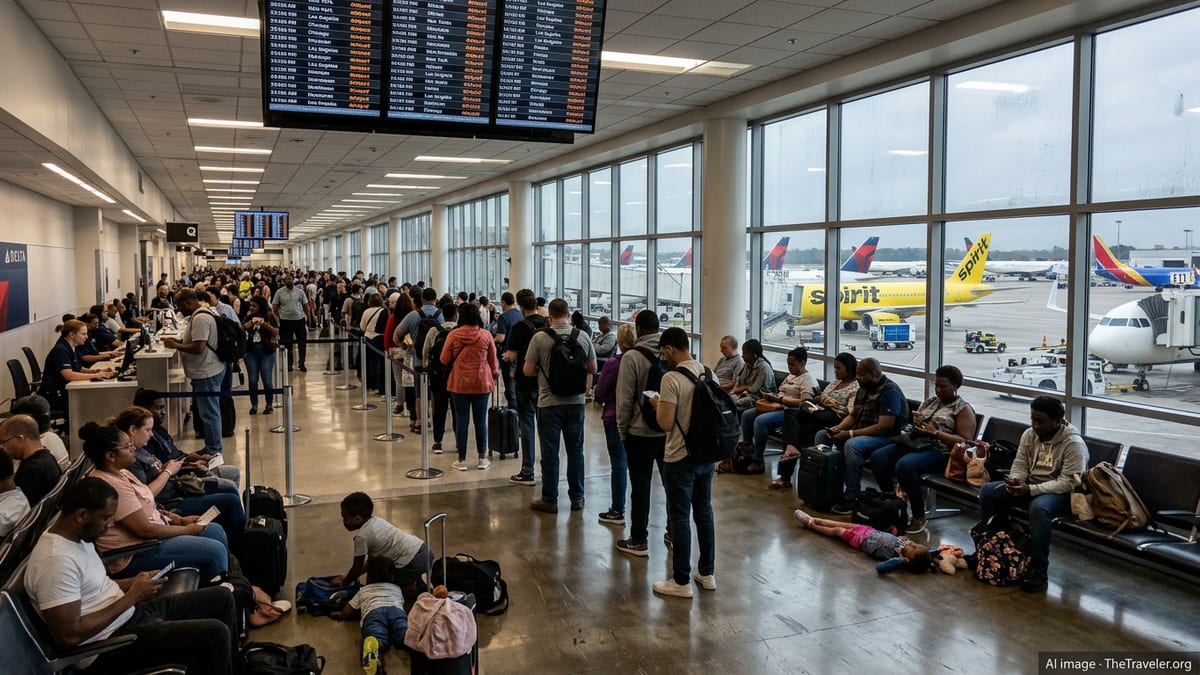
Published images and accounts from July 2024 show crowded departure halls, extensive lines at check-in and customer service desks, and rows of grounded Delta aircraft at Atlanta’s Hartsfield-Jackson airport. With Delta’s global schedule heavily concentrated through Atlanta, each canceled or delayed departure quickly translated into missed connections, stranded passengers, and mounting pressure on airport infrastructure.
Reports from that period describe large numbers of passengers being forced to rebook, often days later, as Atlanta-bound and Atlanta-originating flights stacked up. Once aircraft and crews were out of position, the disruption radiated to other major Delta bases and international gateways, turning operational issues at a single hub into a global challenge. Airports in Europe and Asia reported knock-on delays as inbound Delta services arrived hours late or not at all, further complicating slot coordination and ground handling.
According to industry analyses, Atlanta’s role as a primary Delta hub magnified every individual flight disruption. A single cancellation at the hub could unravel a complex web of onward connections, turning what might otherwise have been a localized operational setback into widespread schedule instability. That dynamic contributed to extended recovery times, even after the underlying IT issue had been patched.
The episode also highlighted the dependence of modern airports on fully functioning digital systems. Display boards, check-in kiosks, and baggage tracking tools were affected in various locations, and reports indicate that contingency procedures struggled to keep pace with the scale of the outage, particularly during peak travel periods.
Regulatory Scrutiny and Passenger Compensation Questions
The scale and duration of Delta’s meltdown prompted intense scrutiny from regulators and lawmakers. Publicly available documents show that the U.S. Department of Transportation opened an investigation into Delta’s handling of passenger care, including refunds, rebookings, and accommodation for those whose travel plans were upended during the outage period.
Correspondence from congressional committees and transportation officials raised questions about whether passengers were consistently offered the full range of protections newly codified in federal law, such as timely refunds when flights were canceled or significantly changed. Consumer complaints surged as travelers reported long waits for assistance, limited communication, and difficulties reclaiming baggage stranded at Atlanta and other airports.
Recent coverage indicates that regulators have now closed their formal probe into the 2024 operational disruption without imposing penalties on Delta. However, the absence of fines does not erase the record of difficulties encountered by affected travelers or the high volume of issues logged during the investigation period. Advocacy groups continue to cite the incident as evidence that more robust enforcement and clearer automatic compensation standards are needed for large-scale airline disruptions.
The regulatory response has also intensified debate over what constitutes a controllable versus uncontrollable event for airlines. While the root cause of the outage lay with a third-party cybersecurity update, many assessments characterize the extended operational chaos, particularly at Delta, as at least partly the result of internal system fragilities and recovery planning.
Financial Fallout and Legal Battle with CrowdStrike
Beyond the immediate travel disruption, the 2024 meltdown left a significant financial mark on Delta. Company disclosures and business media coverage identify hundreds of millions of dollars in estimated revenue impact tied to the outage, driven by lost ticket sales, compensation costs, and operational inefficiencies. Analysts point to the combination of mass cancellations and lingering schedule instability as a major drag on quarterly performance.
In response to the losses, Delta has pursued legal action against CrowdStrike, the cybersecurity firm behind the faulty software update. Court filings and news reports describe Delta’s claim that the defective rollout caused catastrophic failures across its Windows-based systems, grounding aircraft and crippling its ability to manage flights and customer operations. CrowdStrike has countered with its own legal defenses, arguing over responsibility and the extent of damages.
The legal dispute is being closely watched across the aviation and technology sectors, as it could shape future contracts and risk-sharing arrangements between airlines and their IT providers. Observers note that airlines increasingly rely on complex digital ecosystems that blend in-house systems with third-party tools, making questions of liability particularly thorny when outages occur.
Regardless of the lawsuit’s outcome, the case has already sharpened awareness of the financial exposure airlines face when core systems fail, turning operational resilience into a board-level priority rather than a purely technical concern.
Lessons for Airline IT Resilience and Passenger Trust
Industry reviews of the 2024 crisis emphasize that the outage was global in scope but uneven in impact, with some carriers resuming near-normal operations within days while Delta’s network remained heavily disrupted for longer. Analysts suggest that differences in redundancy, legacy system dependence, and manual fallback procedures played a role in how quickly airlines could recover.
For Atlanta, the event underscored the vulnerability of hub-and-spoke models when a dominant carrier experiences a large-scale system failure. Local businesses, connecting travelers, and international visitors all felt the effects as flight options narrowed and uncertainty persisted. Travel planners and corporate buyers have cited the episode in reassessments of airline diversification strategies, particularly for itineraries that rely on critical connections through Atlanta.
Passenger trust has also been a central concern in the aftermath. Travel commentators note that high-profile meltdowns can linger in consumer memory, influencing booking decisions long after operations return to normal. Delta has invested in public messaging, schedule reliability improvements, and technology upgrades to reassure customers that lessons from 2024 are being applied.
As aviation regulators, airports, and airlines digest the findings from post-incident analyses, Atlanta’s experience stands as a stark example of how a single software failure can paralyze a global network. The focus now turns to whether the structural changes under discussion will be sufficient to prevent a similar collapse during the next unforeseen shock to the world’s air travel system.