


More news on this day
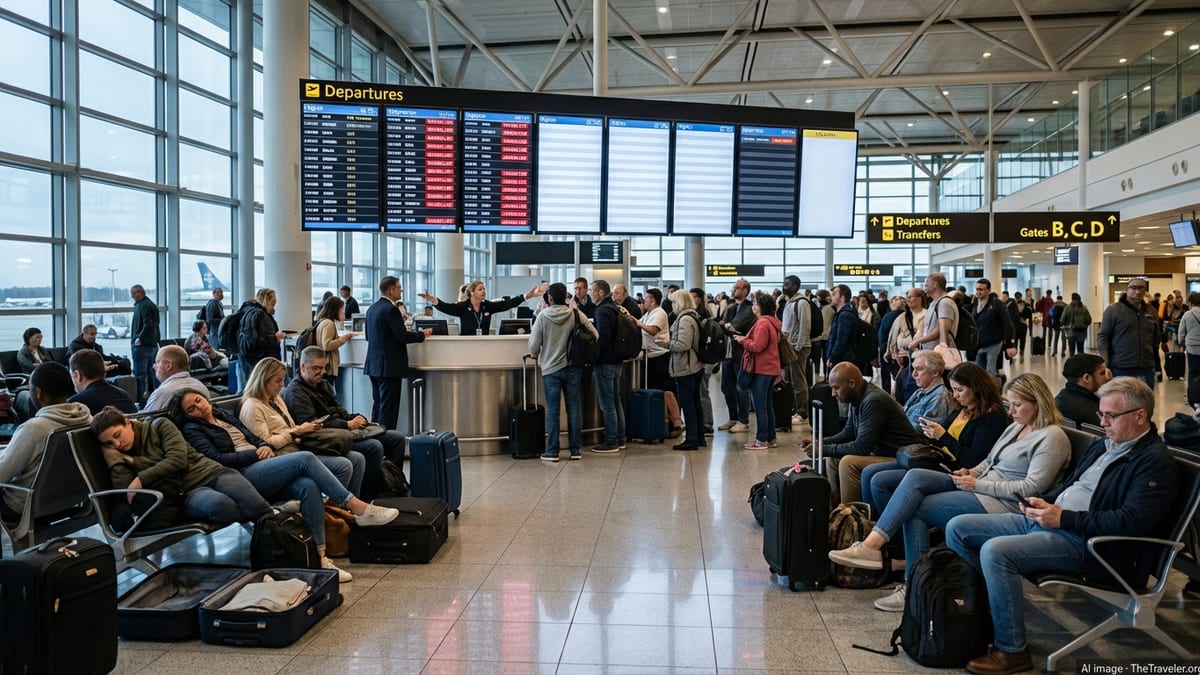
Passengers traveling through Washington DC at the start of the Independence Day weekend are being warned to brace for cancellations, diversions and lengthy delays as heightened security and special airspace controls temporarily halt flights at Ronald Reagan Washington National Airport on July 3 and 4.
Get the latest news straight to your inbox!
Holiday Airspace Controls Trigger Temporary Shutdown
Publicly available aviation notices and industry briefings indicate that a series of temporary flight restrictions tied to America’s 250th Independence Day celebrations will sharply limit operations at Reagan National during key daytime and evening hours on July 3 and July 4. The measures are designed to clear the skies above central Washington for flyovers, ceremonial events and nighttime fireworks, and to create a protective buffer around the capital’s tightly controlled airspace.
While the detailed FAA coordination documents have not been widely circulated to the general public, schedule data and advisory summaries show that airlines have been instructed to cancel, retime or reroute many flights that would normally pass through or depart from the airport during the restriction windows. Similar but shorter airspace closures in previous years have already demonstrated how even a brief halt can ripple across the national network, stranding connecting passengers and backing up aircraft and crews far from Washington.
Reagan National is uniquely sensitive to such moves. The airport sits just across the Potomac River from the National Mall and operates within the Washington Special Flight Rules Area and Flight Restricted Zone, where security-related closures are more stringent than at most U.S. airports. With large crowds and televised performances expected as part of the America 250 program, airspace management has taken on an even more central role in the capital’s holiday planning.
The July 3 rehearsals and July 4 main events mean that for extended periods, only specially authorized flights will be allowed to use the corridors around the downtown core, effectively pausing most commercial traffic at Reagan National and sharply curbing overflights that would normally crisscross the region.
Passengers Confront Cancellations, Diversions and Crowded Terminals
The practical impact for travelers is already becoming clear in the run-up to the holiday. Airline booking systems show unusually light schedules and blocked-out time bands for Reagan National across the two days, while neighboring Washington Dulles International and Baltimore/Washington International Thurgood Marshall list additional services and larger aircraft on key routes to absorb displaced demand.
Travel forums and social media posts from the Washington region in recent months have highlighted how even routine ground stops and short-term restrictions can quickly snarl traffic at all three area airports. Travelers recount missed connections, long security lines and crowded gate areas when weather, infrastructure problems or security incidents have forced the FAA to halt departures. With the July 3–4 shutdown structured in advance and lasting longer than a typical hold, airlines are reworking timetables to avoid last-minute chaos, but many passengers are still discovering that their preferred departure times simply no longer exist.
Those who do travel through Reagan National during the holiday period are being steered toward early-morning or late-night departures, outside the core restriction windows. Airport statements and carrier advisories emphasize that terminal concessions, parking and ground transport will remain available even while the airfield is quiet, but travelers may spend more time waiting on the ground than in the air.
For some, itineraries are being rebuilt around bus, rail or mixed-airport solutions, such as arriving at Dulles and departing from Reagan later in the weekend. Travel planners recommend leaving additional buffer time in case restrictions are adjusted or extended at short notice, particularly if ceremonial events run late or weather forces rescheduling of flyovers and fireworks.
Security and America 250 Events Drive Strict FAA Measures
The extraordinary controls reflect a confluence of security planning and national celebration. Federal airspace guidance describes temporary flight restrictions as a tool used for hazardous conditions, major national events and movements of high-profile government figures. Washington’s layered security regime already incorporates permanent constraints around the Capitol, White House and Pentagon, and the July 3–4 festivities add another dimension.
According to published event programs, the capital is preparing for large-scale concerts, a nationally broadcast Independence Day show and a major fireworks display over the National Mall to mark the 250th anniversary of the Declaration of Independence. Past years have featured precision flyovers by military aircraft and ceremonial helicopter formations, activities that require carefully sterilized airspace above central Washington and across approach and departure paths from Reagan National.
In recent years, rehearsals and live events have prompted evening flight suspensions of up to 90 minutes, creating pockets of intense congestion before and after the closures. This year’s expanded program and the symbolic weight of the anniversary have led planners to carve out longer, more conservative time blocks, paired with ground security measures such as river closures, traffic diversions and strict crowd control on bridges and viewing points.
While the FAA retains the authority to adjust restrictions as conditions evolve, the current planning framework suggests that the agency is prioritizing predictability for both airspace users and security partners, even at the expense of two of the busiest peak travel days of the summer.
Wider Network Impact Across the East Coast
The Washington region’s holiday airspace lockdown is also expected to reverberate across the broader U.S. airline network. Reagan National serves as a key spoke in numerous East Coast shuttle routes and as a focus city for several major carriers, meaning that any forced gaps in operations can leave aircraft and crews out of position for later flights.
Industry analysts point to previous security-related airspace closures in other parts of the country, which resulted in extended delays far beyond the immediate area as airlines scrambled to reassign aircraft, secure hotel rooms for displaced passengers and rebuild rotations. The combination of peak summer leisure travel, business traffic linked to the shortened workweek and the symbolic importance of the date is likely to magnify the effect of even small schedule adjustments.
Travelers connecting through New York, Boston, Atlanta and Chicago may encounter longer minimum connection times or see itineraries automatically rerouted through Dulles or Baltimore instead of Reagan. Some carriers are proactively waiving change fees for customers willing to shift their travel dates to earlier in the week or to the days following July 4, in an effort to spread demand away from the tightest restriction windows.
Rail operators and intercity bus companies serving Washington are also preparing for a holiday surge. With more visitors expected for America 250 events and fewer mid-day and evening flight options into the city’s closest airport, alternative modes stand to pick up travelers seeking to avoid the uncertainty of air travel during the shutdown.
Advice for Travelers Heading to or Through Washington
For passengers with tickets into or out of the Washington area over July 3–4, travel experts recommend confirming airport, date and time details as early as possible and checking reservation tools frequently in the days before departure. Even if flights remain scheduled, departure and arrival times may shift as airlines fine-tune operations around the restriction windows or respond to evolving FAA directives.
Those who must fly at peak times are urged to arrive at the airport well ahead of normal recommendations, given the likelihood of heavier-than-usual crowds at security and check-in desks. Travelers with flexibility are being encouraged to consider flights on July 2 or July 5, or to use Dulles or Baltimore if convenient ground transport is available from their destination.
Budgeting extra time for connections, avoiding tight layovers and packing essentials such as medications and chargers in carry-on bags may help soften the impact of delays or diversions. Given the potential for last-minute changes linked to weather or security conditions, reliance on real-time airline apps and airport information displays will be critical throughout the holiday period.
Despite the short-term disruption, aviation and tourism observers note that the temporary curbs reflect the complexity of managing a modern capital’s airspace during a historic national milestone. For travelers willing to plan ahead and stay flexible, the payoff may be an up-close view of Washington’s once-in-a-generation celebration, even if it comes at the cost of a longer journey.