


More news on this day
Delta Air Lines is facing a severe operational meltdown at Hartsfield-Jackson Atlanta International Airport, where reports describe aircraft parked at nearly every gate and hundreds of flights canceled or heavily delayed following a global technology outage linked to a faulty software update.
Get the latest news straight to your inbox!
Global IT Outage Triggers Systemwide Disruption
The disruption began on July 19, 2024, when a flawed software update tied to cybersecurity firm CrowdStrike affected Microsoft Windows systems worldwide. Airlines relying heavily on Windows-based platforms were among the hardest hit, with Delta emerging as the carrier most affected by the incident. Publicly available data indicates that Delta paused departures as staff scrambled to determine the extent of the technology failure and restore basic operations.
At Atlanta’s Hartsfield-Jackson airport, Delta’s largest hub and the world’s busiest airport by passenger traffic, the outage quickly cascaded into a ground stop, with departure boards filling with delays and cancellations. Aviation tracking services showed that Atlanta suffered some of the worst disruption globally, with more than a third of flights departing late or not at all as the situation unfolded.
By the following days, reports indicated that Delta had canceled thousands of flights across its network, with a disproportionate share tied to Atlanta operations. The airline’s own customer advisories acknowledged that the outage had disrupted flights for an extended period, with recovery efforts continuing well beyond the initial incident.
While other U.S. carriers began stabilizing their schedules within a day or two, industry coverage noted that Delta continued to account for a majority of cancellations worldwide into the new week. Analysts highlighted the carrier’s reliance on Windows-based systems and the complexity of its hub-and-spoke network as key factors in the prolonged disruption.
Atlanta Hub Choked With Parked Aircraft
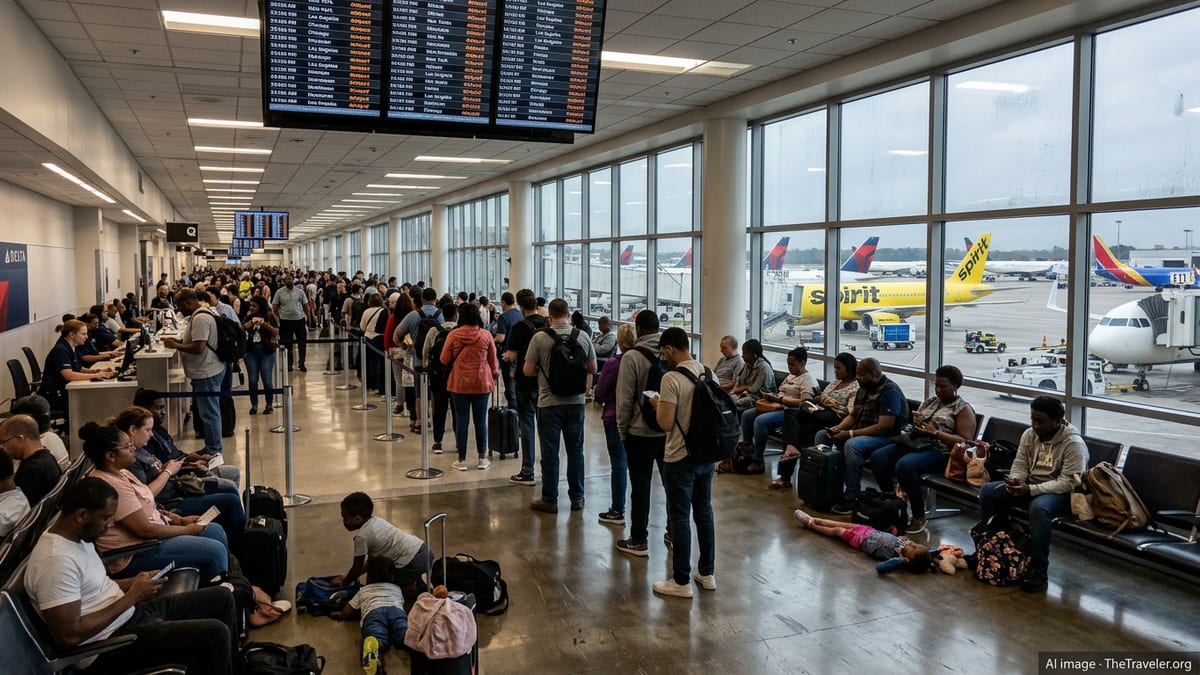
As cancellations mounted, conditions at Atlanta’s central terminal complex deteriorated rapidly. Travelers shared images and descriptions of concourses lined with idle jets, with virtually every Delta gate occupied and additional aircraft parked on remote stands. Some passenger accounts from the airport described scenes where “planes are parked everywhere,” underscoring how quickly the carrier’s largest hub became saturated.
Operationally, a canceled departure from one city meant the aircraft never reached Atlanta for its next scheduled leg, while crews were left out of position around the network. Once aircraft and flight crews fell out of sync with the schedule, the airline faced growing challenges finding legal, rested crews and available planes for subsequent flights. Industry analysis of the meltdown emphasized how such imbalances can snowball, especially at a dominant hub like Atlanta where Delta schedules tens of thousands of seats each day.
Inside the terminals, passengers reported long lines at ticket counters and rebooking desks extending deep into the concourses. Many travelers were forced to sleep in walkways and gate areas as they waited for word on new itineraries. Images from the airport showed crowds clustered under departure boards filled with delays, reflecting the strain on infrastructure when thousands of people are stranded overnight.
The congestion on the airfield and in the terminal complicated efforts to resume normal operations. With gates blocked by out-of-service or mispositioned aircraft, there were fewer spots available to turn around flights that could still operate, slowing Delta’s ability to clear the backlog even as computer systems were gradually restored.
Days of Cancellations and Mounting Passenger Frustration
What began as a single morning’s outage evolved into a multi-day disruption across Delta’s network. Over several days, flight-tracking data and media tallies showed Delta canceling or delaying thousands of flights, with some reports indicating that the airline accounted for a substantial share of cancellations worldwide during the height of the crisis.
In Atlanta, passengers described repeated cycles of rolling delays that ultimately ended in last-minute cancellations, forcing travelers to rebook repeatedly or abandon trips altogether. Some customers reported losing multiple days from long-planned vacations or international itineraries when connections through Atlanta failed to materialize.
Publicly available information shows that the carrier extended travel waivers for affected dates and routes, allowing customers to change their plans without additional fees if they were willing to travel later or adjust itineraries. However, many travelers attempting to rebook encountered limited seat availability, particularly on peak summer routes, and some turned to other airlines or alternate airports as they sought a way out of the hub.
As social media posts and consumer complaints accumulated, regulators and lawmakers began to scrutinize the scale of the disruption and its impact on travelers. Policy briefings documented that the U.S. Department of Transportation had received a surge of complaints related to the event and was monitoring how airlines were handling refunds, rebookings, and customer care obligations.
Why Delta Was Hit Harder Than Rivals
Industry coverage has focused on several structural reasons why Delta appeared to struggle more than other major U.S. carriers. Delta publicly noted that more than half of its global IT systems are Windows-based, which meant the CrowdStrike-related outage affected a wide array of tools used for flight operations, crew tracking, and customer service. Rebooting and repairing each affected workstation and server required extensive manual effort across the network.
Reports also highlighted challenges related to crew scheduling and legal duty time. Even when sufficient crew members physically reached the gate, they sometimes timed out under federal work rules before the airline could assemble complete, properly rested teams. Once that happened, both aircraft and partial crews ended up in the wrong place for subsequent flights, a problem that multiplied across the schedule.
Delta’s Atlanta hub structure further amplified the impact. As the dominant carrier at Hartsfield-Jackson, Delta concentrates a huge share of its daily departures through the airport. When the hub stalls, every missed rotation has a ripple effect across domestic and international routes, effectively radiating disruption throughout the network.
Comparisons with other airlines suggested that carriers with more diversified IT stacks or different hub structures recovered more quickly. Analysts cautioned, however, that the CrowdStrike outage was unprecedented in scope, and that lessons learned at Delta are likely to shape how the entire industry approaches redundancy, system design, and contingency planning for future technology failures.
Compensation Efforts and Questions About Resilience
As operations gradually stabilized, Delta shifted focus toward remediation and customer relations. Public statements outlined a package of measures including travel waivers, fee-free changes, refund options in eligible cases, and, for some affected customers, offers of bonus frequent-flyer miles as a goodwill gesture. The airline also published detailed guidance on how passengers could seek reimbursement for certain out-of-pocket expenses tied to the disruption.
Estimates cited in business coverage suggested that the meltdown would cost Delta hundreds of millions of dollars in lost revenue and remediation. The company has indicated that it retained outside legal counsel to explore potential claims against third parties involved in the faulty software update, signaling that the financial aftermath of the event may extend well beyond the immediate operational crisis.
For travelers, the episode has renewed questions about the resilience of airline technology systems and the adequacy of protections when large-scale disruptions occur. Policy analyses produced for lawmakers have cited the Delta case as an example of how a single external failure can cascade through complex aviation networks, stranding passengers with little advance warning.
At Atlanta’s hub, where the sight of planes parked at every available gate became a symbol of the breakdown, the focus has now turned to how quickly full reliability can be restored and whether new safeguards can prevent a repeat. As summer travel demand remains high, aviation observers are watching closely to see how Delta adjusts its operations and technology strategy in the wake of one of the most significant disruptions in its recent history.