


More news on this day
Qatar Airways has disclosed new details on how it accommodated around 16,000 passengers left stranded in Doha during recent regional airspace closures, describing a large-scale contingency effort that turned Hamad International Airport and dozens of city hotels into a temporary hub for displaced travelers.
Get the latest news straight to your inbox!
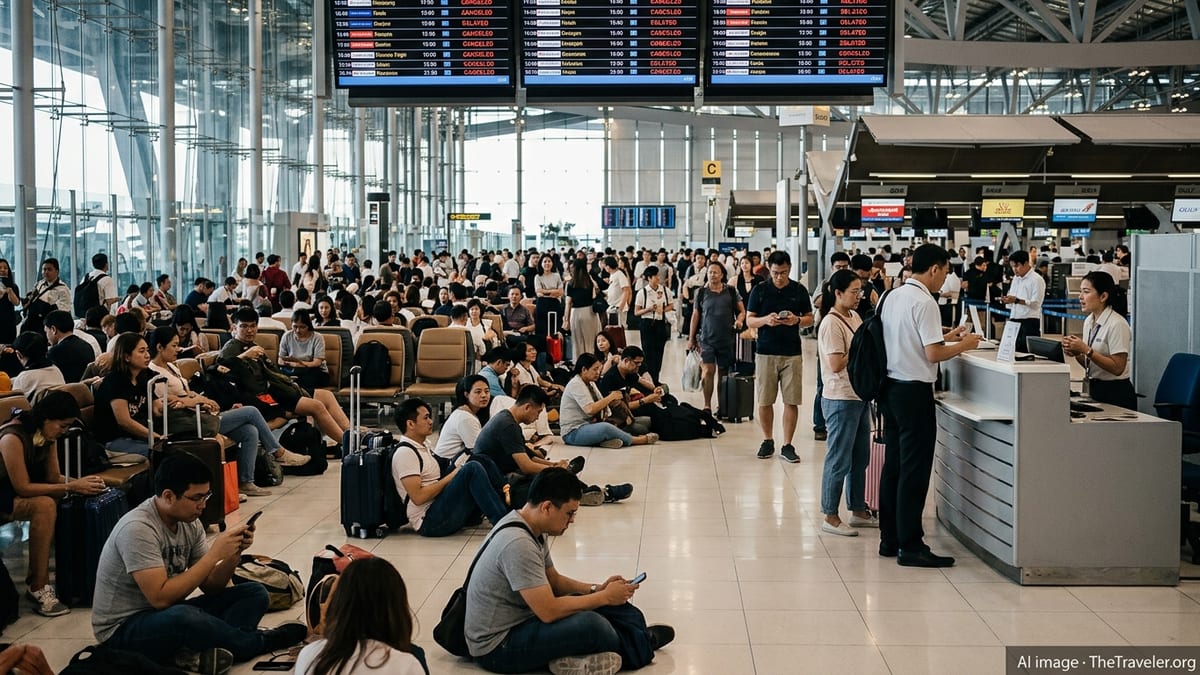
Emergency Plan Activated After Sudden Airspace Shutdown
Publicly available information indicates that the disruption began with the abrupt closure of key sections of regional airspace at the end of February, which forced Qatar Airways to divert and ground flights that would normally connect through Doha. As services were suspended or rerouted, large numbers of passengers found themselves unable to continue their journeys and were held in transit at Hamad International Airport.
According to coverage carried by Qatar News Agency and regional newspapers, the airline implemented a comprehensive emergency plan centered on its Integrated Operations Center in Doha. That plan prioritized stabilizing the flow of aircraft into the constrained airspace around Qatar, while also shifting focus to the basic needs of travelers who were unexpectedly stuck on the ground.
Operational updates issued in early March show that the carrier initially suspended most scheduled services while it sought regulatory clearances for safe corridors and alternative routings. Limited relief flights were gradually introduced in the days that followed, but the number of passengers already in transit meant that accommodation and welfare became the immediate challenge.
Reports from Doha-based outlets describe how the closure quickly transformed Hamad International into an irregular-operations hub, with tens of thousands of people converging on the terminals as diverted aircraft arrived and connecting passengers missed onward flights.
16,000 Passengers Housed Across 61 Doha Hotels
In remarks reported during an open media day at Qatar Airways facilities, the airline’s Chief Operating Officer said the company ultimately accommodated around 16,000 stranded passengers during the most acute phase of the crisis. The figure reflects travelers who were unable to depart Doha as originally scheduled and required overnight or multi-day stays in the city.
Qatar News Agency coverage of the event notes that the airline booked approximately 15,600 hotel rooms spread across 61 hotels throughout Doha. This effectively turned much of the city’s hospitality sector into an extension of the airport, with buses shuttling passengers between the terminals and properties ranging from large international chains to mid-scale city hotels.
The same reports indicate that more than 15,000 meals were provided to affected travelers inside Hamad International Airport during the disruption period. Catering efforts were scaled up using existing in-flight kitchens and airport concession partners, with a focus on basic hot meals and refreshments to support passengers while they waited for room allocations or rebooking.
Regional business media highlight that this level of accommodation required close coordination between Qatar Airways, airport management and local hotel operators, as the sudden spike in demand coincided with already strong visitor numbers in Doha.
Relief Flights and Repatriation Corridors Restore Connectivity
Once immediate welfare needs were stabilized, the focus shifted to moving stranded passengers onward. Qatar Airways service updates show that from early March the airline began operating a limited schedule of relief and repatriation flights to key long-haul markets, using approved corridors through surrounding airspace.
Published statements indicate that these flights targeted major European hubs including London, Paris, Madrid, Rome, Frankfurt, Amsterdam, Berlin and Zurich, among others. Capacity on these services was allocated in phases, with priority reportedly given to families, elderly travelers and people with urgent medical or compassionate travel needs.
Regional press reports explain that in some cases the airline reconfigured existing aircraft rotations and used non-standard routings to bypass closed skies. Industry coverage also points to the use of temporary bases and partnerships in neighboring states during earlier phases of the wider conflict, a playbook that was refined and applied during the latest round of closures.
According to these accounts, targeted evacuation flights continued in the days after the initial shutdown, gradually reducing the number of passengers waiting in Doha and allowing the airline to rebuild a skeletal network while broader airspace restrictions remained in place.
Inside the Operations Hub That Managed the Disruption
The media day that produced the 16,000-passenger figure also offered an inside look at several of Qatar Airways’ back-end facilities, including its Integrated Operations Center, maintenance hangars and Customer Support and Disruption Management Center. Reports describe a control-room environment where flight planners, dispatchers and communications teams monitored airspace changes in real time.
During the airspace closure, these facilities became the nerve center for decisions on diversions, crew positioning and passenger reaccommodation. Coverage in local newspapers emphasizes how staff from across the airline group were redeployed into transit halls and customer service desks at Hamad International, where they worked on manual rebooking, visa issues and complex itineraries involving multiple carriers.
Industry observers note that this operational infrastructure was originally strengthened in response to earlier regional crises, including prior airspace disputes and cargo disruptions. The latest episode provided what analysts describe as a large-scale test of these capabilities under intense time pressure.
Aviation analysts quoted in regional business outlets suggest that the ability to rapidly expand hotel and transport capacity, combined with centralized operational control, is becoming a critical differentiator for hub airlines that are exposed to geopolitical risk.
Passenger Experience and Future Preparedness
While airline and government-linked outlets have highlighted the scope of the accommodation effort, passenger accounts shared on social platforms and forums paint a more mixed picture of the experience on the ground. Some travelers described lengthy waits for hotel vouchers or rebooking, as well as challenges in reaching call centers during peak disruption periods.
Consumer advocates cited by regional media argue that the Qatar Airways episode underscores broader questions about airline obligations to passengers during prolonged airspace closures, particularly when disruptions extend beyond the control of any single carrier. They point to the need for clearer communication, standardized care policies and rapid-response mechanisms that function across borders.
At the same time, aviation industry commentary notes that managing more than 16,000 stranded passengers in a matter of days represents a complex logistical task for any airline, especially one operating from a single primary hub. The crisis has renewed discussion about how carriers model worst-case scenarios and maintain surplus capacity in areas such as hotel contracts, ground transportation and customer support staffing.
Reports from Doha indicate that Qatar Airways is reviewing its emergency procedures in the wake of the event, with a focus on fine-tuning coordination between its operations centers, airport teams and local authorities. For travelers, the episode serves as another reminder that large-scale airspace closures can ripple through global networks, leaving hub carriers to manage the human impact in transit.