


More news on this day
Travelers eyeing Eid Al Adha 2026 getaways are finding an unwelcome surprise on flight search engines, as fares for late May departures surge weeks before the holiday moon has even been sighted.
Get the latest news straight to your inbox!
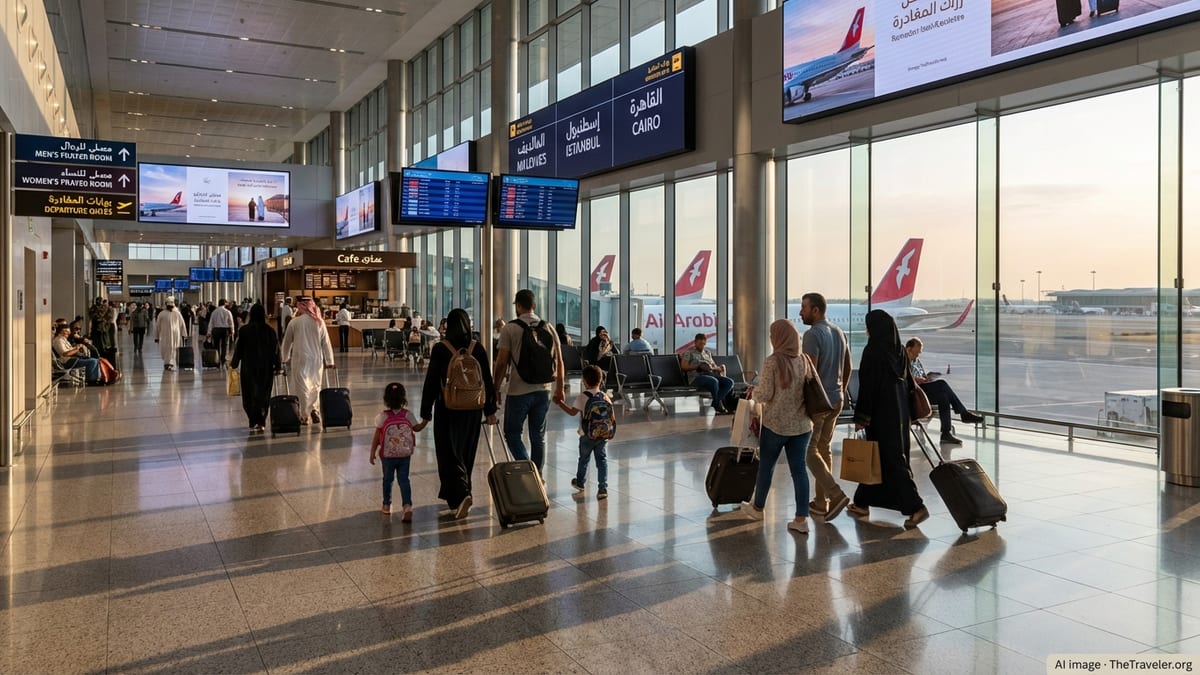
Why Late May 2026 Has Become a Global Peak Week
In 2026, most astronomical calendars indicate that Eid Al Adha will fall around Wednesday 27 May, with festivities beginning from the evening of Tuesday 26 May in many countries. Publicly available Islamic calendars and national holiday schedules in Saudi Arabia, the wider Gulf, North America and Europe broadly cluster around that same final week of May for the four days of Eid.
This timing places the feast period squarely at the threshold of the northern hemisphere’s summer travel season. Many schools in the Middle East are approaching final exams or already transitioning toward break, while European and North American travelers are starting to book May and June escapes. The overlap between religious travel and early-summer leisure demand is helping to push up fares faster than usual.
In several Gulf states, 2026 public holiday outlines show multi-day breaks around Eid Al Adha, with some schedules and commentary pointing to four to six consecutive days off when weekends are included. Travel planners note that this creates an ideal long-break window without the heat of peak July and August, further intensifying interest in flights between the Gulf, Turkey, Europe and Southeast Asia.
For residents of countries such as Indonesia and Malaysia, where Eid Al Adha is also a major national observance, the late-May timing offers a rare alignment with existing school and workplace leave patterns. This convergence of calendars is turning a religious holiday into a global peak travel week, even before final moon-sighting announcements are issued.
Hajj, Umrah and VFR Travel Squeeze Airline Capacity
Eid Al Adha coincides with the annual Hajj season, and capacity into Saudi Arabia is among the first to tighten. Schedules and religious travel advisories show that May and June 2026 are central to the pilgrimage period, with large flows of passengers converging on Jeddah, Madinah and other Saudi gateways.
Specialist pilgrimage operators and online guides for Hajj and Umrah in 2026 describe a steep rise in inquiries and package bookings once provisional Dhul Hijjah dates were publicized. As group allocations firm up, airlines serving Saudi Arabia often redeploy aircraft and adjust timetables, concentrating seats on key feeder routes from South Asia, North Africa and the wider Middle East. That shift can leave fewer competitively priced seats for independent travelers, particularly in economy cabins.
At the same time, many families use Eid Al Adha to visit relatives abroad, a pattern known in the industry as VFR, or visiting friends and relatives, travel. For 2026, that is particularly visible on routes linking the Gulf and Europe, the UK, the United States and Canada, where sizable diaspora communities plan reunions during the late-May break. As those bookings accumulate, dynamic pricing algorithms begin to climb, making it harder to find the low headline fares still visible in airline marketing.
Regional travel forums and community groups are already reporting that seats on popular evening and pre-Eid departures into hubs such as Dubai, Istanbul and Doha are selling briskly. That early wave of religious and family demand is one of the main drivers behind the viral screenshots of sharply higher prices now circulating on social media.
Fuel, Fares and a New Era of Holiday Pricing
The 2026 Eid Al Adha spike is not happening in isolation. Across global aviation, airlines are contending with elevated fuel costs influenced by recent swings in oil prices linked to geopolitical tensions in and around the Middle East. Industry commentary in business media over recent months has highlighted how carriers are responding with seasonal surcharges and tighter promotional windows.
Higher operating costs are converging with robust post-pandemic appetite for travel. Trade publications and travel agencies report that, despite rising fares, demand for international trips from key markets such as the Gulf, South Asia and Europe remains strong. Many travelers appear willing to pay more for school-break and religious-peak departures after several disrupted travel years, leaving less pressure on airlines to discount.
Pricing models increasingly rely on sophisticated forecasting tools that incorporate historical behavior around Eid periods. With 2025 and 2024 data confirming that seats around major Islamic holidays sold out early, algorithms for 2026 are primed to push prices higher as soon as booking curves begin to accelerate. That means travelers searching in May for end-of-May flights are often encountering fares that resemble last-minute summer pricing, even if cabins are not yet technically full.
For budget-sensitive travelers, this environment can create the perception of “viral price peaks” appearing almost overnight. In reality, many fares have been stepping up in tiers for weeks in the background, following patterns that revenue-management systems have come to expect for Eid-heavy travel weeks.
Holiday Announcements, Social Media Buzz and the Fear of Missing Out
A key trigger behind the latest surge has been the early publication of 2026 public holiday calendars in parts of the Gulf and selected Muslim-majority countries. Even where Eid dates remain officially subject to moon sighting, governments and major employers have circulated indicative schedules showing that the late-May period will bring an extended break.
Once those outlines were shared, local media and online commentators began flagging potential six-day windows off work when weekends are included. That in turn encouraged residents to start plotting getaways to cooler destinations or quick city breaks in nearby countries, pushing many to check airfares months earlier than they might have in the past.
Social media plays an amplifying role. Viral posts comparing 2025 and 2026 Eid fares, screenshots of fast-changing prices, and advice threads urging people to “book now before it jumps again” have all contributed to a sense of urgency. As more travelers rush to secure perceived bargains, they unintentionally accelerate the very price climbs they are trying to avoid.
Travel advisers note that this feedback loop is especially pronounced on popular regional routes, where low-cost carriers and full-service airlines compete within the same booking platforms. Once a handful of the cheapest fare buckets sell out, automated tools quickly raise prices across multiple carriers, reinforcing the impression that “everything” has become more expensive at once.
What Travelers Can Still Do Before the Next Fare Hike
Although many of the lowest fares for Eid Al Adha week have already disappeared on high-demand routes, industry data suggests that prices remain more flexible outside the most coveted departure and return dates. Mid-week flights that avoid the first and second days of Eid, as well as very early morning or late-night departures, often show more availability.
Travel search advice from consumer publications continues to emphasize the benefits of booking as early as possible for fixed-date religious periods, particularly where Hajj overlaps with school or public holidays. For 2026, that guidance effectively means locking in tickets several months before May for those heading toward Saudi Arabia, the Gulf or major diaspora hubs, and at least a few weeks early for shorter regional journeys.
Travelers are also encouraged to watch for schedule adjustments, as some airlines may add capacity closer to the holiday once demand patterns are confirmed. While additional flights can relieve pressure in certain markets, they rarely restore the very lowest teaser fares seen many months in advance, so waiting solely in the hope of a dramatic price drop is considered a higher-risk strategy.
For now, the 2026 Eid Al Adha experience underlines how a combination of firmed-up public holidays, overlapping Hajj and summer schedules, and sophisticated airline pricing is reshaping what travelers can expect to pay. Those planning to travel during the feast period may find that the era of last-minute Eid bargains is rapidly receding, replaced by a new normal in which viral price peaks arrive long before the first sighting of the crescent moon.