


More news on this day
Dozens of Delta Air Lines passengers bound for Peru report being stranded for days in Atlanta after a cascade of delays and cancellations on the carrier’s Lima routes, highlighting ongoing pressure on U.S. hubs as international travel rebounds.
Get the latest news straight to your inbox!
Days of Disruption on the Atlanta–Lima Corridor
Reports emerging over the past several days describe travelers heading to Peru who were unable to leave Atlanta as planned, facing repeated schedule changes on flights between Hartsfield-Jackson Atlanta International Airport and Lima’s Jorge Chávez International Airport. Publicly available flight-tracking data shows that Delta’s Atlanta–Lima services, including flight DL151, have experienced recurring delays in mid-June, with departures pushed back from their scheduled late-afternoon slots and arrivals into Lima running behind schedule.
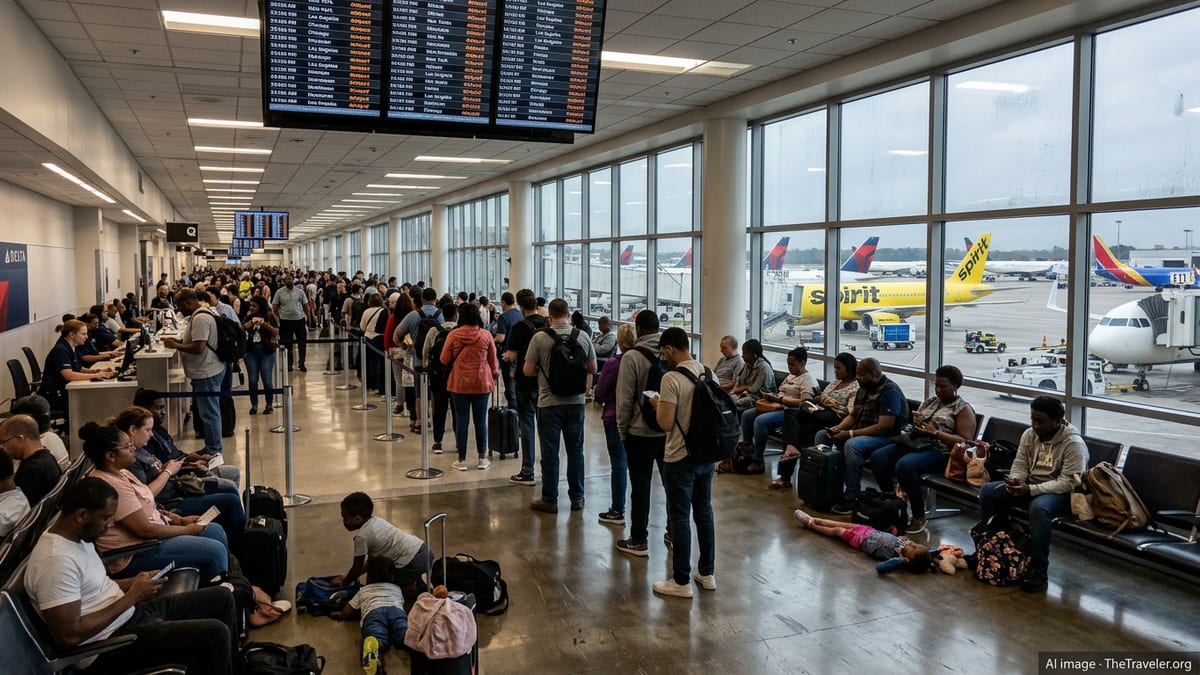
Some passengers recount that initial delays were followed by missed connections, rolling rebookings and, in a number of cases, cancellations that left them in Atlanta for multiple nights. Social media posts and forum discussions describe travelers sleeping on terminal floors, scrambling for last-minute hotel rooms and facing uncertainty over when seats to Peru would become available again.
These accounts fit into a broader pattern of strain on long-haul routes in and out of Atlanta, one of Delta’s largest hubs. While many flights on the corridor have operated close to schedule, clustered disruptions can quickly overwhelm rebooking options on a route with limited daily frequencies.
Weather, Capacity and Operational Strain
Published coverage and traveler commentary suggest that a mix of factors contributed to the extended marooning of Peru-bound passengers in Atlanta. Seasonal thunderstorms around the southeastern United States can create knock-on delays, and even modest schedule changes on a long-haul international route may cause travelers to miss onward domestic or regional connections in South America.
Operational constraints also appear to play a role. Long-haul international flights require specific aircraft and crew, and there are comparatively few daily departures between Atlanta and Lima. When one of these flights is significantly delayed or removed from the schedule, the limited number of alternative options can leave passengers waiting many hours or even days for the next available seat, particularly when flights are operating near capacity at the height of the travel season.
Consumer posts describing Delta’s recent performance on South American routes point to a wider sense of frustration, with some travelers alleging that flights left with empty seats while they remained stuck on later departures or in overnight accommodation. Industry observers note that airlines must constantly balance crew, aircraft positioning and cargo commitments, and that this optimization sometimes intersects awkwardly with the experience of stranded passengers on the ground.
Passenger Experiences From the Terminal Floor
First-hand accounts from Atlanta describe an exhausting and confusing experience for Peru-bound travelers. Some passengers report standing in lines at customer-service counters for hours, only to be told that the next confirmed seat to Lima or onward into Peru would not be available until days later. Others say they were offered hotel and meal vouchers for one night at a time, forcing them to return to the airport each day in hopes of a confirmed itinerary.
Travel forums and social media posts reference families, organized tour groups and solo travelers alike who saw carefully arranged itineraries unravel. Missed treks to the Andes, rescheduled visits with relatives and forfeited hotel bookings in Peru appear frequently in these accounts. Several reports indicate that some travelers gave up on flying directly to Lima from Atlanta and instead pieced together alternative routes on other carriers or from other U.S. gateways at their own expense.
While such narratives are anecdotal, their consistency paints a picture of significant disruption for a relatively small but highly impacted group of passengers. The contrast between the world’s busiest passenger airport and the absence of timely onward options for specific international destinations is especially stark in these stories.
What Stranded Travelers Are Entitled To
The Atlanta disruptions have renewed attention on what passengers can reasonably expect when international flights are delayed or canceled departing the United States. Publicly available information from regulators and consumer advocates emphasizes that, unlike in some other regions, U.S. federal rules do not mandate cash compensation for most delays or cancellations caused by airlines. Instead, carriers typically outline their own commitments in customer-service plans.
Delta’s published policies describe when the airline may provide hotel rooms or meal vouchers if a disruption is within its control, such as certain maintenance or crew issues. In the event of severe weather or air-traffic restrictions, assistance can be more limited, although many travelers report receiving at least basic support during overnight stays. Passengers who are rebooked multiple times or left without a clear itinerary often turn to customer-relations channels after travel to request reimbursements or credits for additional expenses.
Consumer advocates advise that travelers document every aspect of a disruption, including boarding passes, receipts for food and lodging and any written communication received from the airline. Such records can be crucial when seeking refunds for unused tickets, disputing charges through payment providers or filing complaints with transportation regulators in the traveler’s home country.
Planning Ahead for South America Flights
The experience of passengers stuck for days in Atlanta while trying to reach Peru is prompting some international travelers to rethink how they plan itineraries to South America. Travel advisors often recommend avoiding tight connections, particularly when linking a domestic U.S. flight to a long-haul departure, and suggest building in overnight buffers in hub cities when schedules and budgets allow.
For routes with limited daily frequencies, such as many nonstops to South America, flexibility can be especially important. Booking changeable fares, traveling with carry-on bags when possible and monitoring flight status through airline apps or departure boards may help travelers react faster if schedules start to unravel. Some travelers are also comparing options across carriers and hubs, weighing price against the availability of backup flights should disruption strike.
Although most journeys between Atlanta and Peru proceed uneventfully, the recent reports underscore how vulnerable international itineraries can become when a small number of key flights are delayed or removed from the schedule. For those stranded in Atlanta, the experience has served as a stark reminder that in today’s crowded skies, a missed connection can easily turn into multiple unplanned days in transit.